Increase font Decrease font

Histories

Grete geb. Roschkowski & Hannelore geb. Petroschka- Remembrances of Elbing

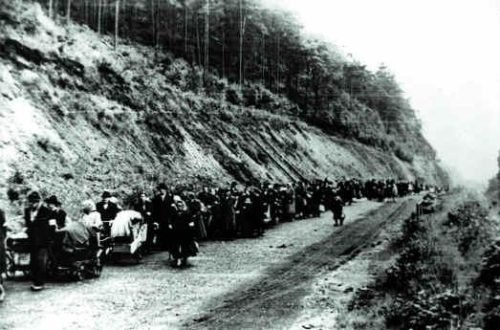
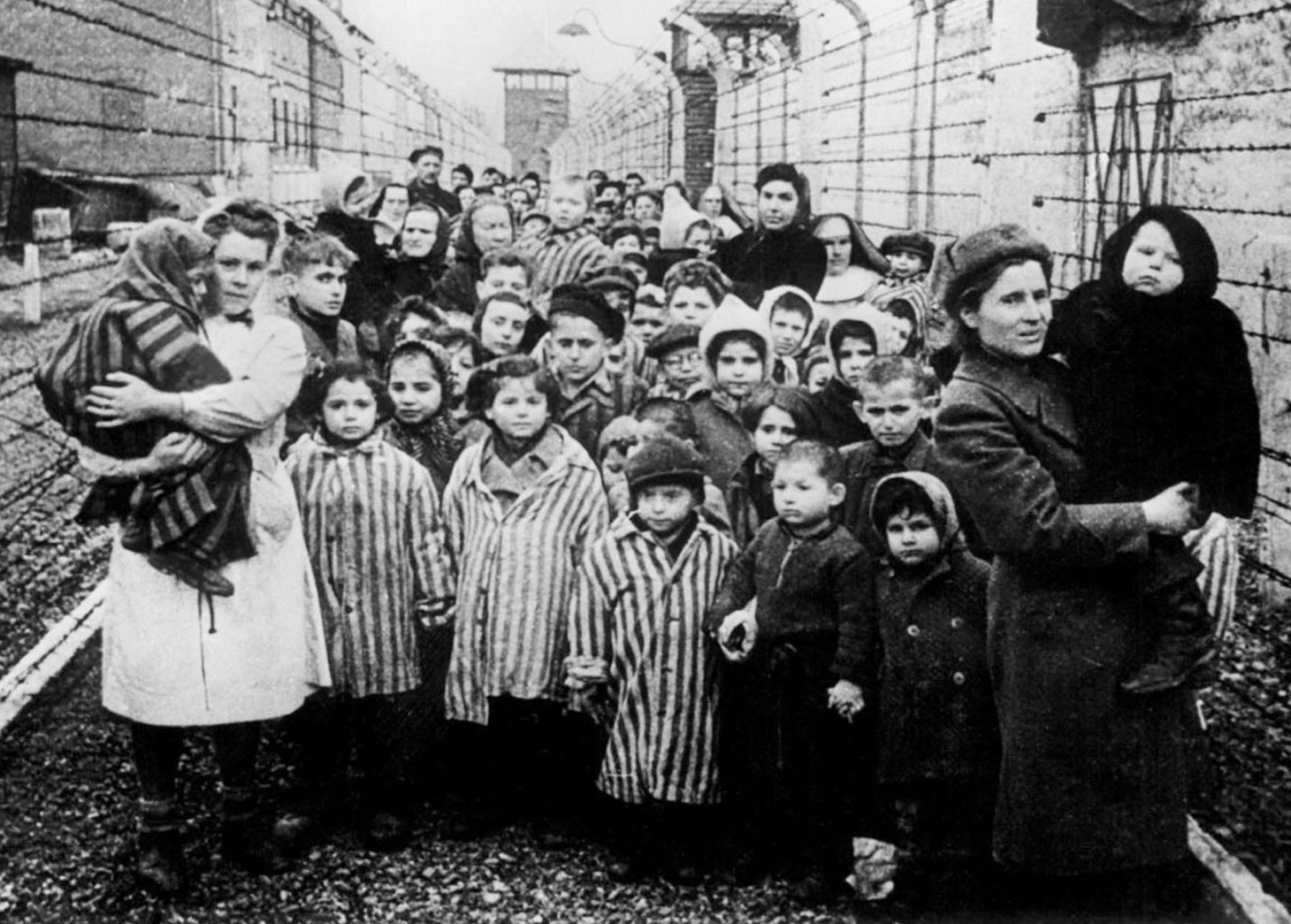
Hannelore Petroschka and Grete geb. Roschkowski were among the tens of thousands of Germans forcibly removed from their home by the German Expulsion – “Ethnic Cleansing” of  Elbing/Elblag following World War 2.

In March of 2013, I was contacted by Hannelore’s grand-daughter who wrote:

My Grandmother Hannelore was born in Elbing [West Prussia] in 1923 to Julius Petroschka and Grete Roschkowski (whose family owned a furniture factory in Elbing).

After my grandmother died a lot of her belongings were lost but we have recently discovered a box of photographs which included a lot of post cards from Elbing and the surrounding areas. It seems my great grandmother purchased them before they [the family] fled Elbing; knowing that [they] would never be able to go back.

I’ve uploaded them [her photos] to my flikr account[...] if you might find them useful please feel free to use them.

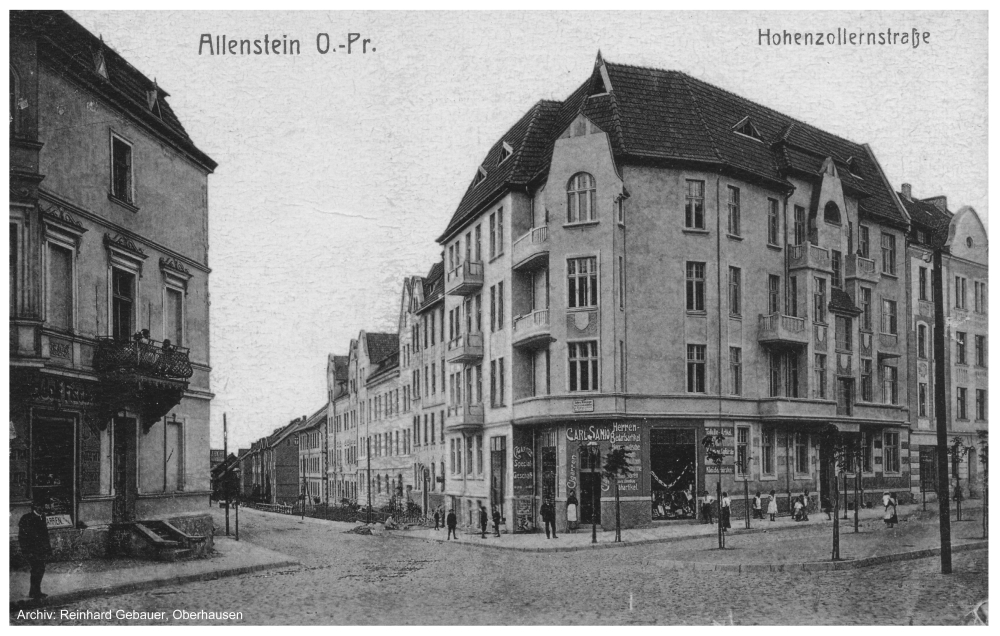
What follows is a reformatted version of Hannelore and Grete’s photographic collection; this collection/ these images represent memories of their alte Heimatland (old homeland). Please be aware that I have enhanced these images, to the best of my ability, from the originals sourced on Flickr.  Hopefully, this image library represents an accurate & true version of  the original postcards and photos.

Grete geb. Roschkowski & Hannelore geb. Petroschka- Photo Collection

[img src=http://www.many-roads.com/wp-content/flagallery/petroschka-roschkowski-elbing-photos/thumbs/thumbs_Die Padagogische Akademie in Elbing.jpg]6140Die Padagogische Akademie in Elbing
[img src=http://www.many-roads.com/wp-content/flagallery/petroschka-roschkowski-elbing-photos/thumbs/thumbs_Die Lindenallee in Cadinen.jpg]5460Die Lindenallee in Cadinen
[img src=http://www.many-roads.com/wp-content/flagallery/petroschka-roschkowski-elbing-photos/thumbs/thumbs_Die Fischbrucke am Elbing-Fluss.jpg]5060 Die Fischbrucke am Elbing-Fluss
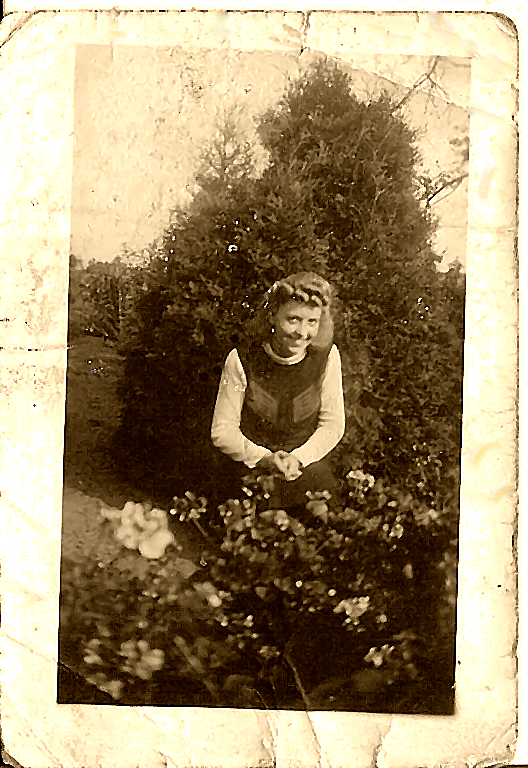
[img src=http://www.many-roads.com/wp-content/flagallery/petroschka-roschkowski-elbing-photos/thumbs/thumbs_Hannelore Petroschka geb. Roschkowski .jpg]7310 Hannelore Petroschka geb. Roschkowski
[img src=http://www.many-roads.com/wp-content/flagallery/petroschka-roschkowski-elbing-photos/thumbs/thumbs_Die 1000 jahrige Eiche bei Cadinen.jpg]7010 Die 1000 jahrige Eiche bei Cadinen
[img src=http://www.many-roads.com/wp-content/flagallery/petroschka-roschkowski-elbing-photos/thumbs/thumbs_Der Pfeifenbrunnen am Alten Markt in Elbing.jpg]6740Der Pfeifenbrunnen am Alten Markt in Elbing
[img src=http://www.many-roads.com/wp-content/flagallery/petroschka-roschkowski-elbing-photos/thumbs/thumbs_Der Kahlberger Leuchtturm auf der Frischen Nehrung.jpg]6630Der Kahlberger Leuchtturm auf der Frischen Nehrung
[img src=http://www.many-roads.com/wp-content/flagallery/petroschka-roschkowski-elbing-photos/thumbs/thumbs_Das Markttor in Elbing.jpg]6490 Das Markttor in Elbing
[img src=http://www.many-roads.com/wp-content/flagallery/petroschka-roschkowski-elbing-photos/thumbs/thumbs_Dampferanlegestelle in Elbing.jpg]6411Dampferanlegestelle in Elbing
[img src=http://www.many-roads.com/wp-content/flagallery/petroschka-roschkowski-elbing-photos/thumbs/thumbs_Carlsonplatz Elbing.jpg]6160Carlsonplatz Elbing
[img src=http://www.many-roads.com/wp-content/flagallery/petroschka-roschkowski-elbing-photos/thumbs/thumbs_Blick vom Russenberg.jpg]6060Blick vom Russenberg
[img src=http://www.many-roads.com/wp-content/flagallery/petroschka-roschkowski-elbing-photos/thumbs/thumbs_Das Turmhaus in Elbing.jpg]5990Das Turmhaus in Elbing
[img src=http://www.many-roads.com/wp-content/flagallery/petroschka-roschkowski-elbing-photos/thumbs/thumbs_Blick in der Wasserstrasse.jpg]5980Blick in der Wasserstrasse
[img src=http://www.many-roads.com/wp-content/flagallery/petroschka-roschkowski-elbing-photos/thumbs/thumbs_Alter Markt Mit Pfiefenbrunnen und Markttor in Elbing.jpg]5860 Alter Markt Mit Pfiefenbrunnen und Markttor in Elbing
[img src=http://www.many-roads.com/wp-content/flagallery/petroschka-roschkowski-elbing-photos/thumbs/thumbs_Am Ostseestrand in Kahlberg.jpg]5860Am Ostseestrand in Kahlberg
[img src=http://www.many-roads.com/wp-content/flagallery/petroschka-roschkowski-elbing-photos/thumbs/thumbs_Anlagen am Bahnhof - Elbing.jpg]5730Anlagen am Bahnhof - Elbing
[img src=http://www.many-roads.com/wp-content/flagallery/petroschka-roschkowski-elbing-photos/thumbs/thumbs_Anlegestelle der Ausflugsdampfer.jpg]5710Anlegestelle der Ausflugsdampfer
[img src=http://www.many-roads.com/wp-content/flagallery/petroschka-roschkowski-elbing-photos/thumbs/thumbs_Eisschollen auf dem Elbingfluss.jpg]3460Eisschollen auf dem Elbingfluss
[img src=http://www.many-roads.com/wp-content/flagallery/petroschka-roschkowski-elbing-photos/thumbs/thumbs_Elbing - vom Rathausturm.jpg]3410Elbing - vom Rathausturm
[img src=http://www.many-roads.com/wp-content/flagallery/petroschka-roschkowski-elbing-photos/thumbs/thumbs_Elbing-umgebung.jpg]3380Elbing-umgebung
[img src=http://www.many-roads.com/wp-content/flagallery/petroschka-roschkowski-elbing-photos/thumbs/thumbs_Elbing.jpg]3380Elbing
[img src=http://www.many-roads.com/wp-content/flagallery/petroschka-roschkowski-elbing-photos/thumbs/thumbs_Elbinger Hafengesellschaft.jpg]3270Elbinger Hafengesellschaft
[img src=http://www.many-roads.com/wp-content/flagallery/petroschka-roschkowski-elbing-photos/thumbs/thumbs_Fischer am Draunsensee.jpg]3260Fischer am Draunsensee
[img src=http://www.many-roads.com/wp-content/flagallery/petroschka-roschkowski-elbing-photos/thumbs/thumbs_Fischerstrasse - Elbing.jpg]3240Fischerstrasse - Elbing
[img src=http://www.many-roads.com/wp-content/flagallery/petroschka-roschkowski-elbing-photos/thumbs/thumbs_Freidrich-Wilhelm Platz - Elbing.jpg]3250Friedrich-Wilhelm Platz - Elbing
[img src=http://www.many-roads.com/wp-content/flagallery/petroschka-roschkowski-elbing-photos/thumbs/thumbs_Gasthaus Gottschalk in Cadinen im Winter.jpg]3200Gasthaus Gottschalk in Cadinen im Winter
[img src=http://www.many-roads.com/wp-content/flagallery/petroschka-roschkowski-elbing-photos/thumbs/thumbs_Haffschlossen.jpg]3190Haffschlossen
[img src=http://www.many-roads.com/wp-content/flagallery/petroschka-roschkowski-elbing-photos/thumbs/thumbs_Hof des Heilig-Geist Hosptials mit Heilig-Geist Kirche.jpg]3151Hof des Heilig-Geist Hosptials mit Heilig-Geist Kirche
[img src=http://www.many-roads.com/wp-content/flagallery/petroschka-roschkowski-elbing-photos/thumbs/thumbs_Innerer Muhlendamm in Elbing (vom Friedrich-Wilhelm platz aus gesehen).jpg]3050Innerer Muhlendamm in Elbing (vom Friedrich-Wilhelm platz aus gesehen)
[img src=http://www.many-roads.com/wp-content/flagallery/petroschka-roschkowski-elbing-photos/thumbs/thumbs_Leggebrucke und St Marienkirche in Elbing..jpg]3090Leggebrucke und St Marienkirche in Elbing
[img src=http://www.many-roads.com/wp-content/flagallery/petroschka-roschkowski-elbing-photos/thumbs/thumbs_Ludendorff-Hohe 1938.jpg]3090Ludendorff-Hohe 1938
[img src=http://www.many-roads.com/wp-content/flagallery/petroschka-roschkowski-elbing-photos/thumbs/thumbs_Markttor mit Schichau-Verwaltungsgebaude in Elbing nach 1945.jpg]3080Markttor mit Schichau-Verwaltungsgebaude in Elbing nach 1945
[img src=http://www.many-roads.com/wp-content/flagallery/petroschka-roschkowski-elbing-photos/thumbs/thumbs_Mowen am Leuchtturm auf dem Frischen Hoff.jpg]3080Mowen am Leuchtturm auf dem Frischen Hoff
[img src=http://www.many-roads.com/wp-content/flagallery/petroschka-roschkowski-elbing-photos/thumbs/thumbs_Portal des Kamelhauses in der Spieringstrasse.jpg]3090Portal des Kamelhauses in der Spieringstrasse
[img src=http://www.many-roads.com/wp-content/flagallery/petroschka-roschkowski-elbing-photos/thumbs/thumbs_Roschkowski Mobelfabrik.jpg]3040Roschkowski Mobelfabrik
[img src=http://www.many-roads.com/wp-content/flagallery/petroschka-roschkowski-elbing-photos/thumbs/thumbs_Sankt Annenskirche.jpg]3030Sankt Annenskirche
[img src=http://www.many-roads.com/wp-content/flagallery/petroschka-roschkowski-elbing-photos/thumbs/thumbs_Schichau -elbing und die Leggebrucke.jpg]3010Schichau - Elbing und die Leggebrucke
[img src=http://www.many-roads.com/wp-content/flagallery/petroschka-roschkowski-elbing-photos/thumbs/thumbs_Schmeiderstrasse Elbing.jpg]2980Schmeiderstrasse Elbing
[img src=http://www.many-roads.com/wp-content/flagallery/petroschka-roschkowski-elbing-photos/thumbs/thumbs_Segelschiff im Elbinger Hafen.jpg]2990Segelschiff im Elbinger Hafen
[img src=http://www.many-roads.com/wp-content/flagallery/petroschka-roschkowski-elbing-photos/thumbs/thumbs_Speicherinsel mit alter Borse.jpg]2950Speicherinsel mit alter Borse
[img src=http://www.many-roads.com/wp-content/flagallery/petroschka-roschkowski-elbing-photos/thumbs/thumbs_St Annenkirche Elbing.jpg]2930St Annenkirche Elbing
[img src=http://www.many-roads.com/wp-content/flagallery/petroschka-roschkowski-elbing-photos/thumbs/thumbs_Staatliches Gymnasium in Elbing.jpg]2900Staatliches Gymnasium in Elbing
[img src=http://www.many-roads.com/wp-content/flagallery/petroschka-roschkowski-elbing-photos/thumbs/thumbs_Stadtische Sparkasse in Elbing.jpg]2891Stadtische Sparkasse in Elbing
[img src=http://www.many-roads.com/wp-content/flagallery/petroschka-roschkowski-elbing-photos/thumbs/thumbs_Vogelsang bei Elbing in der guten alten Zeit.jpg]2900Vogelsang bei Elbing in der guten alten Zeit
[img src=http://www.many-roads.com/wp-content/flagallery/petroschka-roschkowski-elbing-photos/thumbs/thumbs_Volkschule - Elbing.jpg]2890Volkschule - Elbing
[img src=http://www.many-roads.com/wp-content/flagallery/petroschka-roschkowski-elbing-photos/thumbs/thumbs_Wilhelmstrasse - Elbing.jpg]2890Wilhelmstrasse - Elbing
Enhanced by Zemanta

Bericht ueber den Untergang der Synagogengemeinde Elbing/ Report on the Destruction of the Elbing Synagogue

World War 2 and its aftermath was a tragic period for the inhabitants of Elbing Westpreussen (Elblag, Poland, today). It is essential to preserve and honor the history and travails of those people and their times. To quote:

“Peace is not merely a distant goal that we seek, but a means by which we arrive at that goal.”

Martin Luther King, Jr.

“Peace cannot be kept by force; it can only be achieved by understanding.”

Albert Einstein

It is in this spirit that I am pleased to announce, courtesy of the Leo Baeck Institute, ManyRoads is able to present a transcribed version of the Bericht ueber den Untergang der Synagogengemeinde Elbing (A Report on the Destruction of the Elbing Synagogue.)  This report was written by the last Rabbi of the Elbing Synagogue- Siegbert Neufeld.  It details the final days of the Elbing Synagogue.  You may download a copy of this report for your own personal use (Please honor and request rights for any reproduction use of these materials through the Leo Baeck Institute.):

Document Download

Bericht ueber den Untergang der Synagogengemeinde Elbing- A Report on the Destruction of the Elbing Synagogue

Synagogue Images

Elbing Synagogue- Interior Elbing Synagogue- Etching
Enhanced by Zemanta

Elbing Damals- new photos

For those of you who might be interested in viewing my latest batch of Elbing “Damals” Photos. (Fals Sie interesse darueber haben, hier sind meine lezte Elbing Damals Fotos)

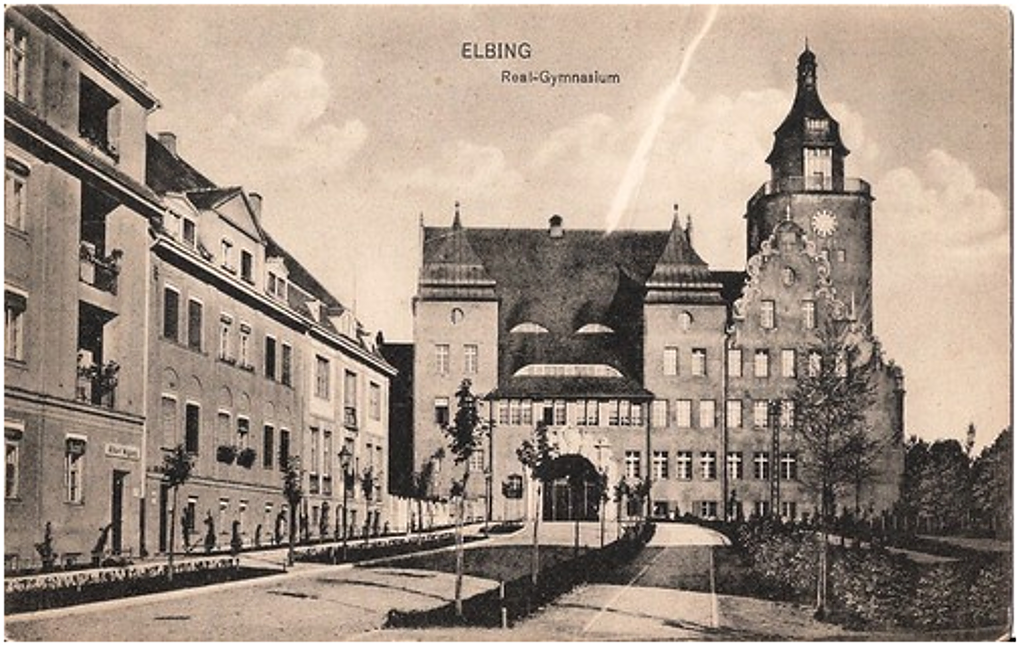
The following images were added today (Die folgende Fotos sind jetzt auf ManyRoads):Elbing Real-Gymnasium um 1900

  • Alte Giebelhaeuser
  • Alte Haeuser Spieringstrasse circa1935
  • Alter Markt circa 1935
  • Blick auf St. Nikolai-Kirche 1940
  • Blick auf St Nikolai durch die Fleischerstrasse 17.1.13
  • Blick ueber den Elbing-Fluss
  • Brueckstrasse
  • Fischmarkt Markttreiben mit Geschaefte
  • Friedrichstrasse 1916
  • Lagerhaeuser am Elbingfluss
  • Marktstrasse mit Friseurgeschaeft und Giesskanne
  • Moltkestrasse mit ober Real Schule 1918
  • Moltkestrasse Realgymnasium 1927
  • Patrizierhaeuser Spieringstrasse circa 1935
  • Rathaus mit Erweiterungsbau 1931
  • Real-Gymnasium um 1900
  • Sankt Georgen-Bruederhaus circa 1910
  • Sankt Marienkirche 1927
  • Schichauwerft
  • Schmiedstrasse 1943
  • Strassenpartie mit Rathaus und Autos
  • Koeniglicher Gymnasium 1915
  • Partie am Elbingfluss mit Turm der Nikolaikirche

Anabaptist-Mennonite DNA project participation

As many of you may have already guessed, our families and ancestries are crowded with Mennonite and Amish peoples- Anabaptists. For years, we knew of the Rich (Henss Family Branch)  connections to the Swiss- Elsass/Alsace,  Montbeliard/ Bern communities. More recently, we have come to understand quite a bit of the Senger (Rabideau Family Branch) connections to the West Prussian / East Prussian Mennonite communities.

Because of the smallish nature of these original communities, we (Becky, my wife, and I) have elected to purchase DNA tests from 23andMe and submit our DNA test results for inclusion in the Mennonite DNA Project. This past weekend our 23andme DNA test kits arrived!  Now all we have to do is study hard and take our tests.  ;^)  Which actually means, we have to ‘spit in a tube’.  It is our hope that we will both contribute useful research data as well as benefit from the new information we obtain regarding our heritages & lineages.

As our adventure progresses, I will post more information regarding our DNA ‘project’. But for now, if you, like we, are genetically linked to any of the Anabaptist, Mennonite, Amish communities, please consider participating and adding your ‘voice’ (read, DNA) to this worthwhile research project.

Who knows what kind of insights and discoveries might arise from our collective efforts!

Anabaptist-Mennonite DNA research links:

If you are wondering whether you might be an Anabaptist- Mennonite descendant, here are several articles that provide pointers to Anabaptist Family Surnames:


“Our” Mennonite Churches in Europe

As you may have noticed, a “goodly portion” (to quote my father-in-law) portion of both sides of the Henss & Rabideau families have roots in Amish/ Mennonite/ Anabaptist traditions.  Out of curiosity, actually out of a desire to find church building photos, I did a little web research on our families’ past church homes.  As you might have guessed, nothing identifiable remains of our Prussian/ Poland Mennonite congregations, the Second World War took care of that.  However, I have stumbled across a number of our families’ Alsatian congregations on the Internet.

It is wonderful to see that many of our predecessors’ beliefs and traditions live on and that our family’s work is continued by those who remained in the home country (Heimatland/ Patrie).  The links below provide information to those Mennonite congregations today:

With respect to our Prussian/ Poland Mennonite connections The Mennonite-Polish Friendship Association freely provides documents describing the accomplishments and status of the Mennonite past in that region.

If any of our readers have information or photos regarding the history for any of these faith communities, we would greatly appreciate hearing from you.  Please use our Contact us page, we’d love to share information.

Swiss- Alsatian Mennonite- Anabaptist Research

This page contains information regarding source materials I am using from across the Internet to conduct Henss/ Rich family research. These links and pages will change ‘automagically’, over time, as I add, change, and delete materials in Mendeley.

If you wish, you may also join the group and contribute to the research library.

Related Anabaptist- Mennonite Sources

Mennonite/Amish/Anabaptist Research Materials

For those interested in following my Anabaptist information gathering process/ results, I will publish my Mennonite Mendeley related folder contents on this page. Because of the rather extensive listings, over time I will create numerous sub-pages that will be accessible from here. These links and pages will change ‘automagically’, over time, as I add, change, and delete materials in Mendeley.

If you wish, you may also join the group and contribute to the research library.

Related Anabaptist- Mennonite Sources

Past to future

Over the past few weeks, I have been mulling over the significance of history, war, and the ravages of time.  Quite the happy thoughts I know.

I suppose this stream of consciousness was initiated by my review of some photos from my mother’s family church in Zeyer, Westpreussen, in what is today Poland.  Then today an Internet friend sent an article from today’s Elblag, Poland (what used to be Elbing, West Prussia, Germany) regarding their German past.

Here are the photos and articles that prompt my thoughts.

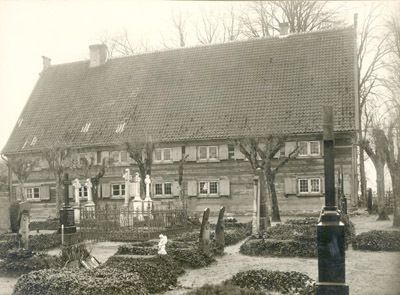
The first set are recent photos of the Zeyer Evangelische Kirche- Zeyer Lutheran Church. I guess more precisely these are photos of what is left of the church and graveyard where more than 200 years of my forebears were baptized, married and buried.  I have included a photo of what the Church, built and established in 1774, looked like in the early 1900s for comparison purposes. There are also photos of the 2010 re-consecration of the ‘old’ graveyard; along with the placement of a ‘new’ memorial stone.

These next links will take you to some images and postings on German graves recently unearthed in Elblag/Elbing.

All of this brought to my mind the importance of understanding.  Understanding history, perspective, motivation and the passage of time.  Each of these factors have a significant impact on who we are, who we were, and how we perceive our surroundings.  Nothing is static. Societal artifices and institutions which seem permanent are not; they are transient. Place, home, family, and even our burial are dynamic and evolving.

I guess the bottom line is we never really are; but rather, we are always becoming.  As living sentient beings we can chose what, we can even chose who, we allow ourselves to become.  And I suppose, we are best when we remember that life is a journey from our collective past into our shared future.

Basketball in Easthampton- one family’s account

In 2010 I published a posting on pro-basketball in Easthampton, Mass.  Yesterday Jeffrey Baker, a ManyRoads reader, was kind enough to send these images and family story along.

Enjoy!

James R Knox was my maternal grandfather. Raised in the Easthampton area, went on to work at the Veterans Hospital in Northampton MA in the Personnel Office, eventually becoming Quartermaster.

Unfortunately there is no listing of any of the other ruffians pictured…nor of the coaches.

The details were noted by George W Knox, brother of James R. “Beaver” Knox. Interesting on how he has the Celtics in Boston in the 1920′s.

The other scan is EHS years ’13 – ’14. No details on this one, and I’m having a hard time discerning any relative in there. I’ll need to match up with some other photos from the era.

Hope these prove useful. I’ll be going through more photos from that time soon, getting things scanned. If I come across anything interesting I’ll forward them along.

The scans may be a bit big, please adjust for your site as you’d like.

Jeffrey Baker
Worcester MA

easthamptonbasketball1913-1914 jamesrknoxbasketballfront jamesrknoxbasketballback

Die Wedhorn Vertreibung (Expulsion)

Note:  This account is the product of numerous discussions, interviews and writings between Frieda geboren Wedhorn, her son Norbert Grohmann, and Mark Rabideau.  Every effort has been made to remain true to the intent, content and events of this life altering time.

During the days preceding Frieda geboren Wedhorn’s capture and deportation by the Soviets, heavy fighting began in and around the Wedhorn family home in Orlofferfelde, Westpreußen.  During this time, around March 1945, Soviet soldiers came to the Wedhorn farmhouse, took possession and refuge within it and while there they attacked and raped Frieda (geboren Wedhorn). Shortly after the rape, the Russians were forced to leave the farm, at gunpoint by their superiors, to re-engage in the heavy fighting against German defense forces in and about Orlofferfelde.

Immediately following the Soviet evacuation of Otto Wedhorn’s home and raping of his daughter (Frieda), Otto (Sr.) decided to take precautions to protect his daughter Frieda from further danger by hiding her in a secret double walled area within the family stable, near their home.  This was the same area were the family had previously stored “surplus” food stocks obtained by Otto Sr. through his private butchering service.  (Note: This private service was illegal during the war because each German was allocated a specific quantity of food via a government controlled food stamp system.)

Wedhorn Family about 1944 Unfortunately, Otto’s plan nearly produced disastrous results. The family home was very exposed, standing on the highest ground in Orlofferfelde. The stable of the Wedhorn house was hit by incoming artillery fire; no one really knew whether the shells came from German or Soviet weapons. Shrapnel struck the family’s horse in the neck causing the horse to bleed to death; screaming, gurgling and terrifying Frieda with its death throes. Fortunately, Frieda’s hiding place, with her in it, remained intact; she was uninjured. (Note: During that same military engagement, the nearby farm house of Hermann Recht was struck by shellfire.)

Throughout this bombardment and shelling, the Wedhorn family, excepting Frieda Wedhorn who remained in her hiding place, spent the night cowering in a tiny, dank, basement under the family home.  The cellar was cold and wet; water soaked the floor. Frieda believes her mother, Ella Wedhorn, contracted a lung infection during this time, weakening her immune system. Frieda believes that this infection ultimately resulted in her mother, Ella, contracting a fatal case of typhoid when she was later incarcerated by the Soviets in an Elbing assembly camp.

The following day the Wedhorns along with Emma Recht, the wife of Ernst Hermann Ferdinand Recht, decided to leave for a safer house in the nearby town of Orloff. (Note: Emma Recht had come to the Wedhorns in January 1945 when the Russians over ran Tilsit in Ostpreußen; she was Ella geb. Recht and Otto Wedhorn’s sister-in-law. Her husband Ernst Recht had been conscripted to fight in the Volksturm and had been reported as missing in action. Ernst was brother-in-law to Otto Wedhorn Sr. and brother of Ella geboren Recht.) Ella Wedhorn (Recht), Otto Wedhorn (Jr.) and Emma Recht were the first to evacuate. Otto Wedhorn (Sr.) stayed with his daughter Frieda who remained in her stable storage hiding area; father and daughter waited until there were fewer Soviet troops nearby before attempting their escape. Early during the battles around Orlofferfelde, the Red (Soviet) Army had brought numerous horses to the Wedhorn stable for shelter; these remained even after the Soviets resumed fighting. As a result, it was not easy getting Frieda out of her hiding place and through the crowd of animals to safety. But finally, Otto Sr. and Frieda managed to sneak out; it was very early in the morning, quite dark, very cold and there was a thick blanket of snow. Fighting and bombardment continued in the area, but it no longer centered on their home. Frieda remembers seeing shells from a “Stalinorgel” (Soviet multiple rocket launcher) flying above her and her father in the early morning sky.  The ground was covered by newly fallen snow; as she and her father walked they tripped over what looked like piles of snow in the fields.  These ‘snow piles’ were actually the dead bodies of young men in Soviet and German uniforms who had fallen in the battles the days before.

Frieda and her father, Otto Sr., were not able to catch up with the rest of the Wedhorn family because they were arrested by Soviet soldiers.  Instead of rejoining their family, they were brought to a house which was being used as a Soviet command post. In this house, there were already a lot of German civilians.  There were also Poles who took all valuables away from the incoming Germans. While they were being held in this ‘command post’, Frieda noticed Ella, Otto (Jr.) and Emma Recht out on the street being force marched under gunpoint by Soviet military personnel. Only years later did Frieda learn, from her brother Otto, that the Wedhorn family, as well as the escorting Soviets, knew that she and her father (Otto Sr.) were being held and interrogated in the Soviet command post.  But, family members were not allowed to talk to each other; and, instead were kept separate and forcibly removed to different assembly points.

Frieda and Kaethe Wedhorn Eventually, Frieda Wedhorn was jailed in a basement together with other German women scheduled for deportation to Soviet labor camps. Fortunately, Otto Wedhorn (Sr.) was not put on the list for deportation due to his old age (66); he tracked Frieda to each of the holding facilities to which the Soviets brought his daughter, all the way to Elbing. Shortly before Frieda was to be transfered to Insterburg, her father (Otto Sr.) managed to talk to her through the window of her basement prison cell, informing her of the bad news that she was to be deported to the Soviet Union and incarcerated in a forced labor camp.  He informed Frieda that he would look for the other family members and try to bring them back home. As it turned out, he was not able to find anyone and he went home alone.

Over the next days, Otto’s daughter Käthe, his son Otto and even his mother-in-law Else Auguste Recht (Ekrut) showed up at the family farm. By the time Otto Sr. arrived home, the Soviet soldiers had stripped every “standing” home of whatever the soldiers could carry with them. The Soviets had thrown all the furniture and possessions which they could not carry or did not want out of the houses and onto the fields and the streets. As the remnants of the Wedhorn family returned to Orlofferfelde, they rummaged through the fields and streets to see what might be salvageable for use.

Later when Else Auguste Recht (Hermann Recht’s second wife) returned to Orlofferfelde from her unsuccessful evacuation attempt, she was unable to speak about what had happened to her husband Hermann Recht.  She seemed to be in shock and was quite out of her senses. None of the remaining family members were allowed to go to Zeyersvorderkampen to discover Hermann’s fate.  They learned much later that Hermann Recht had drowned or been murdered; and his body had been found in the Nogat River.

Following Frieda Wedhorn’s capture and incarceration by the Soviets in March/April 1945 near Elbing, Westpreußen, she was transported by truck to Insterburg, Ostpreußen.  From there, she was transferred to a cattle car on a train for her journey into the Soviet East; this trip took about two weeks. While traveling through the ‘new’ Poland, Soviet troops had to “protect” the German women on the cattle train from the attacks of marauding Poles.

It became increasingly cold as the train moved Eastward. Every morning, the Soviet minders had to break ice off the train cars in order to open the doors and remove the corpses of the freshly dead German women/ prisoners. The rations for the captive German women consisted of hard bread, dry cheese and a bucket of water for drinking. There were only a few survivors by the time the train arrived at the Gulag. (Notes: The actual location of Frieda’s incarceration remains unknown; our search for information continues. But given the German women were civilians, Frieda believes the Soviets did not maintain incriminating documents which could be used to illuminate the acts of the Soviets who kidnapped and killed many of those Germans. Most certainly Frieda has no record(s) of her incarceration and servitude.  We are working with the DRK Suchdienst to see if they are able to source any documentation regarding Frieda Wedhorn’s ordeal.)

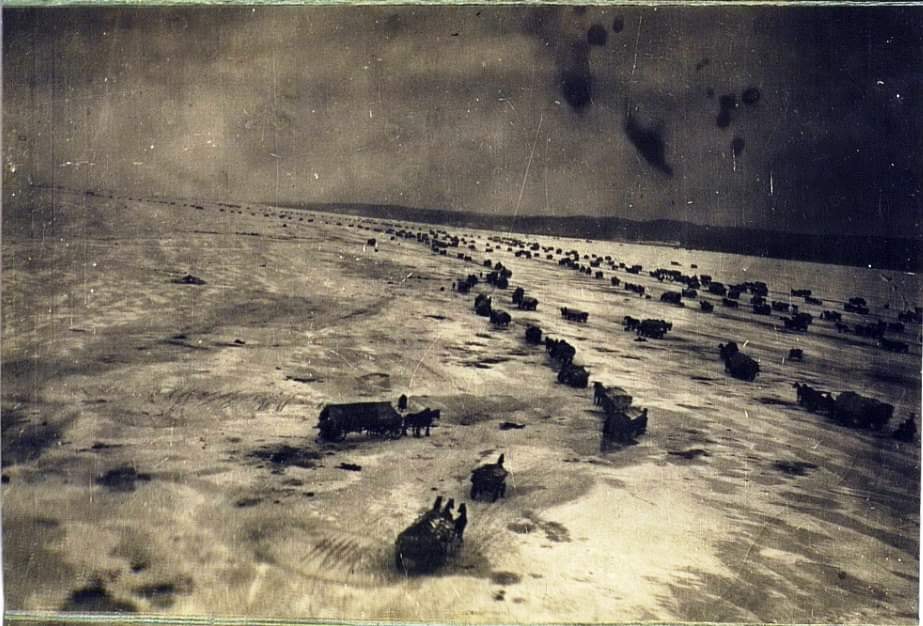
What is known with respect to Frieda’s internment time and deportation is that she was incarcerated in two different labor camps and one POW Camp. The first labor camp was several hundred kilometers east of Moscow. In this camp, German women were forced to do heavy labor such as the manual unloading of coal from trains. Half of the approximately 800 German women in this camp died within the first six months that Frieda was interred. After about 12 months (perhaps in early 1946), Frieda was transfered to a second camp (Gulag). Her transfer was accomplished partly by train and partly by forced march. We know this happened in winter because Frieda recalls that she was forced to walk across the frozen Volga river.  At the second camp, Frieda was forced to pile peat moss and/or still wet bricks for drying before they were fired. For a short time period, she was incarcerated in a third Gulag, this was a German POW camp where she cared for wounded and injured German soldiers. The conditions in each of the camps were horrific.

Shortly before being released in 1947, the few surviving German women, including Frieda, were forced to sign an unintelligible (to them) Russian document. Frieda remembers that the few survivors joked, they had probably just signed their own death sentences.

In the end, Frieda came away from her two plus year ordeal with a single document; it looks something like a birth certificate and is written in Polish.  It is possible that the document might actually be a translation of a German original. (Hopefully we will obtain a copy and be able to translate its contents.) Every other material possession of Frieda Wedhorn was lost.  Still somehow, she managed to escape with her life. She finally arrived and was released to a West German reception camp in Frankfurt/Oder in 1947.

As for the rest of the Wedhorns:

  • Otto Wedhorn Senior was fortunate and survived the conflagration. Otto and the surviving members of the Wedhorn Family, with the exception of Frieda, were expelled into what became the German Democratic Republic (DDR- Deutsche Demokratische Republik; the Soviet Zone of Germany). In 1963, Otto Wedhorn (Sr.) died in a hospital near Fichtenwalde, a few days after having a stroke (Gehirnschlag). He was 84 years old. His daughter Kaethe was with him up to his end; but his daughter Frieda, could not visit him any more after the Berlin Wall was built in 1961.
  • Ella Recht was raped by invading Soviet troops in her home in Orlofferfelde. In that same time period, Ella Recht’s deportation to the Russian Gulags was not undertaken because she had contracted typhus.  The Russians let her go due to the risk of spreading infection.  Ella died in a hospital in Elbing on May 18, 1945. It was her silver wedding day.
  • Willi was killed in battle on the last day of World War 2, in Italy.
  • Emma Recht was the „Schwiegertochter“ (daughter-in-law) of Hermann Recht and the “Schwägerin” (sister-in-law) of Ella geboren Recht and Otto Wedhorn, Sr. Emma Recht later found her husband; Ernst Hermann Ferdinand Recht had been reported missing in action after having been conscripted into the local “Volkssturm” together with many old men and young teenage boys. They both managed to survive the war; sadly, they had lost both of their sons (Ernst Recht and Egon Recht). Following the war they lived near Potsdam.
  • With the erection of the Berlin wall in 1961, the ‘Brandenburg/ Potsdam’ branches of the Wedhorn family became, what was for most of its older members, permanently separated from their Western German relatives.The remnants of the family re-united when Germany reunified in 1990 (Deutsche Wiedervereinigung).

And as for Else Recht geboren Ekrut:

  • Otto Wedhorn Jr. reported that after the end of WW2, when the Soviets turned governmental administration in Westpreußen over to the Poles and ethnic Germans were being expelled from Poland, Else Auguste Recht (geb. Ekrut?) did not flee with the remaining members of the Wedhorn family to Fichtenwalde, near Berlin. Rather than joining Otto Wedhorn’s sisters in Fichtenwalde, she is believed instead to have fled to Danzig where she likely still had family or friends. It was at this time the Wedhorns lost contact with her.
  • Another family story reports that Soviet occupation troops “beat, assaulted and threw Else into the Nogat river” near the Senger farm in Zeyersvorderkampen, Westpreussen.

Using Cyprien Tanguay’s texts…

Over the past few weeks, I have received numerous requests for guidance on how to use Tanguay’s texts for genealogy research (and where to get them).  I have to admit that it does seem a bit odd to me that these genealogy texts are not well understood.  But after having received the requests, I did some searching on the web only to note that there are no real guides readily available for novices, so here’s my feeble attempt at creating one.

By way of a bit of background, the texts discussed here are called: Dictionnaire généalogique des Familles Canadiennes depuis la fondation de la colonie jusqu’à nos jours (Genealogical Dictionary of Canadian Families from the Founding of the Colony to Our Time). This body of genealogical work is generally recognized as the seminal work for all French-Canadian genealogy.  It is “printed” in seven (7) volumes. This huge and historically significant textual documentation is most amazingly the work of but one single person, Father (Abbé/ Abbott) Cyprien Tanguay. To quote Dictionary of Canadian Biography Online:

To compile this genealogy of Canadian families Tanguay systematically examined the parish records of the country, indeed, of the whole of French-speaking North America, copying entries of baptisms, marriages, and burials. During his lengthy journeys through continental Europe he was able to examine in detail the holdings of strategic archives, such as the Dépôt des Archives de la Marine in Paris and collections in Belgium, Prussia and other German states, and Italy.

To begin with, every user of Tanguay’s texts needs to be clear on what these documents are and what they are not…

They are:

  • In the Public Domain and have been since 1952. As such, free electronic versions of the Tanguay texts are available on-line.  The best version is currently resident in BANQ (Bibliothèque et Archives nationales du Québec- National Library and Archives of Quebec).  These are now Freely downloadable in pdf form. (Note: ManyRoads will be replacing our downloads with those from BANQ)
  • Volume 1 covers families 1608 to 1700. This includes all family surnames.
  • Volumes 2 to 7 cover families until ‘about’ 1765 although a very few lines reach as far as 1880.
  • Volume 2 covers family surnames Abel à Chapuy
  • Volume 3 covers family surnames Charbonneau à Eziéro
  • Volume 4 covers family surnames Fabas à Jinines
  • Volume 5 covers family surnames Joachim à Mercier
  • Volume 6 covers family surnames Mercin à Robidoux (and yes, that is my family surname…)
  • Volume 7 covers family surnames Robillard à Ziseuse
  • The original set of texts are released under ISBN 0-88545-009-4 (Ed. Elysee)

The texts are not:

  • Perfect; there are errors in the texts.  Most seem to me to involve missing information rather than mis-information. And yes, there are texts providing corrections to Tanguay’s work.  The errata text I am most familiar with was written by Joseph-Arthur Leboeuf; Complement a Tanguay (A compliment to Tanguay) a volume of 600 pages -  which reports the errors and omissions of Tanguay.

Use

When using Tanguay’s texts it is important to note that every entry includes: date and place of wedding of the married pair/couple, the husband and his father (located in the right hand margin), the wife and her father, and finally their children (note the children’s names are in italics.)

Events included in the records most frequently are baptisms (b), marriages (m) and burials (s).

Additional texts published by Tanguay include (they may be purchased at this link):

  • Gleanings from the Registers (1 vol, 300 pages) – “À travers les registres” by Cyprien Tanguay, is a work of about 300 pages which contains hundreds of facts that are historically related to ancestors. This information was collected by Tanguay at the time of records perusal for the seven original volumes. (Available Free here.)
  • Directory of Canadian Clergy (1 vol, 600 pages) – “Répertoire général du clergé Canadien” by Tanguay. This work of Tanguay enumerates Roman Catholic clergy members from the beginning of New France to to 1880. This book gives historical and genealogical information of all clerical individuals and parishes where they worked. (Available Free here.)

Prussian Mennonite Research Materials

As many of you may know, my Recht family line (Hermann Recht’s family) has strong roots within what was once the Mennonite Community resident near the former Elbing and Marienburg, Westpreussen. As I conduct my Prussian Mennonite family genealogical research, this page will evolve and develop into something a bit more robust.

I am using Mendeley to gather and manage my research findings and source materials (I am also using the tool in an effort to evaluate its effectiveness for genealogy work.)  If I end up writing something profound, perhaps Mendeley will also manage my writings. In any event for those interested in viewing and accessing most of my source materials, access to them will be provided here.

Related Anabaptist- Mennonite Sources

Watch this space, more to come…
Hinaus in die Ferne

It probably bears mention that my grandmother- Frieda Senger- was a woman of many verses.  So given that my most recent visits with my mother have involved hearing a particular verse frequently; I thought I’d preserve it for posterity, especially since it is a verse I never heard while growing up.  It’s a lively little item…
Hinaus in die Ferne
Mit Butterbrot und Speck.
Das mag ich ja so gerne,
Das nimmt mir keiner weg.
Und wer das tut,
Dem hau’ ich auf die Nase,
Dem hau’ ich auf die Schnut’,
Daß es [ihm] blut’.

It turns out to be a music composition with lyrics and so it has an associated tune (a rather lively early 1800′s tune).  The verse & music was written by Albert Methfessel, 1813 (he lived between the years 1786-1869.)  Here is the tune for Hinaus in die Ferne.  A rough translation of the the verse into English follows:

Heading out for a journey
With buttered bread and bacon.
I like that so much,
None can take those from me.
And if someone tries,
I’ll smack them on the nose,
I’ll smack them on the snout,
Until they bleed.

I find it a curious set of lyrics. So, I looked it up and actually found numerous additional verses and versions.  The composition is called the Turnermarsch (Turner March).  The original score along with the most common variations may be found on the web:  here it is.  It seems that the work was created in reaction to Napoleon’s occupation of German lands.  A fairly robust little history (in German) may be found on Wikipedia.de.

Ah, just another happy time… and another happy song!

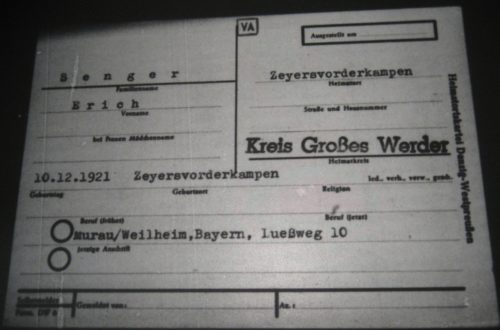
Heimatortskartei gets personal

Almost all ManyRoads readers know that my mother’s family was among those expelled by the allies from the the former German Eastern province of West Prussia following World War 2.  Today, I had the great honor to read and view the Heimatortskartei records of my relatives and their friends/ neighbors.  I have placed the images I found on line and will update this image library as I find more documents.

For those interested, here are the images I managed to obtain.

West Prussia (near Zeyer) Mennonite Births, Deaths, Marriages

The links on this page have been sourced from the Prussian Mennonite Genealogy Resources site. I have rearranged the original links and grouped them for my convenience. Please note, these materials are used without permission because there was no copyright notice or location from which to request usage permission.

All ownership and rights of this material belongs to its original author(s). If you wish to use the most current information and links on these topics and more, I encourage you to visit the original site.

Any research queries should be directed to one of the Mennonite archives in Canada or the U.S.

Elbing-Ellerwald
Jungfer
Ladekopp
Thiensdorf/Markushof
Tiegenhagen
Zeyer

Mennonite Histories of West Prussia

The links on this page have been sourced from the Prussian Mennonite Genealogy Resources site. I have rearranged the original links and grouped them for my convenience. Please note, these materials are used without permission because there was no copyright notice or location from which to request usage permission.

All ownership and rights of this material belongs to its original author(s). If you wish to use the most current information and links on these topics and more, I encourage you to visit the original site.

Any research queries should be directed to one of the Mennonite archives in Canada or the U.S.

Danzig District

Marienwerder District

Danzig- Westpreussen (West Prussia) Heimatortskartei

For those wishing to gain access to photographic images of the actual Heimatortskartei from the towns, cities & villages which were near what used to be Danzig in West Prussia, they are available on FamilySearch. (LINK to Danziger Gebiet (Area ) Westpreussen (West Prussia) Heimatortskartei).[SinglePic not found] [SinglePic not found]These represent images of a civil register (handwritten and printed works) of refugees from the former province of Danzig-Westpreußen, Germany, now Gdańsk and Bydgoszcz provinces in Poland. For those of us whose families were expelled from their homes by the allies after World War 2, this represents a set of documentation that could contain the handwriting of ‘our’ family members, from that place and time.

Ich finde es kaum zu glauben das so etwas auf dem Internet ‘liegt’.  (I find it hard to believe that something like this is available on the Internet.)

For more details on the Expulsion see:


German Expulsions & the Diaspora

While doing some research for an email response, I came across a body of work related to Die Vertreibung (The Expulsion). These papers are presented on the website of Dr. Stefan Wolff.

Stefan Wolff is Professor of International Security at the University of Birmingham, England, UK. A political scientist by background, he specialises in the management of contemporary international security challenges, especially in the prevention, management and settlement of ethnic conflicts and in post-conflict stabilisation and state-building in deeply divided and war-torn societies.

  • Stefan Wolff, “Stefan Wolff,” political research, academic, Stefan Wolff, n.d., http://www.stefanwolff.com/.
Ethnic Germans in Poland and the Czech Republic: A Comparative Evaluation

Co-authored with Karl Cordell and subsequently published in Nationalities Papers (vol. 33, no. 2, 2005), this paper seeks to analyze the nature of the German minorities in the Czech Republic and Poland. In order to achieve this goal, the relationship between Czechoslovakia/ the Czech Republic and Poland with the Bundesrepublik Deutschland (Federal Republic of Germany/FRG) forms an essential intellectual backdrop to our main theme, while reference to the Deutsche Demokratische Republik (German Democratic Republic/GDR) will be made only as and where appropriate. Although we do consider wartime German occupation policy in both Poland and the Czech lands and the consequent expulsion of ethnic Germans from Poland and Czechoslovakia, due to limitations of space, these themes, which have been exhaustively dealt with elsewhere, do not form part of our main focus of study.

Ethnic Germans in Poland and the Czech Republic

Germany and German Minorities in Europe

Eventually to be published in Divided Nations and European Integration (ed. by Tristan Mabry, John McGarry, and Brendan O’Leary, University of Pennsylvania Press, 2010), this paper considers the various causes, consequences, and responses to the ‘German question’. Demographically and geographically complex, the dynamics of the divided German nation are now apparent in the context of European integration.

Germany and German Minorities in Europe

Ethnic Germans in Poland and the Czech Republic: A Comparative Evaluation

Co-authored with Karl Cordell and subsequently published in Nationalities Papers (vol. 33, no. 2, 2005), this paper seeks to analyze the nature of the German minorities in the Czech Republic and Poland. In order to achieve this goal, the relationship between Czechoslovakia/ the Czech Republic and Poland with the Bundesrepublik Deutschland (Federal Republic of Germany/FRG) forms an essential intellectual backdrop to our main theme, while reference to the Deutsche Demokratische Republik (German Democratic Republic/GDR) will be made only as and where appropriate. Although we do consider wartime German occupation policy in both Poland and the Czech lands and the consequent expulsion of ethnic Germans from Poland and Czechoslovakia, due to limitations of space, these themes, which have been exhaustively dealt with elsewhere, do not form part of our main focus of study.

Ethnic Germans in Poland and the Czech Republic

A Foreign Policy Analysis of the “German Question”: Ostpolitik Revisited

Co-authored with Karl Cordell and subsequntly published in Foreign Policy Analysis (vol. 3, no. 3, 2007), this paper takes a constructivist approach to foreign policy analysis. Using German policy vis-à-vis Poland and Czechoslovakia/the Czech Republic as an example, we examine Ostpolitik since the 1960s as a case of a norm-driven foreign policy. We argue that the content of Ostpolitik, including changes over time, can be explained by reference to a prevailing norm consensus in Germany about the country’s foreign policy towards Central and Eastern Europe, which began to develop in the 1960s.

Ostpolitik Revisited

WW1 German Casualty Lists – 1.WK Armee-Verordnungsblatt Verlustliste

dlibra in Poznan is in the process of electronically disseminating German Casualty lists from WW1.  As of this writing, the library has published dozens of documents from the years of 1914, 1915 and 1918.  You may find the complete lists (as they are updated) on the Wielkopolska Biblioteka Cyfrowa site.

Note: These lists are neither digitally indexed nor searchable.  In order to find those you seek, you will need to read the lists ‘manually’.

If you wish to search more broadly for German War Casualties, you might try the Kriegsgräberfürsorge Gräbersuche-Online.

Worse than War

In keeping with our emphasis on die Vertreibung and Ethnic Cleansing, we recommend you either view Daniel Jonah Goldhagen’s documentary “Worse Than War” or read his book of the same title.

To quote Dr. Goldhagen: (source website)

I hope that you choose to have a look at it. Whether or not you end up agreeing with every conclusion and proposal in Worse Than War, the [documentary] offers a plethora of new information and perspectives not just on genocide or eliminationism but on critical aspects of humanity and modernity, society and politics. I hope to rouse your intellect and conscience, even if I at the same time challenge your views about the most foundational matters of politics…

“Dit” Names

The use of Dit names in French Canada (Bas Canada) is both very common and confusing.  Currently, I am working with another Deyo cousin to attempt to unravel yet another Deyo mystery. This part of my family line is now being reworked for the fourth time!  I think I might be getting good at it.  Briefly here’s the mystery…Genealogy Warning

It appears, now, that I might be descended from a woman we believe was named Honoree Beaulac. Her family name (surname) has the following common dit names (there may be others as well):

  • Desmarais
  • Lake
  • Lefebvre
  • Marest
  • Beaulaque
  • Hertel (a nice German sounding name, eh?)

(Click here to view an excellent table which maps common dit names to Surnames French-Canadian: Variants, Dit, Anglicization, etc. provided by the American-French Genealogical Society. on the American-French Genealogical Society.) By the way you will also find a listing of variations in Tanguay’s text (volume 7)… we keep a copy on ManyRoads.

To add even further joy into the equation, her first name (given name) is also commonly altered to include or be (in French/ English):

  • Honoret
  • Nora
  • Honoré
  • Honorée

(Click here to view an excellent table which maps common given names in French-English-Latin on the American-French Genealogical Society.)

As you might well imagine, this combination of names gives us a little bit to search and rummage around in.  More importantly if you are researching family members in Bas Canada, you too will certainly encounter this form of adventure. Enjoy the mystery and challenge!

Here is a list of some sites providing explanations of “Dit” names:


Rituel du Diocèse de Québec

If you are performing research in Quebec, the Rituel du Diocèse de Québec may prove useful in providing clues regarding the name or names of your ancestors. To quote the PRDH:

Among Catholics, choice of first name wasn’t left to chance or parents’ imagination. On the contrary, the church liked to control the attribution of first names to ensure that on the day they were baptised, children received the name of a saint who would guide them throughout their life. In the Rituel du Diocèse de Québec, which laid out the rules to follow for writing baptismal, marriage, and burial certificates in Quebec, Monsignor de Saint-Vallier stipulated, “The Church forbids Priests from allowing profane or ridiculous names to be given to the child, such as Apollon, Diane, etc. But it commands that the child be given the name of a male or female Saint, depending on its sex, so that it can imitate the virtues and feel the effects of God’s protection.”

Flucht aus Polen

They said,
the war was over.
Still,
the suffering continued.

[SinglePic not found]They were hungry.
Alone.
Afraid.

Father had never come home,
from Stalingrad.
Brother, an infant,
was dead.

Home was gone,
given to others.

Of the family,
Mother and the two sisters survived.
They had
their fear,
their lives,
their uncertainty,
and
each other.

Mutti had sent Lilli to beg a cup of food from another expelled family… (photo, Lilli, age six or seven, is in the dark coat with cup). Her face shows the the feelings of humiliation she still remembers.

This poorly written piece is true. Circumstances such as Lilli’s Vertreibung can never be justified; yet, they continue. Different wars, different peoples, the same horror, the same pain…

[SinglePic not found]To complete the story, a few weeks ago Lilli, the girl kneeling next to the fire in this photo, called (some 66 years after these events). She had never seen this photo of herself. She did not know it had been taken. I am glad Lilli saw her photo here and we (Becky & I) are even more glad to have made Lilli’s acquaintance.

N.B.: By way of follow-up, we have had the great good fortune to find an additional photo of Lilli and her Mutti trying to escape Poland in the winter of 1945.


Die Gefangenen – Ab nach Sibirien (ZDF)

Die Gefangenen – Ab nach Sibirien (ZDF – a documentary about German prisoners of war who were sent to camps in Siberia)


Verlorene Heimat – Flucht und Vertreibung (MDR)

Verlorene Heimat – Flucht und Vertreibung (MDR)

Unfortunately, it is not easy or simple to find factual information about controversial subjects like die Vertreibung (the Expulsion). We extend our sincerest appreciation to all our readers who have shared their experiences, links, articles, and photos on the subject.

We hope that you find these videos informative and helpful in developing a more complete and balanced understanding of what happened to Eastern Germans following the loss of World War 2.

For more background on why we present this information, please read:
On the “Vertreibung”, Expulsions, and Hope
.

Note: as with most YouTube videos these films are presented in segments most frequently around 10 minutes in length.

More

Wo sind meine Eltern? (postwar German TV)

Wo sind meine Eltern? (postwar German TV)

Unfortunately, it is not easy or simple to find factual information about controversial subjects like die Vertreibung (the Expulsion). We extend our sincerest appreciation to all our readers who have shared their experiences, links, articles, and photos on the subject.

We hope that you find these videos informative and helpful in developing a more complete and balanced understanding of what happened to Eastern Germans following the loss of World War 2.

For more background on why we present this information, please read:
On the “Vertreibung”, Expulsions, and Hope
.

Note: as with most YouTube videos these films are presented in segments most frequently around 10 minutes in length.

More

Die Gustloff (ZDF)

Two documentaries on the Gustloff from ZDF (on YouTube).

  1. Die Gustloff – Hafen der Hoffnung (ZDF)
  2. Die Gustloff – Flucht über die Ostsee (ZDF)

Unfortunately, it is not easy or simple to find factual information about controversial subjects like die Vertreibung (the Expulsion). We extend our sincerest appreciation to all our readers who have shared their experiences, links, articles, and photos on the subject.

We hope that you find these videos informative and helpful in developing a more complete and balanced understanding of what happened to Eastern Germans following the loss of World War 2.

For more background on why we present this information,  please read:
On the “Vertreibung”, Expulsions, and Hope
.

More

Flucht und Vertreibung – Das Schicksal der Vertriebenen (ZDF)

One of the most comprehensive documentaries on the German Expulsions & Flight from ZDF (on YouTube).

Unfortunately, it is not easy or simple to find factual information about controversial subjects like die Vertreibung (the Expulsion). We extend our sincerest appreciation to all our readers who have shared their experiences, links, articles, and photos on the subject.

We hope that you find these videos informative and helpful in developing a more complete and balanced understanding of what happened to Eastern Germans following the loss of World War 2.

For more background on why we present this information, please read:
On the “Vertreibung”, Expulsions, and Hope
.

More

Frieda Senger- Cyrillic Conversion

As many of you are aware, I have been trying to decipher a Russian document that Soviets created as justification for sending my grandmother into a Gulag following WW2. To help me with my sleuthing, I have found and used the following tools:

  1. Russian letters & script
  2. Russian online keyboard
  3. Automatic Cyrillic Converter

My grandmother’s document may be viewed here: Frieda Senger -Suchdienst & Soviet Records.

What I did to help me in my search was to carefully look at the Cyrillic script and attempt to define each letter using the script as presented on the site at item 1 above. Once I found (or thought I found) the script letters, I entered them in using the Russian On-line Keyboard (using item 2 above). With the typed words in hand, I Googled and yanexed (Russian search engine) seeking hits on my words. In my case, they did not find anything useful.

SO next, I used the Automatic Cyrllic converter (item 3 above). Entering phonetic variations on my grandmother’s hometown (Zeyervorderkampen) in the converter, I discovered that the Cyrillic script/ typing looked an awful lot like Zeyervorderkampen.  Originally it had been translated as Zecher Werder- Kosipel, but I could not find anything that matched that name or anything close to it.

Being a big proponent of following the obvious, I now assume that my Oma’s bill of indictment does not place her in a location other than Zeyervorderkampen prior to her 2 plus year incarceration in the Chelyabinskaya Gulag.

Also today, I received the following note from my friend Martin:

Mark, hier kommt nun mein Versuch zur Klärung Deiner Frage:
1. In der russischen Anklageschrift wird als Geburtsort Pietzkendorf , Rayon (Kreis) Groß Werder genannt. In dem Schreiben vom DRK München vom 15.1.2010 heißt der Geburtsort Zeyer(s)vorderkampen. Pietzkendorf liegt etwas westlich von Tiegenhof, das andere Dorf Zeyersvorderskampen liegt östlich, im Nogatdelta, aber beides im Kreis Großes Werder. Woher die widersprüchlichen Angaben kommen, ist mir nicht klar.
2. in dem gleichen russischen Papier, nur eine Zeile tiefer, wird der Wohnort bezeichnet mit “Zecher-Ferder- Kaxxxx.
Ich lese das als Zeyervorderkampen. Das Y im Zeyer… hat der Mann wohl als X gelesen, das ist das cha im russischen Alphabet, also Zecher…
Ferder könnte man wohl mit Vorder.. übersetzen (wie gehört, gesprochen), und das dritte Wort beginnt zumindest mit Ka.., die weiteren Buchstaben kann nicht mal meine Irina entziffern. Dafür habe ich meinen Freund, russischer Übersetzer, morgen hier, und dann hoffe ich, dass wir das endgültig klären.
Grüße über den Teich – Martin

I may not be right, but I feel confident that I am closer to the truth today than I was two days ago when I started.

Zeyer- the end

Recollections of an officer of the chief administrative district in Zeyer.

Johannes Jahn, farmer and farm owner in Zeyersvorderkampen.
see original document

This document has been translated and reworked with additional family history
by Mark Rabideau.
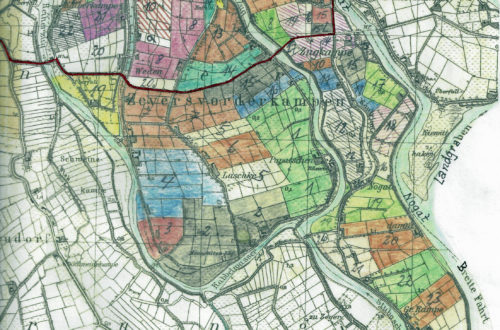
zeyer ev. kirche The District of Zeyer was located in the northeast corner of the Free State of Danzig, in the area that included the towns of Grosses Werder, Zeyer, Stuba and Schlangenhaken. The district followed the Nogat River, starting at the village Zeyer to the Vistula Lagoon estuary. The total area of the District was about 2510 hectares (~6200 acres)  of which 480 hectares (`1200 acres) were the village of Zeyer, Stuba with the village of Neudorf was about 610 hectares (~1500 acres) , Zeyersvorderkampen about 1020 hectares (~2500 acres)  and Schlangenhaken another 400 hectares (~1000 acres). The total population of the district was roughly 1735 inhabitants of German descent and origin. The population was exclusively engaged/ employed in agriculture and related professions.

Up until 1945, the farms located in the area were in good condition. The majority of the farms and agricultural property holdings were small to medium sized. The lands of Zeyersvorderkampen were particularly favorable to dairies; the larger farms historically were also devoted to rapeseed, wheat, and sugar beet cultivation.

While Zeyer and Stuba were built-up areas, Zeyersvorderkampen and Schlangenhaken were so-called scattered settlements. Zeyer was considered to be the oldest settlement in the district. School texts chronicled settlement in the Zeyer village area as early as 1200; followed somewhat later by the village of Stuba.  Zeyersvorderkampen, which consisted of several islands in the Nogat delta, was settled much later, around 1730.  The town of Schlangenhaken was newest settlement in the district, it came into existence in 1929. Schlangenhaken was settled in the uncultivated areas of the Kampen Nogatmündung by order of the Danzig Senate.

Milk production was the key agricultural commodity produced in the district. Even during the war (WW2), a modern dairy under private ownership was located in Zeyer; while a cooperative dairy was located in Zeyersvorderkampen [Papatschen cooperative was partly owned by Richard Senger].
[see:

A third dairy, with offices in Stuba, was shut down during the war and merged with the dairy supplier in Zeyer.

In the commercial sector, there were four shops located in the village Zeyer including, grocery and hardware stores; one wind mill; a restaurant with bakery operations; a dry goods store selling clothing, footwear and dry goods. Additionally, there was a bakery and an inn (guest house).

Commercial enterprises in Zeyer included: a dairy, a butcher, a wheelwright, a blacksmith and two container manufacturers. The public sector in Zeyer included government buildings, two schools, two customs officers houses, a post office, a parsonage, and three village offices and a fire station.

The Zeyer Lutheran Church was located on the opposite bank of the Nogat in Elbing County.

On January 21, 1945, the first Russian tanks arrived unexpectedly in Elbing, just 8 km away. The population of the administrative district Zeyer received notification that night from the district office in Tiegenhof to immediately evacuate the area. Although the evacuation was prepared for in theory, it did not go according to the pre-arranged plan.  The original plan was to evacuate across the Vistula but because early that morning all the roads had become congested and overrun by the fleeing population, that evacuation plan was impossible. Additionally, the rural population found it very difficult to leave their farms. At the same time, the German Wehrmacht had hurriedly constructed a front along the Elbing River behind which people felt temporarily secure. Only the population of villages of Zeyer and Stuba fled towards Zeyersvorderkampern and Schlangenhaken.

During that same time, the entire livestock of the region had been driven off by Räumkommandos (Jeeps, personnel carriers) and grain reserves had been taken, as well. All that remained in the area were food stuffs capable of feeding the population for a short time.

The church came under artillery bombardment during the course of the fighting on February 3, 1945 as did the Zeyersvorderkampen dairy, three taverns, two dry goods stores, the forge and public buildings including: a school, five town buildings and the fire station.

Local horse stocks were taken over by the army. At the onset of battle, destruction of the buildings in Zeyer was limited to those on the edges of town. Initially only 3 properties were burned to the ground. However, very many buildings suffered heavy damage from artillery shelling and gun fire. But, the greatest destruction to the Zeyer area occurred after the area was occupied by Russians and Poles.

After the occupation, those who were left behind in the area no longer had any way to escape, since the Russians had already pushed through the province of Pomerania to the Baltic Sea.

On March 8, 1945, the German army was forced to retreat from its positions on the Nogat. The remaining civilian population was forced to withdraw to the Vistula Spit, where they were met by ships, mostly brought from Denmark. A small portion of the population in Zeyer could not bring themselves to leave their homes and awaited the arrival of the Russians. Most of those remaining people were working class families, the elderly as well as farming families [including Richard and Frieda Senger, ages 66 and 46 respectively.].

Based upon statements from a number of the survivors of the fall of Zeyer, those who were later expelled by the Poles, we know the following. After the arrival of the Russians in Zeyer on March 9, 1945, the entire remaining population was rounded up. All men between the ages of 16 and 60 were transported to the east [for incarceration in Soviet Gulags- concentration camps]. A number of the remaining survivors were held for questioning by the Soviets and ultimately tortured to death. Shortly after the arrival of the Russians in Zeyersvorderkampen the first murders began. The following were executed by the Russians for unknown reasons:

  • Farmer Franz Thiessen (7O years)
  • Farmer Adolf Block
  • Hulda Janzen and her daughter Klara Eichhorn with 1 year old son/ grandson
  • Mr. & Mrs. A. Mierau
  • 18-year-old Christine Wichert
  • Anna Braun of Zeyersvorderkampen
  • four-member family of farmer Fritz Dudenhöft
  • disappearing without a trace were Mr. & Mrs. Rathke Zvk

All women who remained were forced to be available for the pleasure of the Soviet troops, until the Soviet troops were withdrawn. [On the 17th of March 1945 Frieda Senger was indicted by the Soviets and assigned to forced labor camps- concentration camps. She was released in 1947. Between 1945 and 1947 Richard Senger was a forced laborer on what used to be his farm.]

What remained of the population of Zeyer was forced to go to Elbing to try and find food, as none was provided.

As the Russian troops withdrew and the first Poles moved in as an adventurous, unruly rabble. They looted houses of anything that remained from what the Russians had left behind. The Russians took all surviving animals and the best furniture. Agricultural implements and machinery were gathered by the Poles, bartered and taken away. The Vistula and Nogat dikes were breeched or blown up thereby flooding the entire countryside. The withdrawing Russians built bridges and walkways as needed from the materials remaining of destroyed homes and buildings. Under the management of the Poles, the devastation continued.  Buildings were abandoned due to lack of heating fuel or power; according to reports, many houses were also left without windows and doors.

The loss of life continued as many committed suicide. The remaining German population lived in Poland under the worst possible conditions; they received far too little food and were forced to do hard labor every day under severely abusive conditions.

Germans were outlawed. The new residents could do with them what they wanted. Under these brutal circumstances, the forced 1947 German expulsions were initiated. [This includes the same time frame during which 68 year-old Richard Senger began his walk on foot to West Germany. ]

Old, frail people; women with young children were forced to walk the 15 km [9 miles] [from Zeyer] to Tiegenhof in the freezing cold. In Tiegenhof, they were loaded into open rail cars bound for Marienburg; any baggage weighing more than 30 pounds was taken from them. From Marienburg, the journey continued to Halle in the eastern zone [Soviet Zone] of Germany where the deportees usually were force relocated. Numbers of deportees did not survive the hardships and died.

In the villages [Soviet style] collective farms were established because the Poles were not able to manage the farmlands privately.

The church came under artillery bombardment during the course of the fighting on February 3, 1945 as did the Zeyersvorderkampen dairy, three taverns, two dry goods stores, the forge and public buildings including: a school, five town buildings and the fire station.

Deutsche Mundarten- German Language

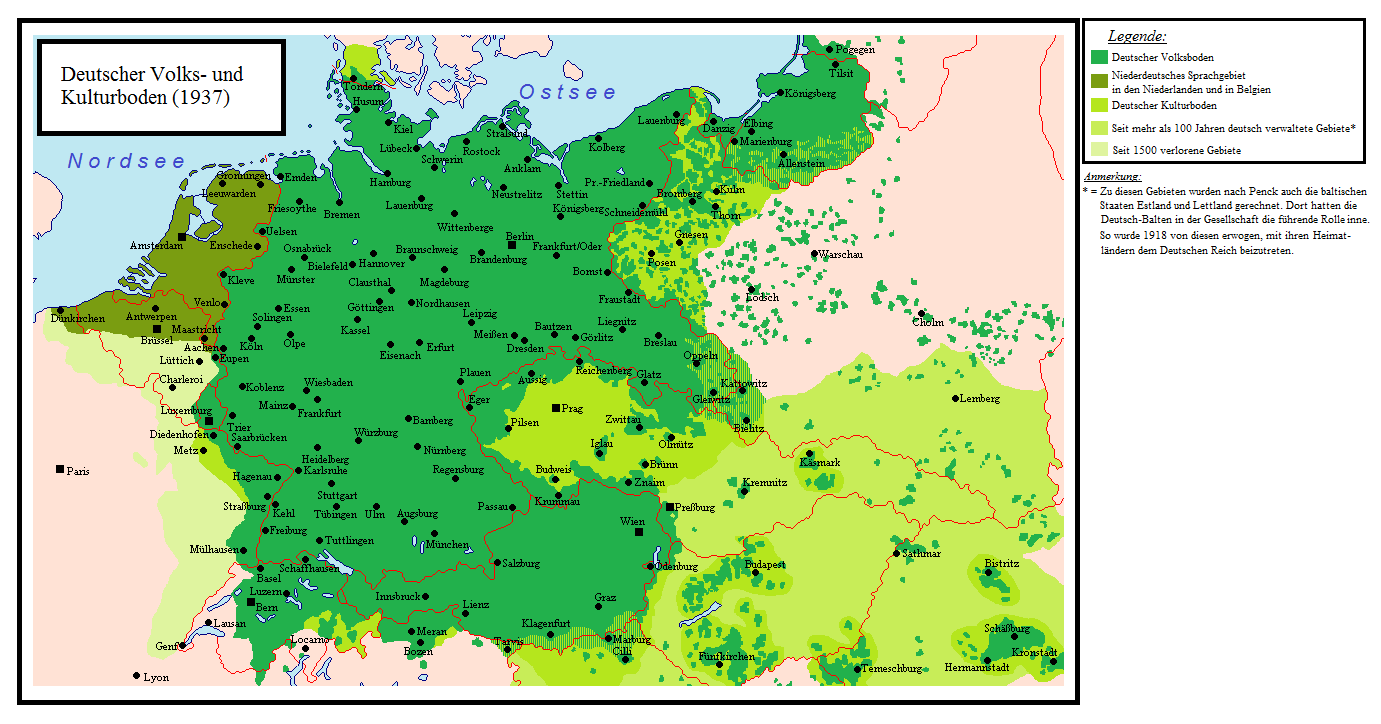
The maps on this page indicate where various European German speaking peoples lived prior to the German Expulsions (Vertreibung) post-World War 2.

1937-Deutsche-Mundarten

Auf deutsch
* Beschreibung: Darstellungskarte der deutschen Mundarten im Jahre 1937. Daneben werden auch die Dialektgebiete in Holland und Belgien angeführt, die in der deutschen Sprachwissenschaft noch bis 1945 als Teil des deutschen Sprachgebietes galten. Diese Gebiete sind farblich blasser gestaltet.
* Zeichner: Postmann Michael
* Lizensstatus: Public domain

English:

* Green: Upper German
* Blue: Central German
* Orange: Low German
* Light orange: Dutch
* Rose (light and intense): Frisian
* Light blue: Limburgish

Description: Representation map of the German dialects in the year 1937. Mapmaker: Postmann Michael

The following map gallery illustrates the historical migration of Germans to the East as well as the pre-World War 1 location of other linguistic groups.

Papatschen Käserei (Meierei)

In Zeyervorderkampen during and before World War 2, there was a small Käserei (Meierei) Dairy that was owned, all or in part, by Richard Senger.

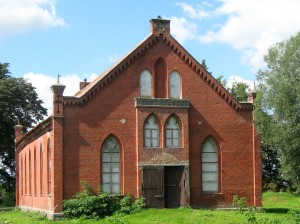
Based upon maps and analysis of the region (today Kepiny Male) by Rainer Glodde-Mueller during his 2010 journey to the area, it is believed that the following photos are what remains of that past business.  Obviously the buildings had been worked on in the early 1950s (see the photo with the dated stone near the roof peak).

Discussions with Luise Senger Rabideau (Richard’s daughter) were not definitive in identifying these buildings positively. A mystery remains. Are these, or are they not, the buildings that once housed the Papatschen Käserei (Meierei)…

Any information would be most appreciated.

Polish courtesy of Google Translate:
W Zeyervorderkampen w trakcie i przed 2 wojny światowej, była mała Käserei (Meierei) mleczarskich, które było własnościąwszystkich lub części, Richarda Senger.

Na podstawie mapy i analiza regionu (dziś Kępiny Male) RaineraGlodde-Mueller podczas jego podróży do 2010 na obszarze, uważa się, że poniższe zdjęcia są co pozostaje, że w przeszłościfirmy. Oczywiście budynków została opracowana w na początku 1950 (na zdjęciu z dnia kamień w pobliżu szczytu dachu).

Rozmowy z Luise Senger Rabideau (córka Ryszarda) nie byłyostateczne w identyfikacji tych budynków pozytywnie. Tajemnicapozostaje. Czy te, lub nie są one, budynki, które kiedyśznajdowały się Papatschen Käserei (Meierei) …

Wszelkie informacje będą najbardziej mile widziane.

Further readings:

Senger Family Lands & Possesions

Deutsche Musik mit Humor (sampler #2)

The songs on this page are from the early 20th Century Germany (pre-World War 2) and have intriguing titles!

Mein Papagei frisst keine harten Eier (My parrot does not eat hard boiled eggs)

Ich fahr mit meiner Klara in die Sahara (I drive with my Clara through the Sahara)

Tante Paula liegt im Bett und ißt Tomaten (Aunt Paula lays in bed eating tomatoes)

Wer hat bloß den Käse zum Bahnhof gerollt (1927) (Who rolled the cheese to the train station)

Die schönsten Beine von Berlin (The prettiest legs from Berlin)

I’ll add more insightful songs as I find them!

Related:

  • Alte Kriegslieder
  • Deutsche Musik (Sampler)
  • On the “Vertreibung”, Expulsions, and Hope

    Of late, I have received numerous queries and comments from our readership regarding my position on and interest in the ethnic expulsions of German peoples from Eastern Europe after World War 2. I think this is a fair question that merits response.

    I guess I would begin my response by stating that expulsions and holocausts (genocides) did not start nor end with the Germans of 1930-1940s Europe.

    From a historical context some of the earliest genocides were (according to Wikipedia):

    • the destruction of Melos by Athens during the Peloponnesian War (fifth century BCE)
    • the genocides of Amalekites and Midianites (described in the old Testament).
    • the Yu Ding (禹鼎) records that Liwang of Zhou (d. 828 BC) ordered his army not to leave old and young of a rebel country alive.
    • the destruction of Carthage at the end of the Third Punic War (149–146 BC) “The First Genocide”.

    Expulsions and ‘holocausts’ continue today and have been conducted with vigor for millennia.

    In World War 2 alone there were at least four major ‘genocides/holocausts’ conducted against non-combatant civilian populations of:

    • Jews (up to 6 million),
    • Chinese (up to 16 million)
    • Germans (up to 3 million)
    • Polish (up to 2.5 million)

    Other less easily classified WW2 ‘genocides/ mass murders/ displacements’ were conducted against the Soviet controlled peoples (Russians, Latvians, ethnic Germans, etc.), American Japanese, Indians, Indochinese, Indonesians, European gypsies, and homosexuals.  Since World War 2, there have been numerous additional ‘holocausts’, including those against Cambodians, Bosnians, Rwandans, Sudanese…

    The extreme sadness is that each event is inexcusable and more sadly, few are even remembered or acknowledged. Historically, governments and peoples continually attempt to rationalize and justify their genocidal crimes in the context of some prior crime, either real or imagined, that was perpetrated upon ‘them’ previously by the ‘other’. The cycle simply never ends. There is no first crime, there is no last retaliation. It is simply a vicious hate based spiral/ cycle. In human terms, the cycle is nearly infinite in duration and scope. As someone once said: “An Eye For An Eye Makes The Whole World Blind”.

    So why do I bother to tell and document the Vertreibung story? I tell the story of the German Expulsions because my family was very fortunate to have survived the pogroms, murders, concentration camps, loss of property, etc. and because the Vertreibung bears telling. The Vertreibung was the largest ethic cleansing in history, involving the displacement of as many as 14 million people; the crimes against humanity in this event are immense and almost always ignored- especially by those most closely involved in their sanction and conduct. People need to be informed. The acts should be remembered in the hope that they will not be repeated. Most importantly, governmental or social ‘retribution’ meted out during the Vertreibung needs to be unconditionally viewed as inexcusable, unacceptable by anyone, anywhere. Crimes, genocides, expulsions such as these are unpardonable, even when they are conducted against a people who had the great misfortune of being associated with a hated and abjectly defeated government.

    Our family, your family, every family has been wronged at one time or another. We have all, almost certainly, been associated with losing wars, being on the wrong side of an issue, and being expelled from homes and lands we thought were ours. Our families have been wrongly incarcerated and punished by people who believed they were superior to us. We have been punished for our language, our color, our intellect, our beliefs and more. No family is immune.

    Fortunately each of us has a choice. We can choose to perpetuate, hide, ignore or excuse these events; or we can attempt to stop their continuance and recognize them for what they are: crimes against humanity.

    I choose to tell the tale, and I refuse to continue the cycle. The Vertreibung, like many other expulsion/ genocides, needs to be viewed in the light of day. We need to examine it, evaluate it, and our reactions to it. We need to move forward by forgiving ourselves and others. In forgiving others, we free ourselves. In asking for forgiveness, we earn the right to be forgiven.

    So, during this annual season of remembrance, love, peace, and forgiveness, I extend my fervent wish for broader understanding, acceptance, and tolerance. I hope you will join me in working for a world where we all can see and appreciate our shared humanity. A world where reconciliation is possible and we can forgive one another for our collective transgressions, while still valuing the sacrifices each of our families have made.

    Related Materials

    Sudeten Vertreibung- Sudeten German Expulsion

    “Töten auf Tschechisch”[SinglePic not found]

    Zwei Tage nach Kriegsende treiben tschechische Milizen deutsche Bewohner Prags mit brutaler Gewalt aus der Stadt. Es ist der Beginn der Vertreibung fast aller Deutschen aus der Tschechoslowakei.

    Mehr Information von diesem ZDF Film.  Hintergrunde and der DVD.

    This film details the history surrounding the expulsion of Germans from Prague, the Sudetenland and Czechoslovakia.  Both the NSDAP actions and crimes preceding the expulsion and the brutality with which the ultimate German expulsion were conducted by the Czech people and government after the war are detailed.

    More Information on the Film.   Background on the DVD.

    Deutsche Musik (Sampler)

    Popular German Music – Deutsche Musik.

    We are building this sampler collection and hope to add more music as we find it. It is our plan to add tunes from the 1920′s, 30′s, and 40′s. Over the longer term, we hope to build a similar collection for US tunes as well.

    Related:

    Newly added 28 Dec 2010:

    Erhard Bauschke: Bei mir ist nicht mehr viel zu holen (1938)

    Wiener Fiakerlied (1932)

    Ich bin verrückt nach Hilde (RUSI R 3034a), 1929

    Humoresk Melodios: Das macht der Fridolin mit einer Hand (1934)

    Previously added Music:

    Das gibts nur einmal, das kommt nicht wieder- Odeon-Tanz-Orchester

    Bei mir bist du schön- Zarah Leander (1938)

    “Lilli Marleen” by Lale Andersen (1939)

    Das ist Berlin! by Ilse Werner

    J’attendrai (Komm zurück) in Berlin, 1939

    Es geht alles vorüber, es geht alles vorbei- Lale Andersen (1942)

    Hallo! Du süße Frau- Bernard Ette Orchester- 1930

    Kriegsweihnacht- War Christmas

    I have attempted to present videos offering the music and feeling of WW2 Christmases in Germany. It is, as you might imagine, very difficult to find films that are not extremely propaganda oriented. Those presented here are more oriented to the music and mood of the time and less towards the propaganda, which is what I seek to portray here. If you know of films and music that are available for use, please let me know where to locate them and I will add them.
    More

    Battle of Verdun 1916

    This set of films documents the Battle of Verdun in which Richard Senger fought, was wounded and earned an Iron Cross 2nd Class. He served in the Prussian (German) Artillery. This is the same area where Adolf Senger was killed and is buried.

    World War I: Battle Of Verdun 1/4

    World War I: Battle Of Verdun 2/4

    World War I: Battle Of Verdun 3/4

    World War I: Battle Of Verdun 4/4

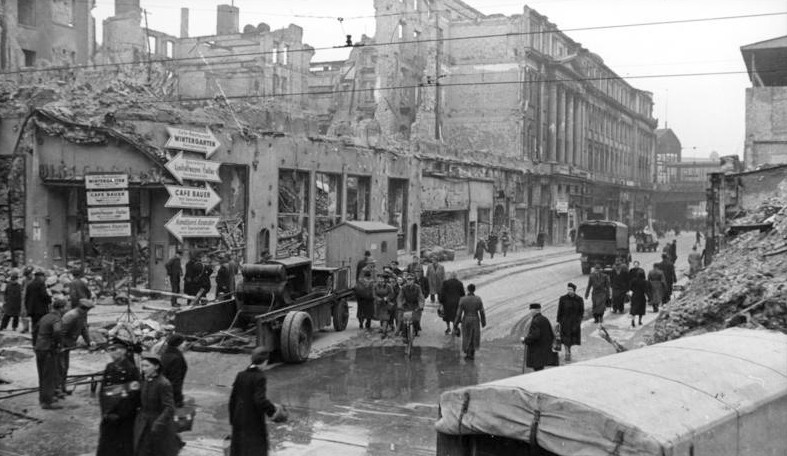
    Der Zerstörung Elbings… das Ende 1945

    Und keine hat den Sieger begrüßt…. (and no one welcomed the victors)

    The destruction of Elbing (West Prussia).. the end 1945.

    1945- Der Zerstoerung Elbings | The Destruction of Elbing

    Soviet News Reel #1

    Soviet News Reel #2

    Christmas… and another war

    For some reason Christmas, this year, reminds me of WW1. I know it shouldn’t.

    I have no idea why I am reminded of WW1- perhaps it is because I have been doing a lot of genealogy and I spend a lot of time thinking about the past. And, the past always reminds me of my Opa (Richard Senger). His life and mine have been deeply affected by the Great War (his directly.. mine vicariously).

    I know a war is historically over at a definitive point in time, but emotionally that may not be the case. It seems more like waves… each following the other, getting smaller and shallower with time and distance. The pain of the Great War continues to ripple across time, still affecting me. His pain, his strength, his loss, all remain in my heart and remain real.

    I remember his stories of the front (Verdun 1916), the stories of pain of angst of survival.

    Last night while watching television, we saw these songs sung. I shed tears for my Opa and all those who suffered…

    Christmas 1915

    Simple Song of Freedom

    Related Articles

    Vertreibung Landkarten (German Expulsion Maps)

    Related Topics

    Vertriebene aus den deutschen Ostgebieten 1

    Vertriebene aus den deutschen Ostgebieten 2

    Vertriebene aus den deutschen Ostgebieten 3

    1945 Aufteilung Deutschland

    Ethnic Cleansing Discussion Groups

    Recently a new Internet Expulsion (Ethnic Cleansing) Discussion Group opened its doors for business. european-expulsion If you are interested in learning more about, or are researching, the European Ethnic Cleansings of the 20th Century as described below, these groups may be of interest. Hopefully the discussions will remain constructive as well as informative.

    The European-Expellees Expellees * EUEEP * EUFV * UESE group describes itself as follows (click here to visit their site):

    Flight, expulsion, ethnic cleansing, banishment and exile are fates suffered by millions of Europeans in the 20th century and represent a widespread political phenomenon in the world up to this day. This group is intended to serve as a platform to enhance communication and interaction between European refugees, expellees and people who support their rightful aims.

    English, German and Italian are the official working languages of the European Union of Exiled and Expelled People (EUEEP). French will be permitted in this group as another major European lingua franca of high importance in the European institutions.

    A second group, more narrowly focused on the German Expulsions from the former German Eastern provinces, describes itself as follows (click here to visit their site):

    [The group focuses on discussions and information about ]Expulsion of ethnic Germans after World War 2.

    The expulsion of Germans after World War II refers to the mass deportation of people considered Germans from the eastern Soviet-occupied zone of Germany, and is the main part of German ethnic cleansing from eastern Germany after World War 2. Central Germany was to become its new east. The ethnic cleansing, intended for new forced border changes, was decided by the Allies at the Potsdam Conference.

    Related Areas on ManyRoads

    %d bloggers like this: