ManyRoads Performance Issues

Sadly, many of you may have noticed that we were off line for a bit; and that our site has been bouncing around, while someone (me) has been frantically attempting to repair site performance difficulties.  I guess it is safe to say, we are getting a bit on the large size, and exercise alone won’t fix our issues.

So for those of you who might be interested in a bit of techno-speak, here is what I have done to improve our site performance and lighten the load we place on the HostGator servers.

To begin with, I deleted the following WordPress plugins:

  • All in One SEO Pack
  • BulletProof Security
  • Exclude Pages from Navigation
  • File Gallery
  • Image Gallery Reloaded
  • Quick Cache
  • Secure WordPress
  • SEO Rank Reporter
  • Slideshow Gallery
  • SweetCaptcha
  • Term Management Tools
  • WP-Members
  • WP Minify

I installed the following WordPress plugins, for functionality and lighter footprint purposes):

  • Greg’s High Performance SEO to provide Search Engine Optimization while minimally impacting site and server performance.
  • WP Super Cache with WPSCMin plus the additional “min” plugin.
  • P3 (Plugin Performance Profiler): to test the impact of the site plugins on page load times.
  • Cloudflare: to protect and accelerate the website. ManyRoad’s web traffic is routed through the Cloudflare intelligent global network to  automatically optimize the delivery of web pages in order to get the fastest page load times and best performance. Cloudflare also blocks threats and limits abusive bots and crawlers from wasting bandwidth and server resources.
  • WP Smush.it: added to reduce image file sizes and improve performance using the Smush.it (Yahoo) API within WordPress.
  • Head Cleaner: to clean-up and reduce redundancies within the site theme header functions
  • jsDelivr CDN which moved all javascript from header to footer and deferred javascript processing to later in the page loading processing
  • Use Google Libraries: to use common javascript libraries from Google’s AJAX Libraries CDN, rather than from WordPress’s own copies.

Additionally, I purchased a MaxCDN account and am operating ManyRoads using CDN via WP Super Cache.

Finally, I added the following to the Many-Roads.com .htaccess file (to enhance performance):

# BEGIN GZIP
<ifmodule mod_deflate.c>
AddOutputFilterByType DEFLATE text/text text/html text/plain text/xml text/css application/x-javascript application/javascript
</ifmodule>
# END GZIP

#pagespeed
<IfModule pagespeed_module>
ModPagespeed on
# using commands,filters etc
</IfModule>
#end Pagespeed

# BEGIN Expire headers
<ifModule mod_expires.c>
ExpiresActive On
ExpiresDefault “access plus 5 seconds”
ExpiresByType image/x-icon “access plus 2592000 seconds”
ExpiresByType image/jpeg “access plus 2592000 seconds”
ExpiresByType image/png “access plus 2592000 seconds”
ExpiresByType image/gif “access plus 2592000 seconds”
ExpiresByType application/x-shockwave-flash “access plus 2592000 seconds”
ExpiresByType text/css “access plus 604800 seconds”
ExpiresByType text/javascript “access plus 216000 seconds”
ExpiresByType application/javascript “access plus 216000 seconds”
ExpiresByType application/x-javascript “access plus 216000 seconds”
ExpiresByType text/html “access plus 600 seconds”
ExpiresByType application/xhtml+xml “access plus 600 seconds”
</ifModule>
# END Expire headers

# BEGIN Cache-Control Headers
<ifModule mod_headers.c>
<filesMatch “\.(ico|jpe?g|png|gif|swf)$”>
Header set Cache-Control “public”
</filesMatch>
<filesMatch “\.(css)$”>
Header set Cache-Control “public”
</filesMatch>
<filesMatch “\.(js)$”>
Header set Cache-Control “private”
</filesMatch>
<filesMatch “\.(x?html?|php)$”>
Header set Cache-Control “private, must-revalidate”
</filesMatch>
</ifModule>
# END Cache-Control Headers

I have run diagnostic test performance on:

Many-Roads now scores at between 88-92/100 depending upon the site performance tests conducted – in the past we were at between 50-68.

If anyone out there can think of anything I ought yet to do, please let me know.  Absent brilliant ideas from on high (or maybe from one of you), I don’t believe I can do much more to see, test and understand my site’s performance and load factors.

Enhanced by Zemanta

Family Echo

Have you been looking for a way to share your genealogy efforts with family and friends? If so the latest tool set on  GenerousGenealogists might be what you need.

Recently GenerousGenealogists announced that Family Echo became part of their family of no-cost genealogy support offerings. Based in Tel Aviv, Family Echo is an open source, web based Family Tree tool set.

If you have been looking for a zero cost, secure option for sharing your Family Tree with family members and friends, over the Internet, this tool set may be exactly what you are seeking.

Be advised that you will be required to create and register an account on Family Echo, in order to used use the tool suite. Instructions, guidance and associated support are available directly through the Family Echo tool itself.

A Genealogy Q&A site

The folks at GenerousGenealogists have recently made available a new and unique Genealogy question and answer site. In many ways the site functions like YahooAnswers. The notable difference is that this Q&A site is geared towards genealogy only.

The new GenerousGenealogists Q&A site is not oriented towards finding lost relatives, or solving brickwalls; they do that in their Brickwall Forums. This new function, site, is set up as a self-help area for the development of genealogy skills and knowledge. In keeping with their philosophy of equipping genealogy buffs with the tools and knowledge needed for success, this fits perfectly.

Thus far the user traffic is very light. Hopefully though that will change as word of the site’s existence spreads. If you get an opportunity stop by and ask a question or two. See what happens. Better yet, stop by and become an active contributor.

GenerousGenealogists, RAOGK & me

As is often the case, I sign-up for more than my family thinks is good for me.  This time I agreed to reconstruct a new and hopefully improved version of what used to be Random Acts of Genealogical Kindness (RAOGK).  The renewed incarnation of RAOGK is named: GenerousGenealogistsOur activities, site, and purpose are largely modeled after that of the original RAOGK group which was founded and managed between 1999 and 2011 by  Bridgett and Dale Schneider.  Although I have to admit, I took license and expanded things ‘a bit’.  If you were familiar with the old site, all I can say is that the new one looks a lot different.

As a service, we represent a group volunteers who agree to provide free genealogy research and assistance, as an act of kindness, to “those in need.” As you might expect, when the old RAOGK site went down its database went with it; so we are looking for new volunteers.  And oddly enough, GenerousGenealogists is looking for Team Members as well! It is our hope that GenerousGenealogists outlives its founders, creators, maintainers, and carries on the tradition of generosity and giving that was begun in 1999 by the original Random Acts of Genealogical Kindness website.

GenerousGenealogists volunteers agree to donate their time for free; recipients of our assistance agree to pay/ reimburse our volunteers for any/all expenses incurred in the fulfillment of “their” requests. The assistance, research and networking we provide is made available freely and without respect or intent of financial gain.  All any of our volunteers will ever request of you is expense reimbursement and a “Thank You”.

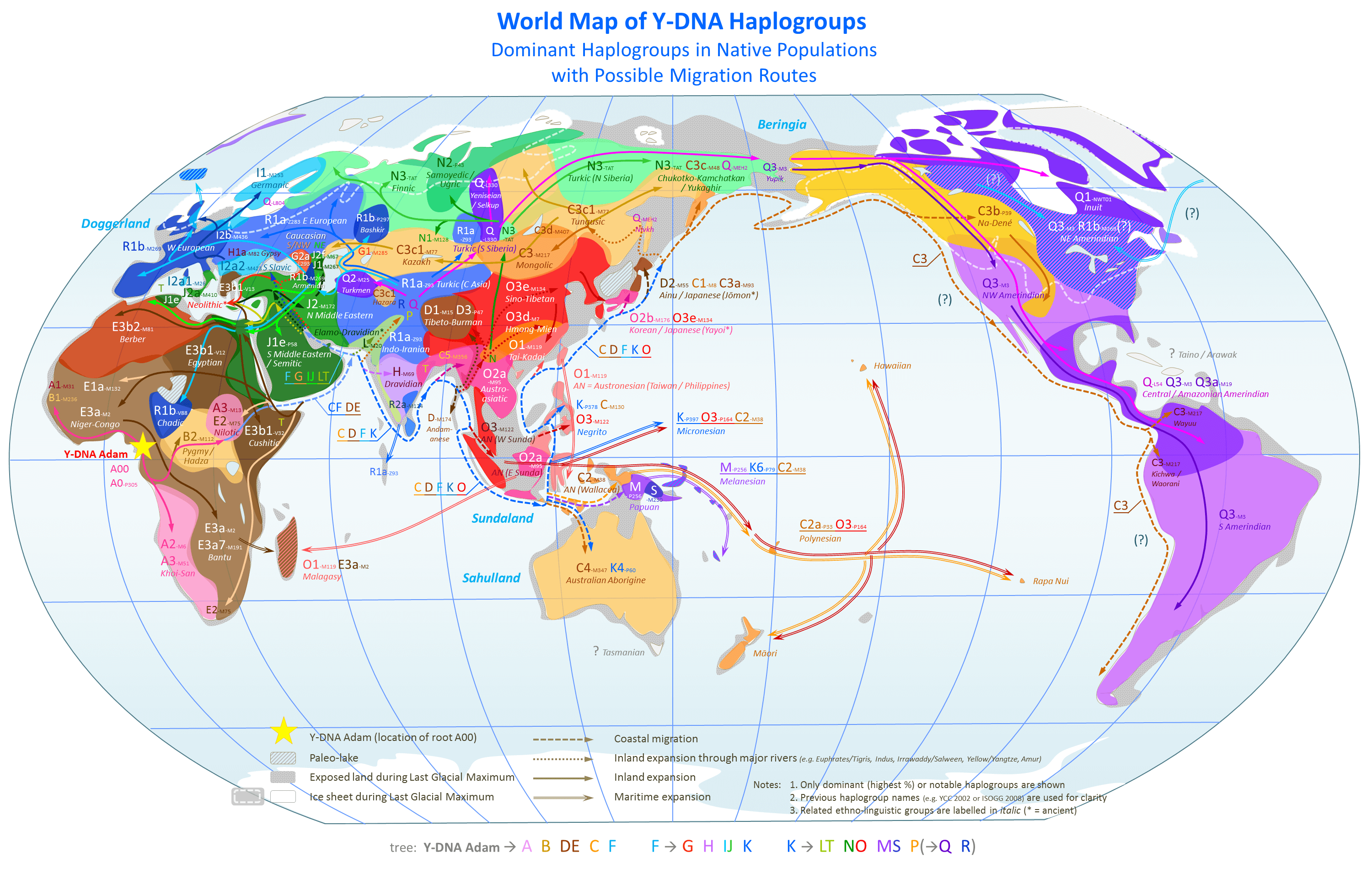
Anabaptist-Mennonite DNA project participation

As many of you may have already guessed, our families and ancestries are crowded with Mennonite and Amish peoples- Anabaptists. For years, we knew of the Rich (Henss Family Branch)  connections to the Swiss- Elsass/Alsace,  Montbeliard/ Bern communities. More recently, we have come to understand quite a bit of the Senger (Rabideau Family Branch) connections to the West Prussian / East Prussian Mennonite communities.

Because of the smallish nature of these original communities, we (Becky, my wife, and I) have elected to purchase DNA tests from 23andMe and submit our DNA test results for inclusion in the Mennonite DNA Project. This past weekend our 23andme DNA test kits arrived!  Now all we have to do is study hard and take our tests.  ;^)  Which actually means, we have to ‘spit in a tube’.  It is our hope that we will both contribute useful research data as well as benefit from the new information we obtain regarding our heritages & lineages.

As our adventure progresses, I will post more information regarding our DNA ‘project’. But for now, if you, like we, are genetically linked to any of the Anabaptist, Mennonite, Amish communities, please consider participating and adding your ‘voice’ (read, DNA) to this worthwhile research project.

Who knows what kind of insights and discoveries might arise from our collective efforts!

Anabaptist-Mennonite DNA research links:

If you are wondering whether you might be an Anabaptist- Mennonite descendant, here are several articles that provide pointers to Anabaptist Family Surnames:


“Our” Mennonite Churches in Europe

As you may have noticed, a “goodly portion” (to quote my father-in-law) portion of both sides of the Henss & Rabideau families have roots in Amish/ Mennonite/ Anabaptist traditions.  Out of curiosity, actually out of a desire to find church building photos, I did a little web research on our families’ past church homes.  As you might have guessed, nothing identifiable remains of our Prussian/ Poland Mennonite congregations, the Second World War took care of that.  However, I have stumbled across a number of our families’ Alsatian congregations on the Internet.

It is wonderful to see that many of our predecessors’ beliefs and traditions live on and that our family’s work is continued by those who remained in the home country (Heimatland/ Patrie).  The links below provide information to those Mennonite congregations today:

With respect to our Prussian/ Poland Mennonite connections The Mennonite-Polish Friendship Association freely provides documents describing the accomplishments and status of the Mennonite past in that region.

If any of our readers have information or photos regarding the history for any of these faith communities, we would greatly appreciate hearing from you.  Please use our Contact us page, we’d love to share information.

Finding Former Eastern German Place Names

One of the great challenges in researching areas like the former German Eastern Provinces Zeyer Kirche Ruins 2011-3 is that they are all gone- governments, people, Churches, libraries, Universities, and yes, in many cases, houses and villages as well.  In an effort to help me, and perhaps others, identify place names, I am creating this document with its eclectic cross reference materials.

Hopefully these documents, websites, etc. will prove useful to those of us who have difficulty in finding ‘our family’s’ former German places and locations.

Former Prussian Places & Locations
(Westpreußen u. mehr/ West Prussia & more)

Documents

Errata for 9000 Village Names in Prussia document:

  • Zeyersvorderkampen = Kępiny Małe
  • Zeyersniederkampen = Kępiny Wielkie
  • Zeyer = Kępiny
Web Sites
  • Atlas des Deutschen Reichs
  • GenWiki.de has many pages covering former German Lands.  The following are particularly relevant to my searches:

Should you have any additional pointers or corrections you’d like to contribute, please either leave a comment on this post or send me a note via our Contact form.


Swiss- Alsatian Mennonite- Anabaptist Research

This page contains information regarding source materials I am using from across the Internet to conduct Henss/ Rich family research. These links and pages will change ‘automagically’, over time, as I add, change, and delete materials in Mendeley.

If you wish, you may also join the group and contribute to the research library.

Related Anabaptist- Mennonite Sources

Mennonite/Amish/Anabaptist Research Materials

For those interested in following my Anabaptist information gathering process/ results, I will publish my Mennonite Mendeley related folder contents on this page. Because of the rather extensive listings, over time I will create numerous sub-pages that will be accessible from here. These links and pages will change ‘automagically’, over time, as I add, change, and delete materials in Mendeley.

If you wish, you may also join the group and contribute to the research library.

Related Anabaptist- Mennonite Sources

German Genealogy Research Aids

Based on email traffic I have seen lately, it seems to me that all too many people think they are doomed to failure with their German genealogical research simply because they are unfamiliar with the German language (dialects) or unaware of German speaking peoples’ histories. Genealogy-IdeasKnowing something about German and “the history of German speaking people” can certainly be very useful in conducting research. But in all honesty, there are simply not that many folks out there, no matter their daily language skills or history knowledge, who are familiar with everything about ‘old Germany’.  The Germans, like most European ethnic groups, have a long and complex history, one which is well matched to their handwriting, alphabet, short hand, and past-dated terminology.

Truth be told, almost everyone, at one time or another, needs help.  It makes little difference whether they need help deciphering old documents, be they German, French, English, Latin or in figuring out what documentation might be available for genealogical and historical research.  As my Oma (grandmother) used to tell me, “Deutsche Sprache, schwere Sprache” (The German language is a difficult language.) And so it is.  Germany’s history is long, varied and complicated as well, encompassing many turns and nuances.  There is simply a lot to learn.

As with many knowledge challenges, there are quite a few excellent tools available on the Internet, these days, to aid in solving language and other knowledge deficiencies or difficulties. When you are in need of help with your German research, I highly recommend the following documents and sites. Whether you are a expert or novice, remember almost everyone needs help at one time or another.

Quick Dictionaries/ Translation Tools

Help in researching German Regions

Gothic Script Help

Obviously, there are many more content expertise providers.  If you use other tools, sites, or help that are “freely” available to those of us poor folk, please let me know and I’ll augment this document with your pointers.

Another perspective on Ancestry hints

I think that in the past almost all of my postings on Ancestry member hints have been negative.  Well in the interest of fairness and sharing, I think this posting is perhaps a bit past due.  I have to admit that as with most observations, there are many perspectives possible.  So here is a personal tidbit offering a counter-point to my earlier Ancestry Member Tree Hint observations.

Genealogy-IdeasLike most genealogists, I make mistakes. I think it is safe to say that my mistakes are almost always simple accidents.  At least, I can not think of a single situation where I have made an error on purpose.  I don’t like admitting that I make errors but in all honesty, I do.  Maybe others are more highly thorough and skilled than I and have a differing view.  However, I digress.

Back to my story… today I found myself looking at my Senger family tree; and as you may already know almost none of my Senger data  has been sourced from Ancestry (almost all of it has been obtained by my reading of West Prussian church records and my maintaining a photographic log of findings).  I do, however, keep an FTM version of my family archive on Ancestry both on the chance that I might get a Historical Record clue as well as for redundancy and backup purposes. Although in all honesty, I never seriously thought I might actually find someone else in the Ancestry universe rummaging for information on my family members who lived in what was once West Prussia.

Well, I was wrong.  I not only found one person, but, I found two.  The second person was researching the Baarenhof Evangelische (Lutheran) Kirche (Church) and had found a second Anna Ziemen.  Yes, it turns out there were two Anna Ziemen’s alive and attending the Baarenhof ev. Kirche in the late 1700s.  Who’d a thunk!  Not only were there two Anna Ziemens, but I had mistakenly used the data from the second Anna Ziemen for my Anna Ziemen (wrong husband, wrong death date).  Oops!

Needless to say I have removed my error from my files.  And, tomorrow, I intend to plow through the church records once again, page by page.  This time I hope to find the correct version of my Anna Ziemen’s death record. Whether I do or not is, as yet, undetermined.  But what I know for certain is, if I had not received this Ancestry Hint from another member’s tree, it might have been years before I ever stumbled on my mistake.

I guess it pays to read those hints.  They can be helpful.  But tread carefully and analyze thoroughly!

Semi-irregular ManyRoads Newsletter (June 2012)

researchFirst off I want to apologize for the few month hiatus in ManyRoads Newsletters.  You are right, this has happened before.  Maybe I should just admit to my unreliable nature but on the other hand the good news is, I am not drowning you in spam!?!

For those interested in what I have been doing lately, this news will hopefully come as an informative update.  For the rest of the world, all this will continue to remain hidden and obscure.

As a few of my preceding ManyRoads posts indicted, I have been both testing new genealogy software tools and working on my family genealogy, primarily on my mother’s Prussian branch.  Based upon my endeavors, here is what I can report by way of progress:

  • It seems that I have stabilized my FTM 2012 for my PC environment, and it now works reasonably reliably. Most importantly, I am able to synchronize my databases and media between my PCs and Ancestry.com. This means my documents are now sharable, more secure (from a redundancy perspective) and are now available to all my computing platforms… Linux, IOS, and Windows.  I have also published a couple of reports on my adventures in getting this environment operational and stable you may read them here…I have successfully gathered and archived a significant amount of information on my Prussian Friesian Mennonite forebears. I have also provided both the Schepansky Family Archives and the Grandma Mennonite Database access to all my materials including quite a few which were previously unrecognized, unknown.  The Schepansky Family Archives has indicated receipt of the materials, some 800 MB.
  • I have, in conjunction with my Mennonite research, updated my Senger Family Tree and documents.  I have also conducted some additional research which has made it possible for me to make significant updates to my family tree.  what began originally with fewer than three dozen family members in 4 generations is now at 250 plus family members going back as many as 8 generations.  I am feeling very fortunate! All are now published here on ManyRoads.
  • As before, I continue to use RootsMagic, now in version 5, to publish my genealogical information ( Family Trees ) on ManyRoads (see). Although, I am now augmenting RootsMagic html documents with edited versions of select FTM reports to complete my detailed family reports, posts (see: Hermann Schepansky Family & Cornelius Schepansky Family(ies) ). Yes, this means I now use two different tools, interfaced via Gedcom 5.5 adherent files for both my public, published documents.

I’d like to say that I will be writing the Newsletter more regularly, but I might not.  The bottom line is, I apologize for the hiatus in my newsletters, as well as for the shortage in my Blog posts.  With any luck, I hope to get more information gathered and published over the next few months. Who knows, I may even be able to stick to my plan… So as always, I’ll promise to write Newsletters as time and schedules permits and wish you all the very best. As always, thank you for visiting ManyRoads and please remember we always appreciate reciprocal web site links!

Hermann Schepansky Family

At this point, we believe that our research has produced a rather complete image of the Families and Children of Hermann Schepansky. If you know of additional source materials or information, we would love hearing from you.

HERMANN1 SCHEPANSKY was born about 1754 in Kerbshorst, Westpreussen, Germany1. Herman Schepansky was baptized in 1802 in Marcushof, Westpreussen, Germany2. He died on 18 Dec 1824 in Schwansdorf, Westpreussen, Germany1.

He married (1) CATARINA ANNA HEINRICHS (daughter of Jacob Heinrichs and Miss Koeller) on 06 Nov 1800 in Kerbshorst, Westpreussen, Germany1, 2. She was born on 05 Aug 1781 in Kerbswald, Westpreussen, Germany1, 2. Catarina Anna Heinrichs was baptized in 1797 in Marcushof, Westpreussen, Germany2. She died on 13 Jan 1857 in Ellerwald, Westpreussen, Germany1 .

He married (2) MARIA CLAUSSEN on 13 Mar 1785 in Kerbshorst, Westpreussen, Germany2. She was born about 17642. She died on 25 Feb 1800 in Kerbshorst, Westpreussen, Germany2.

Hermann Schepansky and Catarina Anna Heinrichs:

They had the following children:

  1. MARIA2 SCHEPANSKY (daughter of Hermann Schepansky and Catarina Anna Heinrichs) was born on 17 Sep 1812 in Kerbshorst, Westpreussen, Germany2. She died on 09 Aug 1825 in Schwansdorf, Westpreussen, Germany2.
  2. JOHANN SCHEPANSKY (son of Hermann Schepansky and Catarina Anna Heinrichs) was born on 12 May 1819 in Kerbshorst, Westpreussen, Germany2.
  3. HEINRICH SCHEPANSKY (son of Hermann Schepansky and Catarina Anna Heinrichs) was born on 09 Jan 1811 in Kerbshorst, Westpreussen, Germany2. Heinrich Schepansky was baptized in 1827 in Marcushof, Westpreussen, Germany2.
  4. CORNELIUS SCHEPANSKY (son of Hermann Schepansky and Catarina Anna Heinrichs) was born on 11 Feb 1806 in Kerbshorst, Westpreussen, Germany2. He died on 27 Feb 1861 in Ellerwald, Westpreussen, Germany3.
    • He married (1) CORNELIA MARTENS on 14 Aug 1831 in Wengelwald, Westpreussen, Germany2 . She was born on 23 Nov 1795 in Campenau, Westpreussen, Germany2. She died on 11 Oct 1831 in Wengelwald, Westpreussen, Germany2.
    • He married (2) CATHARINA MARTENS (daughter of Leonhard Martens and Susana Funck) on 04 Mar 1832 in Wengelwald, Westpreussen, Germany2. She was born about Jan 1809 in Marcushof, Westpreussen, Germany 2.
    • He married (3) MARIA MARTENS (daughter of Jann Martens and Susana Funck) on 18 Jul 1837 in Neuheide, Westpreußen, Germany2. She was born on 16 May 1816 in Marcushof, Westpreussen, Germany2. She died on 30 Oct 1849 in Ellerwald, Westpreussen, Germany3.
    • He married (4) ESTHER WILHELMINE SAENGER (daughter of Michael Saenger and Esther Euphrosine Landig) on 19 Feb 1850 in Zeyer, Westpreussen, Germany3. She was born on 17 Jan 1828 in Zeyersniederkampen, Westpreussen, Germany3. She died on 05 Mar 1858 in Ellerwald, Westpreussen, Germany3.
    • He married (5) RENATE MIERAU on 26 Apr 1859 in Zeyer, Westpreussen, Germany3. She was born about 1823.  Cornelius Schepansky was baptized on 19 May 1823 in Marcushof, Westpreussen, Germany2.

    More on Cornelius Schepansky’s Families.

  5. DAVID SCHEPANSKY (son of Hermann Schepansky and Catarina Anna Heinrichs) was born on 06 Jul 1821 in Kerbshorst, Westpreussen, Germany2.
  6. CORNELIUS SCHEPANSKY (son of Hermann Schepansky and Catarina Anna Heinrichs) was born on 02 Aug 1801 in Kerbshorst, Westpreussen, Germany2. He died on 26 Oct 1801 in Kerbshorst, Westpreussen, Germany2.
  7. CORNEELIA SCHEPANSKY (daughter of Hermann Schepansky and Catarina Anna Heinrichs) was born on 14 Oct 1817 in Kerbshorst, Westpreussen, Germany2.
  8. CATHARINA SCHEPANSKY (daughter of Hermann Schepansky and Catarina Anna Heinrichs) was born on 06 May 1824 in Kerbshorst, Westpreussen, Germany2. She died on 02 Jan 1825 in Schwansdorf, Westpreussen, Germany2.
  9. ANNA SCHEPANSKY (daughter of Hermann Schepansky and Catarina Anna Heinrichs) was born on 18 Jul 1804 in Kerbshorst, Westpreussen, Germany2. She died on 27 Jun 1807 in Kerbshorst, Westpreussen, Germany2.
  10. ANNA SCHEPANSKY (daughter of Hermann Schepansky and Catarina Anna Heinrichs) was born on 09 Jan 1816 in Kerbshorst, Westpreussen, Germany2.
Hermann Schepansky and Maria Claussen:

They had the following children:

  1. JOHANN2 SCHEPANSKY (son of Hermann Schepansky and Maria Claussen) was born on 04 Sep 1794 in Kerbshorst, Westpreussen, Germany2. He died on 06 Sep 1794 in Kerbshorst, Westpreussen, Germany2.
  2. HEINRICH SCHEPANSKY (son of Hermann Schepansky and Maria Claussen) was born on 05 Sep 1792 in Kerbshorst, Westpreussen, Germany2. He died on 09 Feb 1801 in Kerbshorst, Westpreussen, Germany2.
  3. HERMAN SCHEPANSKY (son of Hermann Schepansky and Maria Claussen) was born on 24 Dec 1785 in Kerbshorst, Westpreussen, Germany2.
Sources
  1. Alfons Sczepanski, Thiensdorf Nachfahrenliste (Szczepanski-Familienarchiv).
  2. Thiensdorf- Marcushof Kreis Marienburg Mennonite Church (primarily: Mennonite Church USA Archives – North Newton, Kansas (Bethel College); also FamilySearch.org (LDS Church)).
  3. ev. Kirche Zeyer, Zeyer Evangelische Kirche (Zeyer, Westpreussen, Germany) (published and accessed via LDS (Familysearch.org)), Family History Library, 35 N West Temple Street Salt Lake City, Utah 84150 USA Salt Lake City, Utah 84150 USA.

Do genealogy? Really?

Perhaps, it was Friday or maybe the day before… Becky (my wife) and I were discussing why I do genealogy work. More precisely, the question we were discussing focused on what advantages or benefits I (the genealogy fanatic) actually attain from my endeavors. Because, wealth most certainly was not among them. 1.jpg

But in all seriousness, this posting is really nothing more than a catalog of my thoughts on this question/ topic. It is simply a topic I thought our readership might find interesting.  And, I thought it might be worthwhile for me to archive my ponderings here, as well.

Perhaps my reasons might provide others with some food for thought; or heaven forbid, these thoughts might even provide a bit of fodder for an argument or discussion. Having set the stage, here goes my initial list:

  1. I guess the primary benefit I derive from my genealogy work is the opportunity for self examination, introspection. In the time I spend doing this work, (endless hours, Becky might say) I have an opportunity to analyze how I feel about my life, my family, and my hopes for both. I have time to focus and contemplate on what was, and what might be.  Obviously, I don’t get any of the answers in “the what might be” category.  But, I do see or think of patterns that I never thought of before I did this type of work…
  2. Secondarily, genealogy affords me both the circumstance and time to examine my feelings about and towards others. I especially value my opportunity to examine the breadth and diversity of the human experience and existence, especially as it has involved and consumed my family over time. I enjoy examining the culture, history, and mores of those times and places I never knew, nor ever experienced.
  3. Thirdly, genealogy allows me to speculate upon the hows and whys around life’s twists and turns. How did we get to be in those circumstances? Why did things turn out that way? I am not certain that I ever arrive at an answer, but I enjoy the process of examination.
  4. I relish the opportunity to discuss and rationalize the options, dilemmas, problems and joys faced by my predecessors. I find their situation, when combined with the historical situations of their home place, adds depth and meaning to my view of history’s progress.  This research also helps me examine the complexity of the options they faced as individuals, societies, and families. Interestingly, this thought process also helps me appreciate the levels and depths of their sacrifices and choices, even when I personally might have an intellectual disagreement with what they did or chose…
  5. Ah yes and then, there are the joys of mystery and discovery, followed closely by their child, investigation. I continually marvel at what information and insight there is to be found.  Not to mention my joy and amazement at the vast number of options available to assist in genealogical and historical research. As a perennial data gatherer, there is a lot to be found and a dizzying array of tools being created daily, it seems, to support this discovery.

Yes, for me the discoveries can be amazing and the joy exhilarating.

Oh and did I mention, you also might find pieces and parts of your family and it history???

Past to future

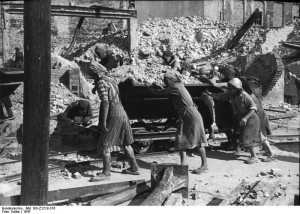
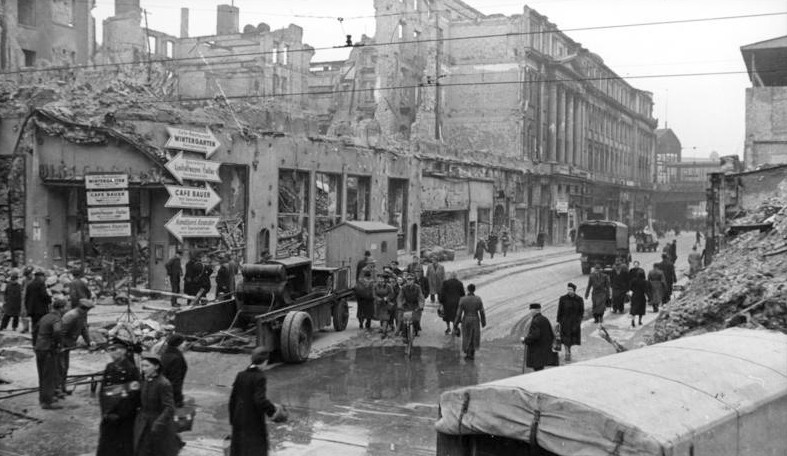
Over the past few weeks, I have been mulling over the significance of history, war, and the ravages of time.  Quite the happy thoughts I know.

I suppose this stream of consciousness was initiated by my review of some photos from my mother’s family church in Zeyer, Westpreussen, in what is today Poland.  Then today an Internet friend sent an article from today’s Elblag, Poland (what used to be Elbing, West Prussia, Germany) regarding their German past.

Here are the photos and articles that prompt my thoughts.

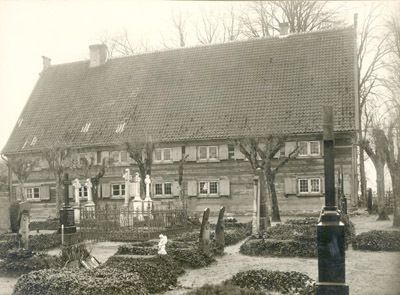
The first set are recent photos of the Zeyer Evangelische Kirche- Zeyer Lutheran Church. I guess more precisely these are photos of what is left of the church and graveyard where more than 200 years of my forebears were baptized, married and buried.  I have included a photo of what the Church, built and established in 1774, looked like in the early 1900s for comparison purposes. There are also photos of the 2010 re-consecration of the ‘old’ graveyard; along with the placement of a ‘new’ memorial stone.

These next links will take you to some images and postings on German graves recently unearthed in Elblag/Elbing.

All of this brought to my mind the importance of understanding.  Understanding history, perspective, motivation and the passage of time.  Each of these factors have a significant impact on who we are, who we were, and how we perceive our surroundings.  Nothing is static. Societal artifices and institutions which seem permanent are not; they are transient. Place, home, family, and even our burial are dynamic and evolving.

I guess the bottom line is we never really are; but rather, we are always becoming.  As living sentient beings we can chose what, we can even chose who, we allow ourselves to become.  And I suppose, we are best when we remember that life is a journey from our collective past into our shared future.

The 200,000th visit

We are extremely pleased to report that last night (3 June 2012) ManyRoads received its 200,000th visitor. We know that does not put us in anything like “a high traffic mode”. But, we are pleased to have gathered and perhaps even sustained a loyal readership.

Thank you very much for visiting our site; we look forward to your continued and on-going presence.  Obviously, we are extremely pleased that 200,00 visitors have stopped by.  We will continue to do our best to provide information and knowledge as we accumulate it.

As always do not hesitate to contact us with your comments or requests for information and/or pointers.  Your interaction is always welcomed.

Creating a stable FTM 2012 Installation

As most of you may know by now, I have had what might best be classifies as a “passel of troubles” with FTM 2012; not the least of which has been in establishing and maintaining a stable, updated, environment.  (For more on that please read: FTM 2012 Surprises?!? and Family Tree Maker 2012 running on a Virtual Machine & Win XP).

After about 2 weeks of work, I have found what seems to be a solution. Yay!  Perhaps that means I am tenacious… I rather prefer to think I am not stubborn, but maybe I am that, too!??  Nevertheless, here is what I have come up with for a solution to build a clean, safe, pristine environment within which FTM2012 ‘seems‘ to be able to run, with greatly reduced breakage and much improved stability.Genealogy-Ideas

This solution may not necessarily be well suited for the feint of heart, but it is worth consideration given the frustration involved in having non-functional software, which you want to work.

First and foremost, I created a single function Windows 7 Virtual PC running in isolation on a guest host (see Wikipedia for more information on this); my guest host happens to be a Debian Linux PC running Linux Mint Debian Edition (LMDE) 201204.  You could do this just as easily on a Windows or Apple Machine.  My FTM-exclusive Virtual PC is run within an Open Source Oracle application called VirtualBox.  It is essential to note that this creates an isolated Virtual PC, not a PC application emulator environment (like WINE or CrossOver).  All applications within the Virtual PC are run in native mode, not in emulation or compatibility or simulation modes. (For more you can read what VirtualBox offers on the topic.)

To begin with, I decided I needed to create and then backup a complete, clean, fresh install of Win7Pro (running as a Virtual Machine under Linux).  My Windows 7 Pro Virtual Machine environment included the following:

  • 1.768 MB of RAM (memory)
  • 64MB of Video RAM
  • 2D video/3D
  • 20 GB of dynamically expandable Disk space

Once I built my Virtual PC, with Win7Pro, I performed a full Windows set of updates; this took 4+ hours. It should be noted:

  • I only allowed for Win7Pro default security settings.
  • No third party firewalls, anti-virus or the like were used or set; none were required because the entire environment was run within the control and protection of my Linux host. I also wanted to avoid these as they often will conflict with unstable applications like FTM2012.
  • After the OS was built and current, I created/ built an initial install of FTM 2012 (no FTM updates were allowed, yet.)
  • As the FTM install began, FTM requested/ required the installation of Microsoft .NET Framework 4.0. This set of installs also turned out to be a leisurely event; taking several hours to accomplish.
  • After my basic FTM install completed, I performed three rounds of updates, getting all the “necessary” MS .NET environment updates.

It is worth noting that after the initial .NET install, FTM2012 died while attempting to connect to the FTM site for its own updates, but, that happened only after I had completed all the Microsoft required .NET updates.  In the end, FTM made its way to its home base for the update package(s); and those updates were completed, as well.

Once FTM was installed and current, I rebooted my FTM2012 Win7Pro Virtual PC… and “surprise!” on exiting the Win7Pro system wanted to install 13 critical updates, mostly involved with .NET.  This process added 1.25 hours to my journey (according to a Microsoft download message). This was not a quick reboot!

Much to my chagrin, the first set of Microsoft Win 7 updates was followed by yet another huge update set, mostly involving .NET. In total there were nearly 2 hours of .NET security updates.  I rebooted the Win7Pro PC after each major update set.

Because I run Win7Pro in a Virtual Machine as a guest Operating System – I was able to back up my “newly created, updated and as yet unused” Windows environment after each major update. I think this is much better then relying on a simple Microsoft Restore point, however, these backups ate a lot of disk space at about 11GB per Virtual Machine Backup…

Once I had my environment built and up-to-date, I opened a ‘live’ session of FTM2012.

  • I ran a restore from a recent backup of my previous FTM2012 data (media included).
  • The entire ‘restored’ database was about 3GB in size.
  • Following the successful creation of a clean ‘new’ database in my Win7Pro Guest PC, I linked my database to Ancestry.com.
  • The initial phase of the update was fairly fast, under 10 minutes.
  • The media upload to Ancestry.com was slow,  although much faster than in my previous environment.  Sadly in the middle of my large media synch, Ancestry.com logged me out.  I restarted the synch after logging into Ancestry.com once again, and things ran cleanly.
  • I ran this environment for two days without difficulty.

In the end I decided to rebuild the whole thing yet once again, this time using a copy of Windows 7 Home Edition (rather than WIn7Pro).  I followed the same process and thus far have received the same positive results.

My conclusion is that FTM 2012 is generally not well tested.  There appear to be some serious conflicts with either applications or dlls that are neither identified nor reported to mere mortals like me, the FTM 2012 customer/ user.  Running FTM 2012 in its own isolated PC environment seems to avoid most of the more serious ‘unidentified and unacknowledged’ conflicts and allows for more successful use of the application at little financial cost; but at considerable time expense, in terms of setup (this took a long  time to figure out and build). In the end, I am almost comfortable in recommending this approach, if you encounter problems resembling those I reported earlier and have read about elsewhere… but, your mileage may vary.

There are no guarantees, warranties expressed or implied…

Basketball in Easthampton- one family’s account

In 2010 I published a posting on pro-basketball in Easthampton, Mass.  Yesterday Jeffrey Baker, a ManyRoads reader, was kind enough to send these images and family story along.

Enjoy!

James R Knox was my maternal grandfather. Raised in the Easthampton area, went on to work at the Veterans Hospital in Northampton MA in the Personnel Office, eventually becoming Quartermaster.

Unfortunately there is no listing of any of the other ruffians pictured…nor of the coaches.

The details were noted by George W Knox, brother of James R. “Beaver” Knox. Interesting on how he has the Celtics in Boston in the 1920′s.

The other scan is EHS years ’13 – ’14. No details on this one, and I’m having a hard time discerning any relative in there. I’ll need to match up with some other photos from the era.

Hope these prove useful. I’ll be going through more photos from that time soon, getting things scanned. If I come across anything interesting I’ll forward them along.

The scans may be a bit big, please adjust for your site as you’d like.

Jeffrey Baker
Worcester MA

easthamptonbasketball1913-1914 jamesrknoxbasketballfront jamesrknoxbasketballback

FTM 2012 Surprises?!?

Well it has been a bit more than a month, now.  I am still using Family Tree Maker 2012; but I must admit that a LOT of the luster and shine has worn off. My initial enthusiasm and excitement has been significantly enhanced with personal experience and tribulations.

Genealogy WarningAs you may or may not know, in my day job I am a engineering process improvement consultant.  And, my greatest area of involvement, dare I say strength, is software engineering, design and implementation.  Simply stated, I worry about making it possible for engineering endeavors to be implemented successfully, reliably and predictably.

Enough for the advert (you may read more on another site of mine if you like)– now back to Family Tree Maker 2012.

Sadly I must report to you that the 2012 version of FTM software is astonishingly buggy and unstable.  The most bizarre encounter I have experienced thus far involves a required upgrade patch, one without any identifier, that causes the software to become totally non-functional even “invisible”.  No error messages, no warnings. The patched version of FTM2012 simply ceases to function without leaving a trace; the desktop icons are there, you simply click and nothing.  If this were open source software, a solution would be discoverable; but sadly such is not the case with FTM. I have scoured ancestry.com and the web only to find that others have experienced similar joys and similar success to mine in finding answers. In other words, there’s a lot of web ranting about FTM 2012 to be found but not much else.

In an effort to stabilize my environment, I have installed and patched FTM on a standalone Windows XP PC. I also have built installations in Windows 7 and Windows XP on Virtual PCs running under Linux in Oracle VirtualBox and the problem is always the same.  All I ever get is a disappearing release of FTM.  Although happily, I have figured out some interesting and fast ways to build Windows Virtual PCs on my Linux hosts.  The only viable solution I have discovered with FTM, however, is to ignore the FTM 2012 required patch.  Now every time I run FTM 2012 I watch the dire warnings as I select the unacceptable options, by FTM’s report, all of this in an effort to keep FTM moderately functional.

So if you are considering buying FTM 2012 consider my small tale of woe.  If it were not for the ancestry.com media synch functionality, I would have placed FTM 2012 along with my $40 in the dust bin of failed software a few weeks ago.  But for now I’ll run it minus its critical and required updates, in hopes that the folks behind the development of this software stumble upon a workable and stable solution.

On the other hand, maybe Ancestry.com will release its database API (Application Programming Interface) and allow other software groups an opportunity to provide a reliable solution… I can hope.

Update #1: 15 May 2012

Well I added 2 GB more memory to my Win7 install to see if FTM2012  (after the ‘patch’) might simply be hung up due to lack of memory.  I guess it still might need more memory; but with 3GB of memory, the situation remains the same.  FTM (updated) continues to hang and freeze without any notification as to why or what is wrong.  Oh well…

Update #2: 15 May 2012

I tried upgrading to a more “robust” version of Win7, Win7 Pro.  Aside from using up 5 additional hours for upgrade and testing, nothing changed.  FTM2012 still hangs up without any report or notice after I run their ‘required’ update.  I know several folks say that the software works for them; well, I certainly wish I were in the ‘working’ group and not in my special user category.

Family Tree Maker 2012 running on a Virtual Machine & Win XP

Like many of you, I rely heavily on Ancestry.com to provide me access to genealogical source materials.  The difficulty I have had with these materials over the years is in simultaneously getting source media objects/images onto my desktop and linked to a viable copy of a family tree.  Well, it looks like Family Tree Maker 2012 (FTM 2012) finally has solved that problem for me.

Given that most of the ManyRoads readership are Windows users, the following section may have only limited value to you.  However if you are a Linux or Mac user or if you are contemplating transitioning operating systems environments (or mixing them), I think you might find my journey of value.

I think most of you know, by now, that I am primarily a Linux user.  Currently my business and personal PCs are running Ubuntu variants for our general computing and technical development needs, most generally Xubuntu 12.04. As a rule, I do not buy Windows software.  My typical experience has been that I can easily find Open Source software with the same or better functionality than that available on either Windows or Apple at a much lower cost (read, Free).  However, when I read that FTM 2012 was able to synch with Ancestry.com and synch across my PC and tablet platforms; well, I just had to give FTM a try.

My initial attempt at installation involved using Wine (Windows Emulator Environment).  To quote the folks at Wine:

Wine lets you run Windows software on other operating systems. With Wine, you can install and run these applications just like you would in Windows.

Wine is still under active development. Not every program works yet, however there are already several million people using Wine to run their software.

Sadly, FTM 2012 failed to run for me after installation under Wine. Because I had yet another installation option available to me, I did not bother to figure out why Wine did not work (sorry).

My next attempt involved installing FTM 2012 on my Windows XP Virtual machine running under Xubuntu (My virtual WinXP PC is installed in an environment using Oracle Virtualbox OSE.). For those who are unfamilar with VirtualBox, here’s what they say about themselves:

VirtualBox is a powerful x86 and AMD64/Intel64 virtualization product for enterprise as well as home use. Not only is VirtualBox an extremely feature rich, high performance product for enterprise customers, it is also the only professional solution that is freely available as Open Source Software under the terms of the GNU General Public License (GPL) version 2.

Now back to my tale, this second installation went very well. Although I did decide to make a few modifications to my WinXP Virtual environment for a better operating experience as well as an improved look & feel, specifically:

  • I modified my standard WinXP desktop settings to use Clear Type (prettier fonts)
  • I upped my Virtual PC memory from 256 to 768 MB, to speed things up because FTM seems a tad memory heavy to me (in terms of ‘apparent’ response time)
  • I added additional disk space to allow for smoother operation (another little improvement to response time was noted)

Because one of the major reasons I spent money on FTM was the synch between my Desktop and Ancestry… I began with a link to my Ancestry account. Here are my basic, ‘initial’ observations:

  • FTM 2012 synchs quite well with pre-existing Ancestry data.  Not fast but thoroughly!
  • Media does indeed download!  Yay!
  • Finally, to my joy and surprise, I have an easy method to correct errors on my Ancestry Trees.

Other nice features/ options I have noticed thus far include:

  • You can exclude Ancestry family Trees from automatic searches (the little leaf thingees)!  Those error-prone, inaccurate Family Trees can now be easily ignored. As they say in Germany: Gott sei dank! (Praise to God!)
  • FTM allows “enhance record images” to be downloaded from Ancestry.com; so much better to see them with…
  • It is easy to define a specific location for your FTM files, data, images, etc.; this allows me to place everything in a shared Linux/Windows file area.

In the main, this seems to have been money well spent!  As I learn more about FTM 2012, I will post noteworthy items on ManyRoads.

Remote Desktop Sharing (Free)

For years I have had the need to share information, applications, and desktops across the miles.  Just recently, I stumbled across two viable, and affordable solutions that should work for people like me who are:

  • poor (and prefer to stick with Open Source – Free- software),
  • multiplatform (Win, Mac, Linux) users and who also…
  • desire a better “hands on approach” to sharing information and coaching folks on system’s usage across the miles.

The applications I have found to be most workable for me are:

  1. Google Chrome Remote Desktop Beta
  2. Teamviewer 7

Google Chrome Remote Desktop Beta

Briefly, Chrome Remote Desktop offers the following functions, including:

  • OS independence (it runs on Win, Mac, Linux)
  • Internet browser dependant (it requires Chrome on Win,Linux, Mac; Chromium on Linux also works)
  • Browser-centric operation
  • A 2 user Desktop Sharing limitation
  • No obvious license restrictions or encumbrances
  • The Requirement of having a gmail account to install and access the application (no charges incurred or required)
  • An apparent arbitrary 15 minute time-out restriction.
  • Application accessible through the Chrome/Chromium Applications screen
To quote the folks at Google:

“Chrome Remote Desktop allows you to securely share your computer over the Web. Both users must be running the Chrome Remote Desktop app, which can be found at chrome.google.com/remotedesktop.”

“Chrome Remote Desktop BETA is fully cross-platform, so you can connect any two computers that have a Chrome browser, including Windows, Linux, Mac and Chromebooks.”

TeamViewer 7

Briefly,TeamViewer7 offers the following functions, it:

  • Operates equally well on Win, Mac and Linux
  • Has no Internet browser requirement
  • Does not seem to time out quickly or arbitrarily
  • Is restricted to personal use only… non-commercial when used with a Free / non-paid license
  • Runs inside its own application window
  • Provides obvious security information regarding the ‘safety’ of your connection
  • Maintains a history of connections

To quote the folks at Teamveiwer:

“While most competitors offer different packages for spontaneous support,
remote maintenance, presentation, online training, team collaboration and
VPN (and also charge for them), TeamViewer combines all of these modules
in a single, extremely affordable application.”

“TeamViewer is a very secure solution for remote maintenance. Your connec-
tions utilize completely secured data channels featuring 1024-bit RSA key
exchange and 256-bit AES session encoding.”

After a couple of trial uses, here are my general observations and opinions (assuming anyone cares).

  1. Generally I prefer Teamviewer 7 both for its browser independence and link security management. Heaven knows my top-secret online meetings require 1024 RSA key exchanges and 256-bit AES (encryption).
  2. On the other hand given that Teamviewer7 is restricted to personal or non-commercial use, I also plan to continue to use Google Remote Desktop Share for those short duration 1 on 1 commercial desktop sharing sessions.

Who knows, someday there might be a single solution for me…. the impoverished genealogist, geek user. But for today, two solutions are better than none!

Die Wedhorn Vertreibung (Expulsion)

Note:  This account is the product of numerous discussions, interviews and writings between Frieda geboren Wedhorn, her son Norbert Grohmann, and Mark Rabideau.  Every effort has been made to remain true to the intent, content and events of this life altering time.

During the days preceding Frieda geboren Wedhorn’s capture and deportation by the Soviets, heavy fighting began in and around the Wedhorn family home in Orlofferfelde, Westpreußen.  During this time, around March 1945, Soviet soldiers came to the Wedhorn farmhouse, took possession and refuge within it and while there they attacked and raped Frieda (geboren Wedhorn). Shortly after the rape, the Russians were forced to leave the farm, at gunpoint by their superiors, to re-engage in the heavy fighting against German defense forces in and about Orlofferfelde.

Immediately following the Soviet evacuation of Otto Wedhorn’s home and raping of his daughter (Frieda), Otto (Sr.) decided to take precautions to protect his daughter Frieda from further danger by hiding her in a secret double walled area within the family stable, near their home.  This was the same area were the family had previously stored “surplus” food stocks obtained by Otto Sr. through his private butchering service.  (Note: This private service was illegal during the war because each German was allocated a specific quantity of food via a government controlled food stamp system.)

Wedhorn Family about 1944 Unfortunately, Otto’s plan nearly produced disastrous results. The family home was very exposed, standing on the highest ground in Orlofferfelde. The stable of the Wedhorn house was hit by incoming artillery fire; no one really knew whether the shells came from German or Soviet weapons. Shrapnel struck the family’s horse in the neck causing the horse to bleed to death; screaming, gurgling and terrifying Frieda with its death throes. Fortunately, Frieda’s hiding place, with her in it, remained intact; she was uninjured. (Note: During that same military engagement, the nearby farm house of Hermann Recht was struck by shellfire.)

Throughout this bombardment and shelling, the Wedhorn family, excepting Frieda Wedhorn who remained in her hiding place, spent the night cowering in a tiny, dank, basement under the family home.  The cellar was cold and wet; water soaked the floor. Frieda believes her mother, Ella Wedhorn, contracted a lung infection during this time, weakening her immune system. Frieda believes that this infection ultimately resulted in her mother, Ella, contracting a fatal case of typhoid when she was later incarcerated by the Soviets in an Elbing assembly camp.

The following day the Wedhorns along with Emma Recht, the wife of Ernst Hermann Ferdinand Recht, decided to leave for a safer house in the nearby town of Orloff. (Note: Emma Recht had come to the Wedhorns in January 1945 when the Russians over ran Tilsit in Ostpreußen; she was Ella geb. Recht and Otto Wedhorn’s sister-in-law. Her husband Ernst Recht had been conscripted to fight in the Volksturm and had been reported as missing in action. Ernst was brother-in-law to Otto Wedhorn Sr. and brother of Ella geboren Recht.) Ella Wedhorn (Recht), Otto Wedhorn (Jr.) and Emma Recht were the first to evacuate. Otto Wedhorn (Sr.) stayed with his daughter Frieda who remained in her stable storage hiding area; father and daughter waited until there were fewer Soviet troops nearby before attempting their escape. Early during the battles around Orlofferfelde, the Red (Soviet) Army had brought numerous horses to the Wedhorn stable for shelter; these remained even after the Soviets resumed fighting. As a result, it was not easy getting Frieda out of her hiding place and through the crowd of animals to safety. But finally, Otto Sr. and Frieda managed to sneak out; it was very early in the morning, quite dark, very cold and there was a thick blanket of snow. Fighting and bombardment continued in the area, but it no longer centered on their home. Frieda remembers seeing shells from a “Stalinorgel” (Soviet multiple rocket launcher) flying above her and her father in the early morning sky.  The ground was covered by newly fallen snow; as she and her father walked they tripped over what looked like piles of snow in the fields.  These ‘snow piles’ were actually the dead bodies of young men in Soviet and German uniforms who had fallen in the battles the days before.

Frieda and her father, Otto Sr., were not able to catch up with the rest of the Wedhorn family because they were arrested by Soviet soldiers.  Instead of rejoining their family, they were brought to a house which was being used as a Soviet command post. In this house, there were already a lot of German civilians.  There were also Poles who took all valuables away from the incoming Germans. While they were being held in this ‘command post’, Frieda noticed Ella, Otto (Jr.) and Emma Recht out on the street being force marched under gunpoint by Soviet military personnel. Only years later did Frieda learn, from her brother Otto, that the Wedhorn family, as well as the escorting Soviets, knew that she and her father (Otto Sr.) were being held and interrogated in the Soviet command post.  But, family members were not allowed to talk to each other; and, instead were kept separate and forcibly removed to different assembly points.

Frieda and Kaethe Wedhorn Eventually, Frieda Wedhorn was jailed in a basement together with other German women scheduled for deportation to Soviet labor camps. Fortunately, Otto Wedhorn (Sr.) was not put on the list for deportation due to his old age (66); he tracked Frieda to each of the holding facilities to which the Soviets brought his daughter, all the way to Elbing. Shortly before Frieda was to be transfered to Insterburg, her father (Otto Sr.) managed to talk to her through the window of her basement prison cell, informing her of the bad news that she was to be deported to the Soviet Union and incarcerated in a forced labor camp.  He informed Frieda that he would look for the other family members and try to bring them back home. As it turned out, he was not able to find anyone and he went home alone.

Over the next days, Otto’s daughter Käthe, his son Otto and even his mother-in-law Else Auguste Recht (Ekrut) showed up at the family farm. By the time Otto Sr. arrived home, the Soviet soldiers had stripped every “standing” home of whatever the soldiers could carry with them. The Soviets had thrown all the furniture and possessions which they could not carry or did not want out of the houses and onto the fields and the streets. As the remnants of the Wedhorn family returned to Orlofferfelde, they rummaged through the fields and streets to see what might be salvageable for use.

Later when Else Auguste Recht (Hermann Recht’s second wife) returned to Orlofferfelde from her unsuccessful evacuation attempt, she was unable to speak about what had happened to her husband Hermann Recht.  She seemed to be in shock and was quite out of her senses. None of the remaining family members were allowed to go to Zeyersvorderkampen to discover Hermann’s fate.  They learned much later that Hermann Recht had drowned or been murdered; and his body had been found in the Nogat River.

Following Frieda Wedhorn’s capture and incarceration by the Soviets in March/April 1945 near Elbing, Westpreußen, she was transported by truck to Insterburg, Ostpreußen.  From there, she was transferred to a cattle car on a train for her journey into the Soviet East; this trip took about two weeks. While traveling through the ‘new’ Poland, Soviet troops had to “protect” the German women on the cattle train from the attacks of marauding Poles.

It became increasingly cold as the train moved Eastward. Every morning, the Soviet minders had to break ice off the train cars in order to open the doors and remove the corpses of the freshly dead German women/ prisoners. The rations for the captive German women consisted of hard bread, dry cheese and a bucket of water for drinking. There were only a few survivors by the time the train arrived at the Gulag. (Notes: The actual location of Frieda’s incarceration remains unknown; our search for information continues. But given the German women were civilians, Frieda believes the Soviets did not maintain incriminating documents which could be used to illuminate the acts of the Soviets who kidnapped and killed many of those Germans. Most certainly Frieda has no record(s) of her incarceration and servitude.  We are working with the DRK Suchdienst to see if they are able to source any documentation regarding Frieda Wedhorn’s ordeal.)

What is known with respect to Frieda’s internment time and deportation is that she was incarcerated in two different labor camps and one POW Camp. The first labor camp was several hundred kilometers east of Moscow. In this camp, German women were forced to do heavy labor such as the manual unloading of coal from trains. Half of the approximately 800 German women in this camp died within the first six months that Frieda was interred. After about 12 months (perhaps in early 1946), Frieda was transfered to a second camp (Gulag). Her transfer was accomplished partly by train and partly by forced march. We know this happened in winter because Frieda recalls that she was forced to walk across the frozen Volga river.  At the second camp, Frieda was forced to pile peat moss and/or still wet bricks for drying before they were fired. For a short time period, she was incarcerated in a third Gulag, this was a German POW camp where she cared for wounded and injured German soldiers. The conditions in each of the camps were horrific.

Shortly before being released in 1947, the few surviving German women, including Frieda, were forced to sign an unintelligible (to them) Russian document. Frieda remembers that the few survivors joked, they had probably just signed their own death sentences.

In the end, Frieda came away from her two plus year ordeal with a single document; it looks something like a birth certificate and is written in Polish.  It is possible that the document might actually be a translation of a German original. (Hopefully we will obtain a copy and be able to translate its contents.) Every other material possession of Frieda Wedhorn was lost.  Still somehow, she managed to escape with her life. She finally arrived and was released to a West German reception camp in Frankfurt/Oder in 1947.

As for the rest of the Wedhorns:

  • Otto Wedhorn Senior was fortunate and survived the conflagration. Otto and the surviving members of the Wedhorn Family, with the exception of Frieda, were expelled into what became the German Democratic Republic (DDR- Deutsche Demokratische Republik; the Soviet Zone of Germany). In 1963, Otto Wedhorn (Sr.) died in a hospital near Fichtenwalde, a few days after having a stroke (Gehirnschlag). He was 84 years old. His daughter Kaethe was with him up to his end; but his daughter Frieda, could not visit him any more after the Berlin Wall was built in 1961.
  • Ella Recht was raped by invading Soviet troops in her home in Orlofferfelde. In that same time period, Ella Recht’s deportation to the Russian Gulags was not undertaken because she had contracted typhus.  The Russians let her go due to the risk of spreading infection.  Ella died in a hospital in Elbing on May 18, 1945. It was her silver wedding day.
  • Willi was killed in battle on the last day of World War 2, in Italy.
  • Emma Recht was the „Schwiegertochter“ (daughter-in-law) of Hermann Recht and the “Schwägerin” (sister-in-law) of Ella geboren Recht and Otto Wedhorn, Sr. Emma Recht later found her husband; Ernst Hermann Ferdinand Recht had been reported missing in action after having been conscripted into the local “Volkssturm” together with many old men and young teenage boys. They both managed to survive the war; sadly, they had lost both of their sons (Ernst Recht and Egon Recht). Following the war they lived near Potsdam.
  • With the erection of the Berlin wall in 1961, the ‘Brandenburg/ Potsdam’ branches of the Wedhorn family became, what was for most of its older members, permanently separated from their Western German relatives.The remnants of the family re-united when Germany reunified in 1990 (Deutsche Wiedervereinigung).

And as for Else Recht geboren Ekrut:

  • Otto Wedhorn Jr. reported that after the end of WW2, when the Soviets turned governmental administration in Westpreußen over to the Poles and ethnic Germans were being expelled from Poland, Else Auguste Recht (geb. Ekrut?) did not flee with the remaining members of the Wedhorn family to Fichtenwalde, near Berlin. Rather than joining Otto Wedhorn’s sisters in Fichtenwalde, she is believed instead to have fled to Danzig where she likely still had family or friends. It was at this time the Wedhorns lost contact with her.
  • Another family story reports that Soviet occupation troops “beat, assaulted and threw Else into the Nogat river” near the Senger farm in Zeyersvorderkampen, Westpreussen.

Using Cyprien Tanguay’s texts…

Over the past few weeks, I have received numerous requests for guidance on how to use Tanguay’s texts for genealogy research (and where to get them).  I have to admit that it does seem a bit odd to me that these genealogy texts are not well understood.  But after having received the requests, I did some searching on the web only to note that there are no real guides readily available for novices, so here’s my feeble attempt at creating one.

By way of a bit of background, the texts discussed here are called: Dictionnaire généalogique des Familles Canadiennes depuis la fondation de la colonie jusqu’à nos jours (Genealogical Dictionary of Canadian Families from the Founding of the Colony to Our Time). This body of genealogical work is generally recognized as the seminal work for all French-Canadian genealogy.  It is “printed” in seven (7) volumes. This huge and historically significant textual documentation is most amazingly the work of but one single person, Father (Abbé/ Abbott) Cyprien Tanguay. To quote Dictionary of Canadian Biography Online:

To compile this genealogy of Canadian families Tanguay systematically examined the parish records of the country, indeed, of the whole of French-speaking North America, copying entries of baptisms, marriages, and burials. During his lengthy journeys through continental Europe he was able to examine in detail the holdings of strategic archives, such as the Dépôt des Archives de la Marine in Paris and collections in Belgium, Prussia and other German states, and Italy.

To begin with, every user of Tanguay’s texts needs to be clear on what these documents are and what they are not…

They are:

  • In the Public Domain and have been since 1952. As such, free electronic versions of the Tanguay texts are available on-line.  The best version is currently resident in BANQ (Bibliothèque et Archives nationales du Québec- National Library and Archives of Quebec).  These are now Freely downloadable in pdf form. (Note: ManyRoads will be replacing our downloads with those from BANQ)
  • Volume 1 covers families 1608 to 1700. This includes all family surnames.
  • Volumes 2 to 7 cover families until ‘about’ 1765 although a very few lines reach as far as 1880.
  • Volume 2 covers family surnames Abel à Chapuy
  • Volume 3 covers family surnames Charbonneau à Eziéro
  • Volume 4 covers family surnames Fabas à Jinines
  • Volume 5 covers family surnames Joachim à Mercier
  • Volume 6 covers family surnames Mercin à Robidoux (and yes, that is my family surname…)
  • Volume 7 covers family surnames Robillard à Ziseuse
  • The original set of texts are released under ISBN 0-88545-009-4 (Ed. Elysee)

The texts are not:

  • Perfect; there are errors in the texts.  Most seem to me to involve missing information rather than mis-information. And yes, there are texts providing corrections to Tanguay’s work.  The errata text I am most familiar with was written by Joseph-Arthur Leboeuf; Complement a Tanguay (A compliment to Tanguay) a volume of 600 pages -  which reports the errors and omissions of Tanguay.

Use

When using Tanguay’s texts it is important to note that every entry includes: date and place of wedding of the married pair/couple, the husband and his father (located in the right hand margin), the wife and her father, and finally their children (note the children’s names are in italics.)

Events included in the records most frequently are baptisms (b), marriages (m) and burials (s).

Additional texts published by Tanguay include (they may be purchased at this link):

  • Gleanings from the Registers (1 vol, 300 pages) – “À travers les registres” by Cyprien Tanguay, is a work of about 300 pages which contains hundreds of facts that are historically related to ancestors. This information was collected by Tanguay at the time of records perusal for the seven original volumes. (Available Free here.)
  • Directory of Canadian Clergy (1 vol, 600 pages) – “Répertoire général du clergé Canadien” by Tanguay. This work of Tanguay enumerates Roman Catholic clergy members from the beginning of New France to to 1880. This book gives historical and genealogical information of all clerical individuals and parishes where they worked. (Available Free here.)

Using Mendeley &tc. for Genealogy Research

As I mentioned in an earlier post, recently I came across a VERY promising research tool to assist in gathering, sorting, and sharing research source materials.  That tool is called Mendeley It enhances, compliments, and can even replace tools like Zotero.  It, also, links interactively with desktop word processing tools like LibreOffice/OpenOffice and perhaps even M$Office (although I don’t own a copy of that to test).   Mendeley, also, allows me to share its content across multiple platforms including my Linux Laptops, my iPad and, according to the provider, Mac and Windows.  Finally, the tool itself tracks, inventories and gathers information from within Firefox and similar web browsers or directly from my Desktop, if I happen to have my information there.

Oh, and before I forget… did I mention the tool allows for socializing selected information and publications (individually or through Groups of Common Interest).  Oh yes, and basic Mendeley usage is Free.

Three quick additional items:

  1. If you are performing genealogy research and want to join in sharing resources and source materials with me, please join Mendeley and my “Mennonite Genealogy Researchers” Group (Note: this group requires a Mendeley Account to View).
  2. If you are interested in following some of my exploits in using the Mendeley Toolsuite you can my publicly available ‘research’ (meaning you don’t need to use Mendeley to see these HERE).
  3. Here is a comparison of Mendeley to other data gathering tools.
Update

I have begun to rely on this tool for all my Prussian Mennonite research and find it very useful and easy to use.  I plan on continuing to expand my use of Mendeley into the future.   This tool is now ‘officially’ a standard part of my genealogy research tool-kit.

Prussian Mennonite Research Materials

As many of you may know, my Recht family line (Hermann Recht’s family) has strong roots within what was once the Mennonite Community resident near the former Elbing and Marienburg, Westpreussen. As I conduct my Prussian Mennonite family genealogical research, this page will evolve and develop into something a bit more robust.

I am using Mendeley to gather and manage my research findings and source materials (I am also using the tool in an effort to evaluate its effectiveness for genealogy work.)  If I end up writing something profound, perhaps Mendeley will also manage my writings. In any event for those interested in viewing and accessing most of my source materials, access to them will be provided here.

Related Anabaptist- Mennonite Sources

Watch this space, more to come…

Data gathering tools (new, to me)

As a genealogist that conducts much of his research on the web, good data and image gathering tools are extremely helpful.  As a person who relies heavily on the PC as a genealogical repository and information processor, tools that help me sort and process the information I gather are highly valued (prized).  In all fairness, I also ought to restate that I rarely (VERY rarely) work with any software outside of the OpenSource (or Free) realm unless I have a hugely compelling reason to do so.

ToolsI must, additionally, admit that I am very new to many (read almost all) of these tools.  It is also worth knowing that several of these tools are brand new to the world (or perhaps even a little bit newer than new).  Nonetheless, I thought archiving and sharing these pointers might be useful.  It is my hope that you, too,  might be willing to share additional information or insights you might have regarding these or other, even better tools.  With mutual sharing, we will all learn and benefit.

Having said all that, here are the innovative tools which most recently appeared on my radar screen.

ZooTool

Zootool is about collecting, organizing and sharing your favorite images, videos, documents and links from all over the internet.

Mendeley

Mendeley is a free reference manager and academic social network that can help you organize your research, collaborate with others online, and discover the latest research.

Here is a biased comparison of Mendeley to other competing products.

Wunderkit  (currently in beta test)

This tool looks like it will be most useful in sharing project tasks, results, ideas, etc with others.

StoryBook

I have recently come into contact with a family member who luckily has a long and detailed memory of the times and travails of my “German” family in and after WW2.  Because of the information from that source plus the information I have gathered from my immediate family over the years, I am attempting to use this tool to understand and write the overall story/ flow of events of that place and time. Obviously Storybook is intended for novels but then family histories are stories, too; they just are not fiction.  To quote the Storybook site:

Storybook is a free Open Source novel-writing software for creative writers, novelists and authors which will help you to keep an overview of multiple plot-lines while writing books, novels or other written works.

Focus Writer

This tool (and others like it) are useful when you want to write and be uninterrupted on your PC.  Hard to believe but electronic interruptions can and are a major distraction.  Sometimes you just want to write…

As their site states: FocusWriter is a simple, distraction-free writing environment. It utilizes a hide-away interface that you access by moving your mouse to the edges of the screen, allowing the program to have a familiar look and feel to it while still getting out of the way so that you can immerse yourself in your work. It’s available for Linux, Windows, and Mac OS X, and has been translated into many different languages.

As I mentioned at the outset, I would greatly appreciate your thoughts on any of these tools or their competing products. After all as the Beatles once said, sometimes:

I need a little help from my friends.

Copyright, copyleft, protect your stuff…

Assuming you write materials and you’d like to get protection and/or keep some credit for your work, here are a few thoughts.
(Note: do not confuse this Blog posting with any manner of legal advice.)

PolicemanFirstly, you ought to decide if you really want your materials to be shared and/or protected.  No matter what you do, remember that anything placed on the web is subject to being copied and reused. Having said that, protection and ‘legal’ sharing of your materials really need not be an all or nothing proposition.  You can, if you are so inclined, offer your writings or other creative content to the world with varying degrees of freedom and/or protection. But before you decide, you might want to read a bit from Wikipedia on these two topics: ( btw. the headers will link you to the complete postings)

Copyright

Copyright may apply to a wide range of creative, intellectual, or artistic forms, or “works”. Specifics vary by jurisdiction, but these can include poems, theses, plays, other literary works, movies, dances, musical compositions, audio recordings, paintings, drawings, sculptures, photographs, software, radio and television broadcasts, and industrial designs. Graphic designs and industrial designs may have separate or overlapping laws applied to them in some jurisdictions.

Copyright does not cover ideas and information themselves, only the form or manner in which they are expressed.

Copyleft

Copyleft type licenses are a novel use of existing copyright law to ensure a work remains freely available. The GNU General Public License, originally written by Richard Stallman, was the first copyleft license to see extensive use, and continues to dominate the licensing of copylefted software. Creative Commons, a non-profit organization founded by Lawrence Lessig, provides a similar license called ShareAlike.

When I choose license protection for my work (like this site), my personal favorites have always been those quasi-open licenses offered by the folks at Creative Commons.  As their site states:

With a Creative Commons license, you keep your copyright but allow people to copy and distribute your work provided they give you credit — and only on the conditions you specify here. For those new to Creative Commons licensing, we’ve prepared a list of things to think about. If you want to offer your work with no conditions attached, or you want to mark a work that is already free of known copyright restrictions and in the public domain, choose one of our public domain tools.

If you want to use one of their licenses, you can get simple, easy to use help selecting the ‘right license’ for your needs directly on their site.

Once you choose the license-style you want, you do need to be serious about its use.  Simply placing a little label on a page may not be formal or serious enough.  Although sometimes the sign is enough to scare interlopers away.  Consult with an attorney if you want the real scoop… I do not provide legal advice and even if I did I doubt you would want it.   However, this I can tell you from my experience.  You will benefit greatly from third-party proof that the material you want protected and have created was ‘in fact’ built by you.  I know of a couple of good and helpful services/ sites providing services in this realm, by that I mean I have used them:

Both of these sites (businesses) provide innovative, affordable methods by which you can archive and/or ultimately prove your ownership of your protected materials.  The bottom line is this:

  • be prudent,
  • choose appropriate, useful, affordable protection
  • get good legal advice  (not from me) —and —
  • protect your stuff.

Pre-WW2 Maps of Poland & the former German East

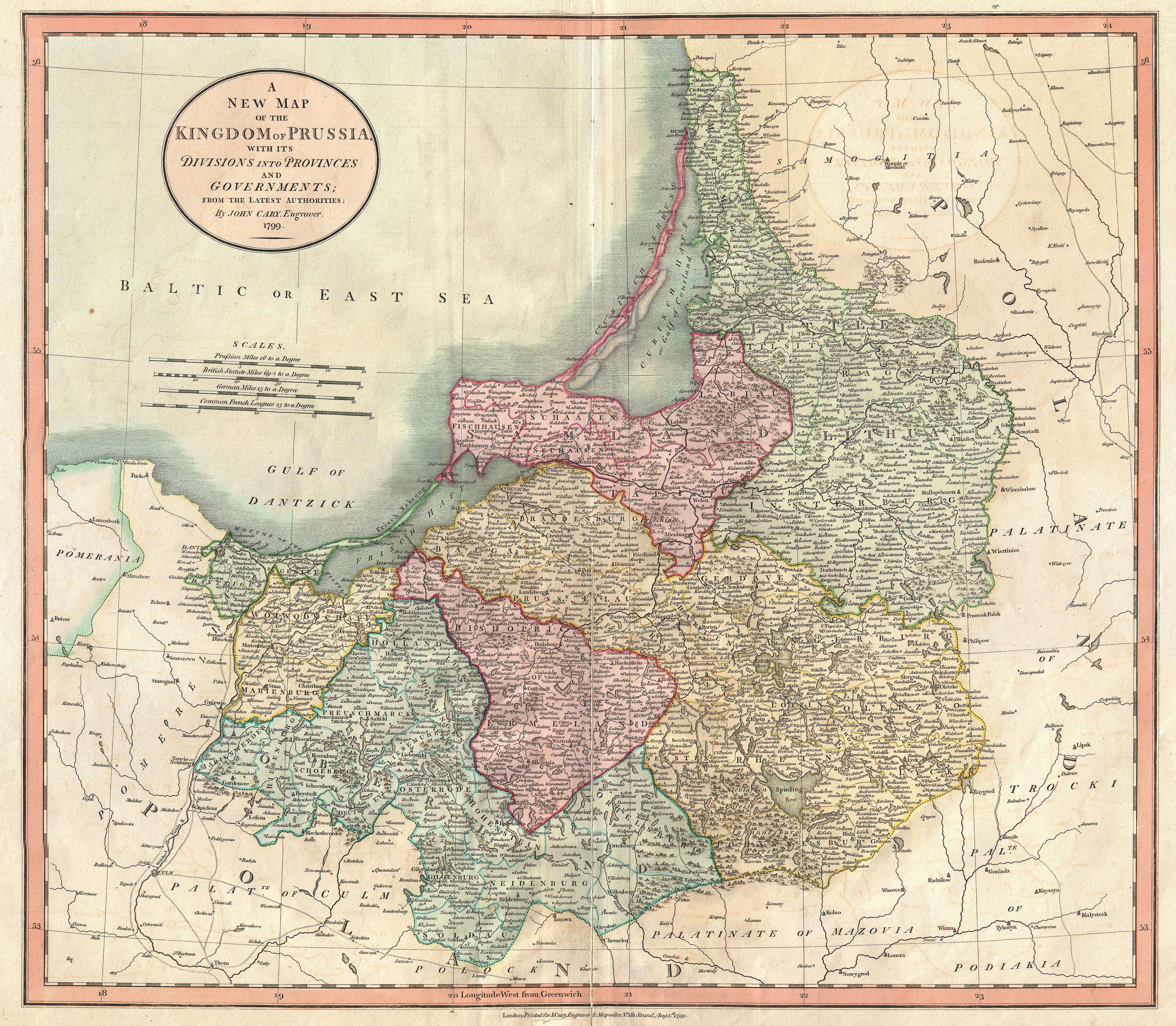
In keeping with my map theme, I have provided links and pointers to what I consider 4 of the Internet’s best sites for genealogically useful maps covering the regions of pre-WW2 Poland (Polska) and the former German Eastern Provinces (mainly, Ost und West Preussen, Silesian, Pommern).  When used in combination with current map tools such as Google Maps, you should meet with fairly high success in finding old place locations, names, etc.  At least, I have had that good fortune.Globe

The most comprehensive database of its kind in the world. It contains 90820 locations with over 38.691 name changes once, and 5,500 twice and more. All locations are EAST of the Oder and Neisse rivers and are based on the borders of the eastern provinces in Spring 1918. Included in this database are the following provinces: Eastprussia, including Memel, Westprussia, Brandenburg, Posen, Pomerania, and Silesia.

The Atlas des Deutschen Reichs shows the division of the Empire into the nine main maps and two smaller maps of the original atlas. This atlas is a digitized version of an item in the collections of the University of Wisconsin-Madison Libraries.

  • Author:     Ravenstein, Ludwig.
  • Title:     Atlas des Deutschen Reichs / bearb. von Ludwig Ravenstein.
  • Publisher:     Leipzig : Bibliographisches Institut, 1883.
  • Summary:     Zehn Blätter im Massstab 1:850,000, mit vollständigem Register aller auf der Karte enthaltenen Namen, nebst drei statistischen Karten der Bevölkerungsdichtigkeit, Konfessionen und Gewerbthätigkeit in Deutschland, und 16 Produktionskärtchen über Bodenkultur, Tierzucht, Nutzpflanzen und nutzbare Mineralien; mit ausführlichen statistischen Übersichtstabellen.
  • Archiwum Map Zachodniej Polski – Additional Maps of Pre WW2 Poland & Prussia.

    Zadaniem internetowego Archiwum Map Zachodniej Polski jest bezpłatne, szerokie udostępnianie wysokiej jakości kopii map archiwalnych. Szczególne miejsce zajmuje wśród nich niemiecka mapa topograficzna w skali 1:25000, cechująca się wysoką szczegółowością i dokładnością.

  • Map Archive of Wojskowy Instytut Geograficzny 1919 – 1939

    There are many websites on the Internet with scanned old topo maps, but resources related to Poland are limited. Polish Military Geographical Institute (1919-1939) developed and printed topographic maps which, in the 1930s were rated among the best in the world. Nowadays these maps are a fountain of information about pre-WW2 Poland and, at the same time, can be still used in the field to locate villages which have long disappeared from the ground and can not be found on modern maps. For these reasons we believe these maps should be made widely accessible and what better way than through the Internet? Although a daunting task we are positive we will manage to collect and present scanned images of all WIG maps and other geographic materials the Institute published.


Hinaus in die Ferne

It probably bears mention that my grandmother- Frieda Senger- was a woman of many verses.  So given that my most recent visits with my mother have involved hearing a particular verse frequently; I thought I’d preserve it for posterity, especially since it is a verse I never heard while growing up.  It’s a lively little item…

Hinaus in die Ferne
Mit Butterbrot und Speck.
Das mag ich ja so gerne,
Das nimmt mir keiner weg.
Und wer das tut,
Dem hau’ ich auf die Nase,
Dem hau’ ich auf die Schnut’,
Daß es [ihm] blut’.

It turns out to be a music composition with lyrics and so it has an associated tune (a rather lively early 1800′s tune).  The verse & music was written by Albert Methfessel, 1813 (he lived between the years 1786-1869.)  Here is the tune for Hinaus in die Ferne.  A rough translation of the the verse into English follows:

Heading out for a journey
With buttered bread and bacon.
I like that so much,
None can take those from me.
And if someone tries,
I’ll smack them on the nose,
I’ll smack them on the snout,
Until they bleed.

I find it a curious set of lyrics. So, I looked it up and actually found numerous additional verses and versions.  The composition is called the Turnermarsch (Turner March).  The original score along with the most common variations may be found on the web:  here it is.  It seems that the work was created in reaction to Napoleon’s occupation of German lands.  A fairly robust little history (in German) may be found on Wikipedia.de.

Ah, just another happy time… and another happy song!

Heimatortskartei gets personal

Almost all ManyRoads readers know that my mother’s family was among those expelled by the allies from the the former German Eastern province of West Prussia following World War 2.  Today, I had the great honor to read and view the Heimatortskartei records of my relatives and their friends/ neighbors.  I have placed the images I found on line and will update this image library as I find more documents.

For those interested, here are the images I managed to obtain.
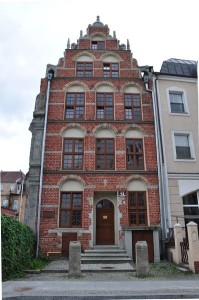
ManyRoads available FHC Films/ Tapes

Because my local Family History Center is moving to a new ‘film’ filing system, I thought it would make good sense for me to explicitly track all the permanent films I have locally on file. Obviously, I hope to keep this list current so I can both find and access my tapes more readily. Eventually, I will add my short-term tapes to this list as well.

Ahhhh, so many tapes & so few brains to track them…

Location Subject Location Film # Status
Catholic Church. St. Joseph (Coopersville, Clinton County, New York) Baptisms, marr., burials 1896-1907 Baptisms 1912-1915 Marriages, burials 1913-1915 New York FHL US/CAN Film 1450735 Items 1-4 Perm.
Evangelische Kirche Baarenhof (Kr. Marienburg) Tauf-Index 1798-1920 Heirats-Index 1723-1935 Toten-Index 1722-1932 West Prussia FHL INTL Film 208027 Perm.
Evangelische Kirche Baarenhof (Kr. Marienburg) Taufen, Heiraten, Tote, Firmungen 1721-1800 West Prussia FHL INTL Film 208028 Perm.
Evangelische Kirche Baarenhof (Kr. Marienburg) Taufen 1797-1851 West Prussia FHL INTL Film 208029 Perm.
Evangelische Kirche Baarenhof (Kr. Marienburg) Taufen 1852-1920 West Prussia FHL INTL Film 208030 Perm.
Evangelische Kirche Baarenhof (Kr. Marienburg) Heiraten 1797-1902 Tote 1801-1881 West Prussia FHL INTL Film 208031 Perm.
Evangelische Kirche Graudenz (StKr. Graudenz) Taufen 1847-1860, 1866, 1867, Taufen 1875, 1883, 1885-1886 West Prussia FHL INTL Film 162301 Perm.
Evangelische Kirche Heiliger Leichnam Elbing Taufen 1622-1713 West Prussia FHL INTL Film 742717 Perm.
Evangelische Kirche Heiliger Leichnam Elbing Taufen 1714-1791 West Prussia FHL INTL Film 742718 Perm.
Evangelische Kirche Jungfer (Kr. Elbing) Taufen 1867-1906 West Prussia FHL INTL Film 208170 Perm.
Evangelische Kirche Jungfer (Kr. Elbing) Heiraten 1811-1901 West Prussia FHL INTL Film 208171 Perm.
Evangelische Kirche Ladekopp (Kr. Marienburg) Taufen 1806-1899 Heiraten, Kommunikanten 1784-1865 West Prussia FHL INTL Film 208200 Perm.
Evangelische Kirche Ladekopp (Kr. Marienburg) Tote 1825-1920 West Prussia FHL INTL Film 208201 Perm.
Evangelische Kirche Sankt Annen Elbing Taufen, Heiraten, Tote 1712-1815 West Prussia FHL INTL Film 742714 Perm.
Evangelische Kirche Sankt Annen Elbing Taufen 1886-1903 West Prussia FHL INTL Film 245610 Perm.
Evangelische Kirche Sankt Annen Elbing Heiraten 1822-1903 West Prussia FHL INTL Film 245612 Perm.
Evangelische Kirche Sankt Annen Elbing Taufen 1625-1712 West Prussia FHL INTL Film 742713 Perm.
Evangelische Kirche Zeyer (Kr. Elbing) Tauf-, Heirats-, Toten-Index 1800-1944 West Prussia FHL INTL Film 208454 Perm.
Evangelische Kirche Zeyer (Kr. Elbing) Taufen, Heiraten, Tote 1774-1797 West Prussia FHL INTL Film 208455 Perm.
Evangelische Kirche Zeyer (Kr. Elbing) Taufen 1797-1840 West Prussia FHL INTL Film 208456 Perm.
Evangelische Kirche Zeyer (Kr. Elbing) Taufen 1841-1867 West Prussia FHL INTL Film 208457 Perm.
Evangelische Kirche Zeyer (Kr. Elbing) Taufen 1868-1904 West Prussia FHL INTL Film 208458 Perm.
Evangelische Kirche Zeyer (Kr. Elbing) Heiraten 1785-1898 West Prussia FHL INTL Film 208459 Perm.
Evangelische Kirche Zeyer (Kr. Elbing) Tote 1785-1838 West Prussia FHL INTL Film 208460 Perm.
Evangelische Kirche Zeyer (Kr. Elbing) Tote 1839-1859 West Prussia FHL INTL Film 208461 Perm.
Evangelische Kirche Zeyer (Kr. Elbing) Tote 1860-1907 West Prussia FHL INTL Film 208462 Perm.
Katholische Kirche Neukirchhöhe (Kr. Elbing) Taufen 1760-1897 West Prussia FHL INTL Film 529475 Perm.
Katholische Kirche Neukirchhöhe (Kr. Elbing) Heiraten 1760-1935 Tote 1760-1896 West Prussia FHL INTL Film 529476 Perm.
New York, Clinton, Mooers Forks – Church records Baptisms, marriages, deaths 1861-1882 New York FHL US/CAN Film 1450736 Items 14-16 Perm.
New York, Clinton, Mooers Forks – Church records Baptisms, marriages, deaths 1882-1915 Confirmations 1879-1884 New York FHL US/CAN Film 1450737 Perm.
%d bloggers like this: