Geopolitical and Socioeconomic Parallels Between 2025 and 1937
A Global Historical Crossroads
Introduction
The geopolitical and socioeconomic landscapes of 2025 bear striking similarities to those of 1937, a period marked by economic instability, aggressive expansionist policies, and ideological extremism. The years leading to World War II were defined by rising authoritarianism, economic contraction due to policy missteps, and the failure of international institutions to curb escalating tensions. Today, despite the presence of modern global institutions and economic safeguards, the echoes of 1937 remain potent. While Western narratives often frame this comparison through a Eurocentric lens, Asia’s historical and contemporary experiences reveal equally critical insights. From anti-colonial struggles in the 1930s to today’s U.S.-China rivalry, Asia has been both a battleground and a catalyst for global change. Understanding these historical parallels across multiple regions provides crucial insights into the risks and challenges of our time.
I. Geopolitical Multipolarity and Territorial Ambitions
Global Context of the 1930s
This work is in the public domain in the United States.
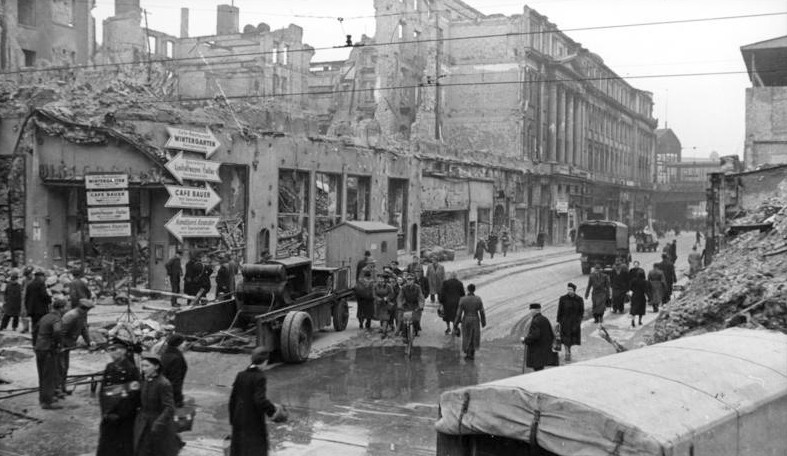
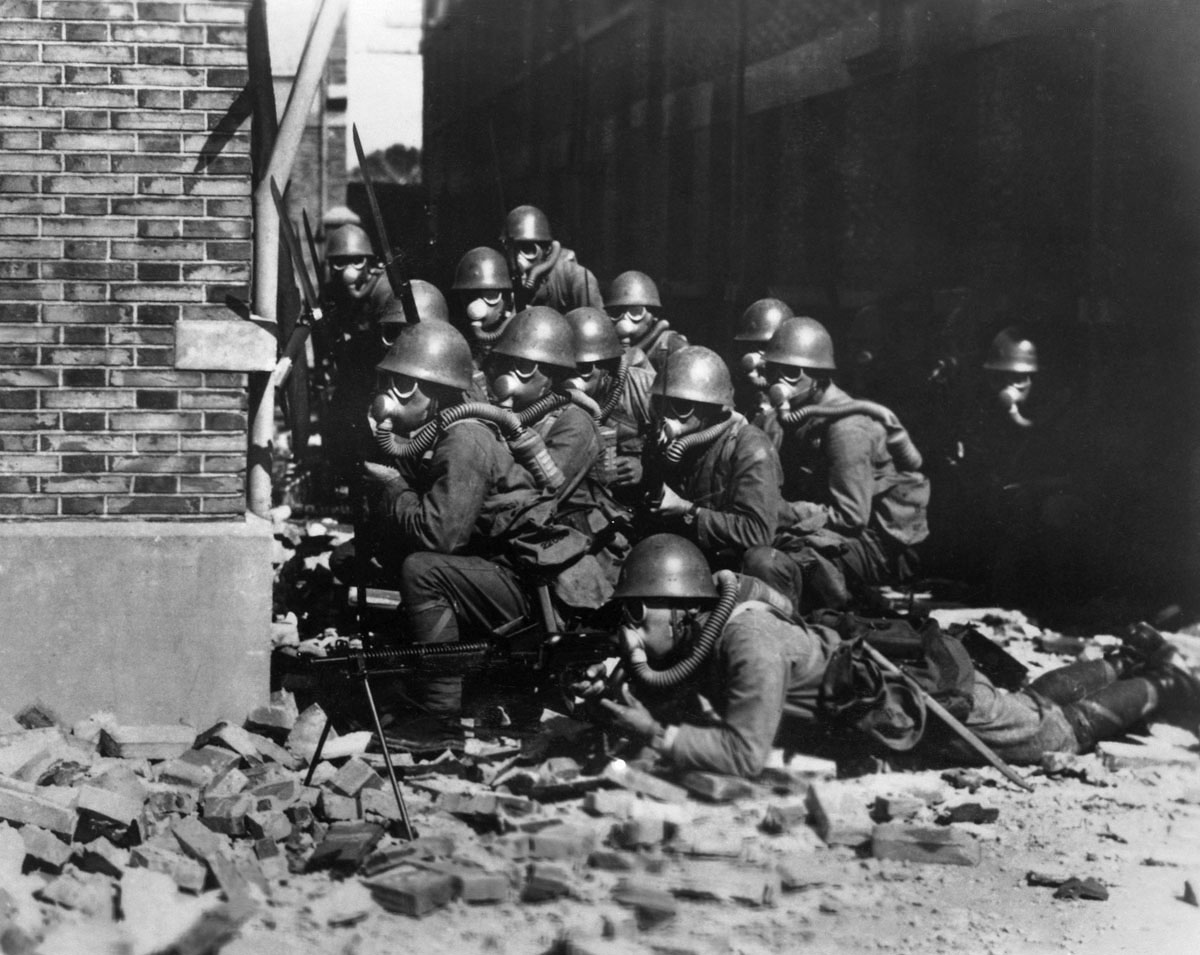
The late 1930s saw the erosion of the fragile peace established after World War I. Japan’s full-scale invasion of China in 1937 signified an open challenge to the existing world order. Meanwhile, Nazi Germany, emboldened by its remilitarization of the Rhineland in 1936 and appeasement policies from Western powers, pressured neighboring states and prepared for further expansion. Italy’s invasion of Ethiopia in 1935 and its involvement in the Spanish Civil War further demonstrated the global shift toward unchecked aggression.1
Asian Dynamics of the 1930s
Asia in the 1930s was a theater of collapsing empires and anti-colonial resistance. Japan’s invasion of China aimed to displace Western colonial powers (Britain in Hong Kong, France in Indochina) and establish a “Greater East Asia Co-Prosperity Sphere.” Meanwhile, anti-colonial movements fractured European hegemony:
- India: The Quit India Movement (1942) challenged British rule, while Subhas Chandra Bose’s Indian National Army allied with Japan to resist colonialism.
- Vietnam: Ho Chi Minh’s Indochinese Communist Party (1930) laid groundwork for independence wars against France.
- Korea: The 1919 March 1st Movement against Japanese occupation inspired decades of resistance.14
Global Landscape in 2025
In 2025, the world has returned to a multipolar structure dominated by the United States and China, with significant roles played by the European Union, India, and Russia.2 China’s assertive stance in the South China Sea, Russia’s ongoing conflict in Ukraine, and territorial disputes in the Arctic reflect a growing willingness among major powers to challenge international norms. The weakening of the United Nations and declining trust in multilateral frameworks parallel the ineffectiveness of the League of Nations in the 1930s.3
Additionally, much like Germany’s aggressive rearmament in the 1930s, nations today are increasing military expenditures at an alarming rate. NATO members have raised defense budgets, China has accelerated naval expansion, and regional powers such as Japan and India are revising long-standing security doctrines.4 If diplomatic engagements fail to manage these rivalries, the risk of conflict escalation remains high.
Asian Geopolitics in 2025
Today, Asia is the epicenter of 21st-century power struggles:
- China’s Ambitions: The Belt and Road Initiative (BRI) and South China Sea militarization echo Japan’s pan-Asian rhetoric but rely on economic leverage, not outright invasion. Taiwan remains a flashpoint, with China framing reunification as a post-colonial imperative.15
- India’s Rise: As the world’s most populous nation, India balances Quad alliances with the U.S. and defense ties to Russia while asserting “Vishwaguru” (global teacher) leadership in the Global South.16
- ASEAN’s Dilemma: Southeast Asian states hedge between U.S. and China; Vietnam accelerates arms imports, while the Philippines granted the U.S. access to nine military bases in 2023.17
Unlike 1930s Japan, modern powers use institutional influence (e.g., China in the Shanghai Cooperation Organization) and debt diplomacy rather than territorial conquest, representing a key distinction between the two eras.
II. Economic Policy Missteps and Trade Fragmentation
Global Economy in the 1930s
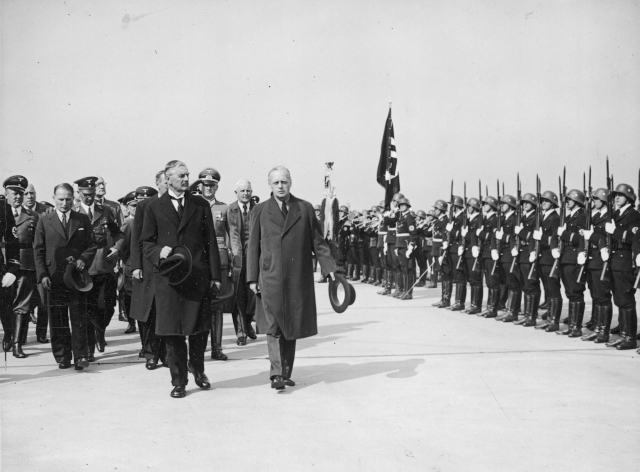
The global economy of the late 1930s suffered from protectionism, monetary tightening, and weakened financial institutions. The U.S. Federal Reserve’s decision to double bank reserve requirements in 1937 led to a contraction of credit, causing industrial production to plummet by 32%.5 Meanwhile, fiscal austerity measures worsened economic conditions, just as Smoot-Hawley tariffs had earlier exacerbated global trade tensions. These policies deepened the recession and contributed to economic nationalism.
Asia’s Colonial Economies in the 1930s
The Great Depression devastated Asia’s export-dependent, colonized economies:
- British India: Rice exports surged during the Bengal Famine (1943), killing 3 million as colonial policies prioritized profit over people.
- Dutch Indonesia: The Cultivation System forced farmers to grow cash crops, impoverishing communities to enrich the Netherlands.
- Japan: Western embargoes over Manchuria (1931) drove resource scarcity, incentivizing expansion.18
Global Economic Landscape in 2025
In 2025, monetary policy tightening in response to inflation mirrors the errors of 1937. The Federal Reserve’s interest rate hikes, alongside similar actions by the European Central Bank and Bank of England, have slowed economic growth and raised borrowing costs.6 Furthermore, the rise of protectionist trade policies, such as new U.S. tariffs on Chinese and European goods, has increased global trade barriers to levels not seen since the 1930s.7 Supply chain disruptions, exacerbated by geopolitical rivalries and reshoring efforts, further fragment the global economy. The lessons of 1937 suggest that excessive monetary contraction combined with trade restrictions could lead to a prolonged economic downturn.
One key difference between the two eras is the role of technology. While automation and artificial intelligence drive productivity, they also create anxieties over job displacement. This economic uncertainty fuels populist discontent, much like the industrial layoffs and labor unrest of the Great Depression.8 Policymakers must carefully balance technological progress with economic stability to prevent social unrest.
Asia’s Economic Strategies in 2025
Asia navigates a fractured global order with greater agency than in the 1930s:
- China’s Dual Circulation: Reduces reliance on Western markets while subsidizing AI and green tech dominance.
- India’s Self-Reliance: “Make in India” and semiconductor ambitions counter China, yet 60% of India’s defense hardware remains Russian.19
- ASEAN’s RCEP: The Regional Comprehensive Economic Partnership (2020) created the world’s largest trade bloc, sidestepping U.S.-China decoupling.20
New forms of economic dependency have emerged:
- Debt Diplomacy: Sri Lanka’s 2022 default and Pakistan’s IMF bailouts involve Chinese BRI loans, not colonial bonds.
- Japan’s Monetary Policy: Ultra-loose monetary policy risks yen volatility, contrasting with 1937 austerity.21
III. Social Polarization and Ideological Extremism
Global Ideological Landscape of the 1930s
The rise of extremist ideologies in the 1930s was driven by economic hardship and political instability. The Great Depression eroded faith in democratic institutions, allowing authoritarian leaders to gain support by offering radical solutions. By 1937, fascism had cemented its grip in Germany, Italy, and Japan, while communist and ultranationalist movements gained traction in Spain and Eastern Europe.9
Asian Ideological Movements in the 1930s
Asia’s ideological battles centered on anti-colonialism:
- India: Split between Gandhi’s nonviolence and Bose’s militarism.
- China: Mao’s Long March (1934–35) reshaped communism, while Chiang Kai-shek’s Kuomintang fought Japanese invaders.
- Japan: Militarists exploited pan-Asian solidarity to justify occupation, fueling Korean and Taiwanese resistance.22
Global Polarization in 2025
Today’s ideological polarization has led to a decline in trust in democratic governance, with populist and nationalist movements gaining momentum across Europe, the United States, and parts of Asia.10 Unlike the 1930s, modern democracies have stronger institutions and welfare programs that cushion economic shocks. However, political disinformation, social media-driven radicalization, and attacks on democratic norms pose significant threats.11 The parallels with 1937 underscore the importance of reinforcing democratic resilience against emerging forms of extremism.
Asian Sociopolitical Developments in 2025
Modern Asia grapples with democratic erosion and dissent:
- India’s Hindu Nationalism: The BJP marginalizes Muslims and dissenters, revising Nehru’s secular vision.
- Philippines’ Authoritarian Nostalgia: The Marcos-Duterte alliance whitewashes dictatorship crimes, mirroring Japan’s historical revisionism.
- Youth Movements: South Korea’s anti-corruption protests (2022) and Thailand’s pro-democracy rallies (2020–23) echo anti-colonial mobilization.23
Digital technologies have created new dynamics for both state control and resistance. Social media empowers state censorship (China’s Great Firewall) while simultaneously enabling dissent movements (Myanmar’s Spring Revolution).
IV. Contemporary Challenges: Climate Change and Demographics
Climate Vulnerability
Unlike the 1930s, today’s world faces unprecedented environmental challenges. Asia bears 75% of global climate disaster displacements. Bangladesh’s sea-level rise threatens 35 million people, while Pakistan’s 2022 floods caused $30 billion in losses.24 These environmental pressures create new sources of instability not present in the 1937 comparison.
Demographic Divides
Demographic shifts represent another modern challenge without historical parallel. Japan and South Korea’s aging populations (median age 49) contrast with India’s youth bulge (median age 28). China’s population decline (the first since 1961) risks economic stagnation and creates new geopolitical pressures.25
V. Lessons and Projections
History demonstrates that economic mismanagement, unchecked geopolitical aggression, and ideological extremism can have catastrophic consequences. While technological advancements and international institutions provide safeguards against a repeat of the 1930s, complacency remains dangerous.
Global Imperatives
Policymakers must prioritize diplomatic engagement to mitigate conflicts, avoid protectionist economic measures that could deepen global instability, and address the root causes of social polarization. A failure to heed these lessons risks repeating the mistakes of 1937—leading to outcomes that the world cannot afford.
Asian-Centered Future Pathways
- Decolonize Institutions: Reform the UN Security Council (permanent seats for India, Japan, ASEAN) and address colonial legacies.26
- Regional Climate Solidarity: Expand the Asian Infrastructure Investment Bank (AIIB) to fund green transitions and disaster resilience.
- Tech Equity: Regulate AI to prevent U.S.-China monopolies and invest in Southeast Asian digital infrastructure.
Conclusion
The parallels between 2025 and 1937 are evident across both Western and Asian contexts, though with important distinctions. While the West focuses on great power competition and economic protectionism, Asia’s experience highlights both colonial legacies and emerging agency in the international system. Unlike the 1930s, today’s global challenges include climate change and demographic shifts alongside traditional security and economic concerns.
By understanding both Western and Asian perspectives on these historical parallels, policymakers can develop more comprehensive strategies to avoid repeating past mistakes. Asia is not merely a passive arena for great power conflict but a dynamic architect of global order. The integration of these perspectives offers the best chance to navigate the crossroads of 2025 without descending into the catastrophic outcomes that followed 1937.
Notes
1 Richard Overy, The Origins of the Second World War (New York: Longman, 1998), 76-78. ?
2 “Global Power Dynamics Report,” NATO, last modified March 15, 2025, https://www.nato.int. ?
3 Susan Pedersen, The Guardians: The League of Nations and the Crisis of Empire (Oxford: Oxford University Press, 2015), 312. ?
4 “Defense Spending Trends 2025,” SIPRI, https://www.sipri.org. ?
5 Robert F. Bruner, “Liveblogging the Great Depression: Comparison with the Great Recession,” Darden Blogs, December 15, 2016. ?
6 U.S. Federal Reserve Board, Monetary Policy Report (Washington, DC: FRB, 2025), 12. ?
7 U.S. International Trade Commission, Economic Impact of Tariffs (Washington, DC: USITC, 2025), 45. ?
8 David Autor et al., “The Labor Market Impact of Artificial Intelligence,” Brookings Papers on Economic Activity, March 2024. ?
9 Stanley G. Payne, A History of Fascism, 1914–1945 (Madison: University of Wisconsin Press, 1995), 310-312. ?
10 Pippa Norris and Ronald Inglehart, Cultural Backlash: [redacted], Brexit, and Authoritarian Populism (New York: Cambridge University Press, 2019), 214. ?
11 “The Future of Democracy Report,” Freedom House, 2025, https://freedomhouse.org. ?
14 Pankaj Mishra, From the Ruins of Empire (2012). ?
15 2023 U.S. DoD China Military Power Report. ?
16 C. Raja Mohan, India’s Strategic Choices (2023). ?
17 “ASEAN Centrality in the Indo-Pacific,” ISEAS, 2024. ?
18 Ken’ichi Ohno, Japanese Economic Development (2018). ?
19 “India’s Defense Modernization,” SIPRI, 2023. ?
20 “RCEP and Trade Fragmentation,” Brookings, 2023. ?
21 “Japan’s Stagnation,” IMF, 2023. ?
22 Rana Mitter, China’s War with Japan (2013). ?
23 “Asia’s Democratic Backsliding,” V-Dem, 2023. ?
24 IPCC Sixth Assessment Report, 2023. ?
25 UN DESA Population Division, 2023. ?
26 Utsa Patnaik, The Agrarian Question (2021). ?

Mark Rabideau
ManyRoads Creator, Professional Genealogist, Family Historian, power-walker, Old Guy and most importantly 'opa'