Quebec History Texts

The following Quebec History subjects are now available in our online library: The 1837 Patriots Rebellion of Lower Canada and the Metis population of Quebec.

research1837 Patriots Rebellion

Metis

These documents like most of our texts are in DJVU format.

Quebec’s French speaking Native People (Metis)

Original Source Article

Names used to designate Natives, other than the name of their tribe or nation, include : Savage (a pejorative, rarely used today but common only a half-century ago), Indian, North American Indian, Native, and Amerindian (this one seems to be used only in French).  In French, the corresponding terms are: Sauvage, Indien, Indien nord-américain, Autochtone and Amérindien.

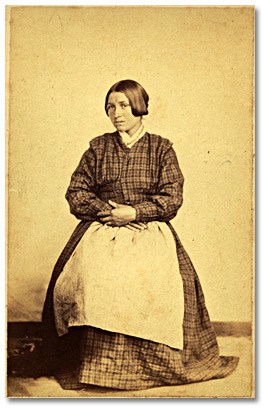
Metis Woman

Janet Woppumnaweskum, Metis woman

Metis means mixed blood, that is initially one parent was White, and one was Native, while later one or both were Metis.  While a Metis can be any place where there are Natives and Whites, Metis Nation is defined as including the Metis living in the early Manitoba lands.

Contrary to popular belief, there were few marriages between Natives and the French in the early days of the colony of New France. We can find these marriages in Jette for the period before 1731, just like all the other marriages of that period.  This kind of marriages seems to be more common in Acadia but because of the missing records, it is not possible to estimate the proportion of Acadian Metis families.

In the Quebec early vital records (1621-1765), we have about 78 couples with a Male Native and a Female European, 45 with a Female Native and a Male European and 540 with 2 Natives.  The whole database has over 44,500 couples, including some living in France.  So, the % of Metis married couples is very small, under 0.3%.  Those are couples according to our church records.  It is practically not possible to count about many couples left no official trace except if we do some DNA analysis for the whole population.

While the Acadian records are less complete, it is quite fascinating to compare them with the Quebec records.  In the Quebec missions like Tadoussac or Oka, the Amerindians were called with Indian names.  In Acadia, they had more frequently European names.  In the old West (pays d’en haut), there are some fur traders who married Native women following the local custom.  The European settlement appeared after that of Quebec and Acadia and the naming pattern is similar to that of Quebec.  This could mean in Acadia, the Natives were mixed to Whites, while in Quebec and the West, the White were mixed to Natives.  This would explain why there is no Native parish in Acadia, unlike in Quebec.

From 1600 to 1800 ( very approximate years ), acts of baptism, marriage, and [death] may include only the Christian name or both the Christian and the Native names. In the second case, it is possible to find the genealogical link even if the Native name is not hereditary because that name is kept by a person all along his/her life.

Around 1800-1850 ( very approximate years ), acts concerning Natives start using a family name and it then becomes possible to trace the genealogical links.

There was another special phenomenon, namely the adoption by Whites of Natives, but these adoptions left no trace in the parish registers. In fact, adoptions before 1930, be they of Whites or Natives are rarely mentioned in Quebec parish registers.

ManyRoads Newsletter- 26 Jun 2010

Quite a bit has been added to the site since my last missive.  Rather than bore you with a lot of details, I will simply outline the changes. The major items or changes to ManyRoads include: news

Additionally I have upgraded the entire site to the newest version of WordPress and everything seems to be running fine.  Please let me know if you encounter any problems.

Best regards!

…mark

ManyRoads Maps

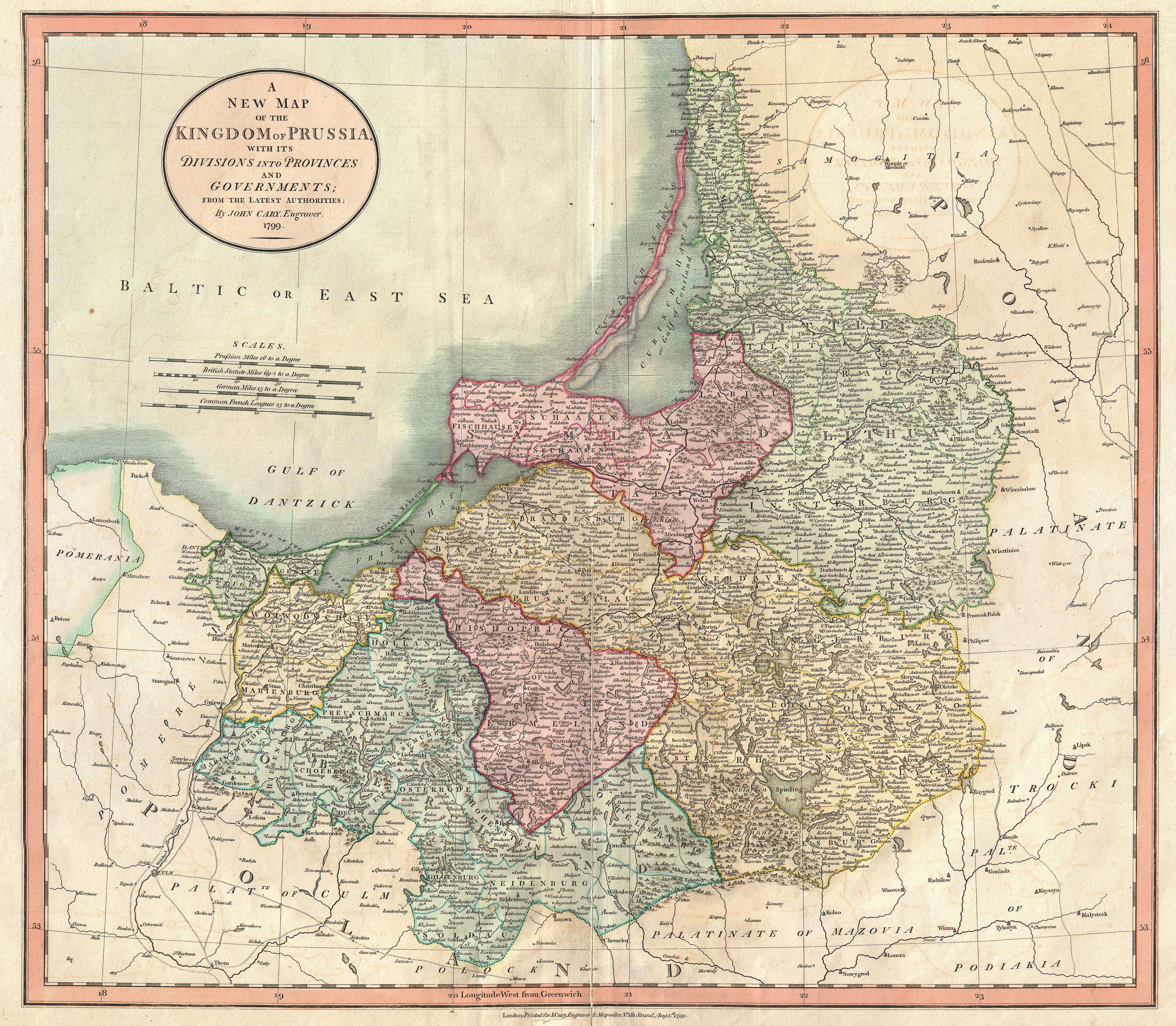
GlobeWe provide free maps of Prussia (Germany), Europe, Quebec, and Early North America.

Maps Related Articles:


Our maps are sourced from all over the internet. In an effort to thank most of those who have provided us with these wonderful documents, we acknowledge the following groups, sites and organizations:

We also thank Zoomify for their software which makes the loading and analysis of large images both fast and easy.

Find your friends

Find your friends.  If you run a family history/ genealogy website, building associations and affiliations can be a useful and valuable adjunct to your genealogical efforts.

Genealogy-IdeasSome of the most interesting and potentially useful affiliations (links) are with are sites and organizations belonging to other family members or family associations.  These family members/ associations need not be particularly close, from a genealogical relationship perspective, but rather simply represent individuals or groups searching for, or providing, information on branches, limbs of your family tree.  It is additionally helpful if their family name obviously links or relates to those most frequently mentioned on your site.  Obvious name linkages make it easier for casual readers and researchers alike to see the importance and enthusiasm for information involving your family, perhaps enticing a more reluctant reader into active participation.

Not only can related sites possible additional readership for, and comments on, your site, but more importantly, they provide you with the potential of finding good and useful sources of genealogical information.  Presumably, the readers of closely affiliated and obviously related sites are also interested in assisting in your research success and may, also, be willing to provide you with analysis and reviews on your own research efforts. (N.B. I have found this form of review invaluable in scrubbing errors and addressing omissions in my research.)

In the case of ManyRoads, we have recently come across several such sites. These include:

If you know of sites researching any of our family names, most notably any related to:

  • Rabideau,
  • Henss,
  • Johannson (Veddige, Sweden),
  • Sivertsen (Sandane/ Gloppen, Norway),
  • Deyo (Quebec, Northern NY),
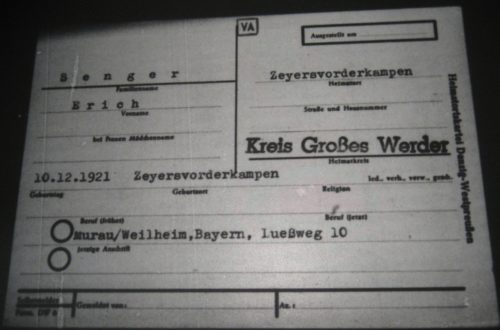
  • Senger (East & West Prussia),
  • Rich (Washington Cty, Iowa)

Please let us know.  We’d both love to visit them and create a mutual link.

The Raphael Robidoux Mystery

The following reproduced web publication goes a long way in solving the mystery of Raphael Robidoux’s birth and his family linkages.

I sincerely appreciate the wonderful work of Clyde Rabideau and his making this publication available on the web. I hope he is honored by our presentation of his material and analysis.

If you get an opportunity, please visit Clyde Rabideau’s website to see what new publications are under development.Raphael & Euphemie Robidoux

IN PURSUIT OF MY ANCESTORS

By Clyde M. Rabideau

I started trying to determine who my ancestors were in 1990 when I was living and working in Ottawa, Canada. It was not long before I was at a dead end. My parents were Medard [Medor] Rabideau and Lillian Varin. My paternal grandparents were Noel Rabideau and Agnes Rousseau. A close look at my grandfather’s death certificate showed his name as Newell and parents as Russel Rebedeau and Philanda Mathews.. [...]

It did not take me long to determine that my great-grandfather’s name was actually Raphael Robidoux. I was able to locate his immigration papers at the Clinton County Clerk’s office in Plattsburgh, New York. He immigrated from Quebec in about 1855 when he was 13 years old and became a citizen on October 21, 1884.

raphael-robidoux-immigration-papers-21-oct-1884

My next step was to find out where he was married. I was able to locate his marriage in the St. Pierre’s [Peter’s] church records in Plattsburgh:

raphael-robidoux-euphemie-robidoux-marriage-9-jan-1860

Unfortunately, the marriage record did not show any parents. This meant that I would have a much more difficult time in my pursuit. The Clinton County federal census records showed them living in Alder Bend in the town of Altona which is where my grandfather, Noel, was born. I still had the problem of going backwards. I started with Raphael and used Quebec church records that were available at the Quebec Archives located very close to the American Embassy in Ottawa, Canada. This location was very close to where I was posted to and working for the U. S. Government. After a considerable search, I was able to find his baptism record in St-Constant, Quebec. St-Constant is located south of Montreal and very close to the Caughnawaga Indian Reservation.

raphael-robidoux-baptism-20-nov-1842

Unfortunately, I was now at a dead end. The baptism record did not provide any clues as to Raphael’s actual parents. His death certificate showed his parents as Russel [Raphael] Rabideau and Mary Lashway [LaJoie]. I could not find any records on a Raphael Robidoux and Mary LaJoie:

raphael-robidoux-death-21-aug-1909

I had no other choice but to change my research to find out more about his wife, Euphemie Robidoux. Family records and written family history had her name as Philomene Mattis or Philenda Mathews and Philomene St. Germain. Her death certificate did show her mother as Salome Boyer:

euphemie-robidoux-death-14-oct-1921

All of the church baptism records of Raphael and Euphemie’s children had her last name as Robidoux. Euphemie is oftentimes shown as Philomene of Philanda or something close to that. As shown on my grandfather’s death certificate her name was Philanda Mathews. On the death certificate of Euphemie’ daughter, Mary, it was shown as Mary St. Germaine. There were several baptisms of children in the Clinton County area to Leon [Leandre] Robidoux and Salome Boyer. Assuming that her name was actually Euphemie Robidoux, I began my search for her birth. I concluded through circumstantial evidence that the Leon Robidoux that attended her wedding was her father. I further concluded that the Pierre Robidoux attending the wedding was the Peter [Pierre] Robidoux who was married to Esther St. Germain and lived in the area of West Plattsburgh.

mary-sorrell-death-28-jan-1967

Based on these conclusions, I began my search of Euphemie and her parents, Leandre Robidoux and Salome Boyer. I found her baptism record shown below:

euphemie-robidoux-birth-24-jan-1838

I was still at a dead end but subsequently found the marriage of her presumed parents, Leandre Robidoux and Salome Boyer. The actual marriage record in French and English follow:

leandre-robidoux-salome-boyer-marriage-15-jan-1839-original
leandre-robidoux-salome-boyer-marriage-15-jan-1839-english-transcription

I then began to research Leandre Robidoux only to find that it was a another complicated task. Footnote 1 of the English translation that I did on the marriage of Leandre Robidoux and Salome Boyer indicates that Julian Laplante, uncle, was married to Marie Anne Robidoux. This was based on my research of Julian Laplante and the connection to the Robidouxs. Marie Anne was the daughter of Toussaint Robidoux and Marguerite Vautrin and the brother of Joseph Robidoux who was born on October 26, 1796 in St-Phillipe, Quebec. Joseph was the only brother of an age that could have fathered Leandre out -of-wedlock or illegitimate, as the Quebec church records describe the baptism. Joseph did not marry until November 22, 1825 when he was 29 years old. It was very uncommon to wait this long to marry during that time and based on the evidence available, I determined that Joseph was the father of Leandre.

I was not able to locate the illegitimate baptism record for Leandre but was able to find him and Euphemie with their children in the 1851 census of Quebec, Canada. They were in Sherrington, Quebec and the age and birthplace is shown for each person. The census below shows that Leandre was born in 1815 in St-Phillipe, Quebec:

leandre-robidoux-salome-boyer-family-1851-census

I now attempted to find where and when Leandre died. Family history had him dying in Beekmantown, New York at the age of 104 with the name of Leandre Mattis. As usual, family history is not always accurate. I was in the Wead Library in Malone, New York looking through microfilm when I came across a two line notice that a Leander Robedeau had died on January 22, 1907 at the age of 94. I eventually was able to obtain a Certification of Death from the Village of Malone clerk in October 1994. The notice in the January 30, 1907 edition of The Malone Farmer read, “ROBEDEAU – In Malone, N. Y., Jan 21st of apoplexy, Leander Robedeau, aged 94 years.”
leandre-robidoux-death-22-jan-1907

The certificate indicated that Leandre’s mother was a Laplante. More than likely, she was a sister of Julian Laplante and as close to the Robidoux family as Julian was. I have not been able to pinpoint exactly which Laplante was her mother. This solved the mystery of my great-grandmother, I thought.

It was not until 2008 when the Northern New York Library Network brought The Malone Paladium on line on their public access site for newspapers in northern New York, http://news.nnyln.net/, that I was able to solve the 80 year old mystery of the Mattis/Robidoux name. I found these articles:

leandre-robidoux-6-sep-1906-malone-palladium-article leandre-robidoux-13-sep-1906-malone-palladium-article To correct some of the information in these two newspaper articles, I must point out that in 1906, Leandre was 91 years of age and not over 100 or 97 as his son, Theodore told the newspaper. In the September 13th article, the editor got the age right.

Also, Leandre was visiting his daughter, Euphemie, who lived in Alder Bend, and not his sister. Euphemie was 68 years old at the time. I could find no record of a sister, let alone one living in Alder Bend with my great-grandparents.

These articles solved forever the family history of Euphemie’s surname and revealed that there were several Mattis, Mattice, Mathes, Mathieu, Matthiew that lived in both New York and Massachusetts that were descended from Leandre Robidoux and Euphemie Robidoux. I found several of her siblings that had taken the Mattis name which subsequently evolved into the names shown above. It appears that Euphemie and Theodore, the two oldest children, were the only siblings to retain the Robidoux name. In Euphemie’s case, she apparently told her family that her maiden or surname was Mattis.

theodore-rubadue-civil-war-registration gilbert-mattice-civil-war-registration

The following obituary was found in the May 8, 1929 Malone Farmer Newspaper:

theodore-robideau-death-newspaper-article

Euphemie’s brother, Leandre Mattis, moved to Lowville, New York and her brother, Gilbert Matthews, lived in Malone, New York for several years before moving to Massachusetts. Both had large and extended families. Theodore and his brother, Gilbert, both served in the Civil War. Theodore as Theodore Rubadue and Gilbert as Gilbert Mattice. It had been a difficult task but I now had a line back to Andre Robidou, the original Robidou that came to Quebec in the 1600s . There are now over 70 spellings of the last name of the Robidou name.

Now, for the rest of the story. By January 2009, I was getting the itch to retry to connect up my great-grandfather, Raphael Robidoux. I spent a couple of months researching the Quebec vital statistics and possible connections. Remember, my grandfather’s name was Noel and my father’s name was Medard. Finally, I used these names as a clue in my search. Both names were extremely rare in the over 9,000 Robidou/Robidoux Quebec record of vital statistics. I found a Medard Robidoux born on June 9, 1798 in Yamaska, Quebec, son of Antoine Noel Robidoux and Josette Godin.

This was too much of a coincidence to pass up. I discovered that Medard married Marie Brouillard on Feb 2, 1819 and they had eleven children born in Quebec. Further, most of their children lived in the Schuyler Falls, Morrisonville, and Cadyville area of Clinton County, New York area. It turned out the Pierre Robidoux attending Raphael & Euphemie’s wedding was a son of Medard Robidoux and Marie Brouillard. This further pointed to Medard Robidoux as the possible father of Raphael. But of course, I did not have any proof.

I had in mind how I was going to prove the connection but I needed to do some more research. I traced the male descendants of Medard Robidoux & Marie Brouillard [...]

I purchased two paternal lineage DNA Test Kit-Y-Chromosome 33s for $79 each from Ancestry.Com with one to be sent directly to the male descendant [...] and one to sent to me. The test kits were received in May 2009 and I completed mine and returned it for testing. He also completed his and returned it for testing. I then had to wait about a month.

The results of the test were emailed to me in June 2009 with a perfect match! Raphael had been born out-of wedlock to Marie Lashway with Medard Robidoux as his father. This meant that the Pierre Robidoux attending the wedding was Raphael’s half-brother and that the male descendant [...] was my third cousin. He was not nearly as excited as I was about the match. It also meant that many of the local Rabideaus were closely related to me and that my long search for my roots was successful.

clyde-rabideau-dna-match-to-medard-robidoux

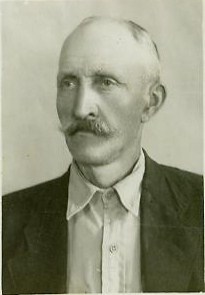
Euphemie Robidoux and Raphael Robidoux on their wedding day at St. Pierre’s church in Plattsburgh, NY on January 9,1860 [small photo] and later in life.
raphael-euphemie-robidoux-pictures

Hampshire Gazette, Massachusetts

Monday, October 17,1921
Mrs. Russell Robideau, aged 92, died Friday evening at the home of her son, Joseph, on Payson Ave. [in Easthampton]. Mrs. Robideau came here in September to visit her son. The body was sent last evening to Altona, N. Y.

raphael-robidoux-grave-before-modification

Raphael & Euphemie Robidoux Grave

Raphael & Euphemie Robidoux Grave after the addition of Euphemie's name by Clyde Rabideau. Location Holy Angels Cemetery, Altona, NY.

Note: Please notice the many different spelling of both the given names and the surnames of all of the ancestors.

Winnie the Pooh on Genealogy #1

It surprises me how much Winnie the Pooh knows about genealogy.

I came across the following quotes and they just seemed to be very insightful. I hope you find them so as well.

Before beginning a Hunt, it is wise to ask someone what you are looking for before you begin looking for it.

Winnie the Pooh
Pooh’s Little Instruction Book

It’s always useful to know where a friend-and-relation is, whether you want him or whether you don’t.

Winnie the Pooh
Rabbit, Pooh’s Little Instruction Book

A little Consideration, a little Thought for Others, makes all the difference.

Winnie the Pooh
Eeyore, Winnie the Pooh

Some people care too much, I think it’s called love.

Winnie the Pooh
Winnie the Pooh

Did you ever stop to think, and forget to start again?

Winnie the Pooh
Winnie the Pooh

Always watch where you are going. Otherwise, you may step on a piece of the Forest that was left out by mistake.

Winnie the Pooh
Pooh’s Little Instruction Book

They’re funny things, Accidents. You never have them till you’re having them.

Winnie the Pooh
Eeyore, The House at Pooh Corner

When looking at your two paws, as soon as you have decided which of them is the right one, then you can be sure the other one is the left.

Winnie the Pooh
Pooh’s Little Instruction Book

When you are a Bear of Very Little Brain, and Think of Things, you find sometimes that a Thing which seemed very Thingish inside you is quite different when it gets out into the open and has other people looking at it.

Winnie the Pooh
The House at Pooh Corner

You can’t stay in your corner of the forest, waiting for others to come to you; you have to go to them sometimes.

Winnie the Pooh
Piglet, Pooh’s Little Instruction Book

All these quotes are copyright A.A.Milne.

Upgraded

ManyRoads has just completed a rather extensive software upgrade. We moved from version 2.9.2 of WordPress to version 3.0.

Free SoftwareSo far as I can tell things are working just fine, however…

If you notice any problems I would greatly appreciate a message regarding the problem(s) so I can track them down and fix them.  Feel free to use our Contact page to let me know.

An Elbing Remembrance- Fred Rump

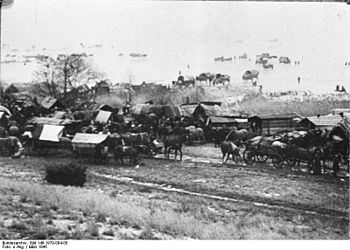
We’ve had some interesting discussions [...] lately but I feel that for most of us Elbing and it’s history is far, far away. The people who actually lived there before 1945 are fast becoming a dying breed. In addition, while there is much Information available in German sources, little information can be found in English.

Let me store some of my thoughts and a brief historical background on these pages.

I was born in Elbing in Dec 1937. My earliest memories are rather vague. See My Story

Point is we left under duress with the full expectation to be back in at most 2 weeks. That was the propaganda line. How my mother could have been so naive and accepted that which was handed her, has taken me to the study of history and the power of government (or other) propaganda. I have read many books and majored in European history just to try to get a handle on this manipulation of the minds of human beings. How was the holocaust possible among a civilized people? The question still haunts me but I’ve discovered that human beings are easily lead astray no matter where they live or who they are. We are essentially tribal beings whether we belong to a family, an infantry squad or a religious group and will defend the behavior of our members against all ‘others’.

I knew my mother was always prejudiced towards Poles. She referred to them as Pollacks in a derogatory way. Why? Where did this come from? I know that we had a Polish maid during the war who helped my mom raising my sister and me. She was probably assigned to us against her will by the state. I don’t know if I’m right or whether she wanted to work for us. Anyway, one fine day she was gone along with some our valuables. That helped my mom with her prejudice against all Poles. They’re all thieves etc. Another action was the aftermath of WW1 when the allies gave much of Eastern Germany to the Poles and created Czechoslovakia from scratch. Just as we just read about Loesser & Wolf, one of their 4 factories was simply Polonized and taken over because it lay in this new Polish territory. This happened all over West Prussia and the animosity of Pole vs German was a breeding ground for hate and prejudice. The rights to live in their homes and keep their livelihood was basically cut short by the actions of the new Polish owners of this land. A perfect cauldron for revenge as soon as the opportunity presented itself. The Nazi propaganda machine only added to this hate campaign. It became easy to see a Pole simply as an opportunistic thief who didn’t want to work for their own benefit like good honest Germans did. When the National Socialist party ran on an extreme rightist ticket for redress of all these wrongs, the people voted them into power. Once they had it, they took complete charge but always under a highly patriotic banner. If you’re not with us, you’re with the enemy. The people could fill in their own blanks.

How did all this get started? Nationalism or tribal warfare – the us and them. To add a little history: way back when the area was Christianized at the request of the authorities who did this all over the world. The idea was to run the newly converted land under new rules of civilization. Normally a country would be formed but this was the time of the crusades and the Teutonic Knights happened to have been given charge of this process by the emperor and the pope. Many wars later a peace treaty was signed which gave roughly half of the knight’s land to a new sovereign, the Polish king. Nothing changed except that more and more settlement came in from the East to enjoy the fruits of trade and commerce. The land became more Slavic while the cities stayed German and managed themselves. They were examples of a new Democratic type of government run by the tradesmen of these towns. They too resented having to pay taxes to some nominal overlord whether he was Polish or the Grandmaster of the knights. They joined together in the Hanseatic League to present a power of their own. Remnants of this free and self governing lifestyle are still seen in the City State of Hamburg and others to this day. They belong to no state. The old HRE (Holy Roman Empire of the German Nation) had many such imperial cities who managed themselves and paid a nominal tax only to the emperor.

In any case, these cities were part of the tribe of German speakers. Countries as such hadn’t been invented yet. The King of England was also the King of Hannover. This did not make Hannoverians into Brits or part of the British Empire. They simply offered homage to the king. Such was the deal in Royal and Ducal Prussia. A lord would sit somewhere far away and the people lived their lives in harmony. Back, before the US had fought it’s 38 Indian wars to conquer native lands, the King of Prussia and others divided Polish lands among themselves to enhance their spheres of influence and, in the Prussian case, get back when they lost in previous wars against the knights. So, in 1772, Royal Prussia which had been under a Polish sovereign for a while became part of the Kingdom of Prussia under a German sovereign. This is our West Prussia. It was all turned back in 1920 when the land was given to this newly created country of Poland which hadn’t existed since 1795. After Napoleon defeated Prussia the Treaty of Tilsit established the Duchy of Warsaw from Prussian lands and a new Poland was born again but under another personal union deal where the King of Saxony was also the Duke of Warsaw. Not to go into the entire history but Poland essentially did not exist until after Versailles. The Poles then also attacked Russia, Ukraine and Lithuania to enlarge their territory. In 1921 after a plebiscite was won by the Germans in Upper Silesia the allies also awarded that territory to Poland. In general it was a time of extreme nationalism which favored the Poles in all respects. German resentment was quietly cooking during the 1920s and 30s. Various atrocities and so called ‘bloodbaths’ in the newly created Polish lands upon the German population only added to the seethe.

In 1939 Russia and Germany attacked Poland. Germany took back all the land taken from it after WW1 and there was great rejoicing among the people. They had gotten their homes and pride back. The Nazi party took the glory and credit. Everyone else was a defeatist and enemy of the state. The concept of traitorous behavior which caused Versailles as a sell out was being blamed on Socialists, the Jewish population and its bankers and industrialists. Enemies of the state where among us. Once all power was in the state, concentration camps were not far behind. The people closed their eyes and did not want to know why and what.

Russia, of course retained the land it took from Poland and arranged for the Polish population to be shifted into German lands after WW2. In order to make room somewhere between 14 and 16 million people were ethnically cleansed and moved out or killed. Our country agreed to this process even though our history books don’t tell us about it. Well over a million people died in the forced exodus. Many simply disappeared in Siberia as they were shipped there as slave labor. Further, a million German POWs died after the war was over in Soviet prisons. It was the worst of times for German women who happened to be caught by Russian soldiers or the so called Polish Militz. Every German refugee can tell those stories from hell. They say such is war.

So much for a short recap of what happened. In 1995 I spent 8 weeks on a camping trip in the former German lands to see what was left to see of the past. I have to admit that the transformation and erasure of the past was almost 100% complete. Except for a few faded signs on old discontinued railroad buildings out in the country and the word ‘Elbing’ in the 1912 cast iron sewer inlets there was really nothing there to showed hundreds of years of having been. Even an old 17th century map painted on a museum wall had the word Elblag replacing Elbing. I’ve seen that same German map in books in its original version. It’s as if Boston were converted over night to be a French city with every English word chiseled out of the granite buildings. All that is left are the old blue and white porcelain house number signs on the buildings. Our house still had its old number but the street name was translated into Polish. So nothing changed and everything changed. The street itself had risen as the city’s rubble was simply paved over. Where once I had to climb steps up into our house, they now led down. Strange.

The people were friendly though. Their world view and history is formed from a system that teaches only a Polish version but we do the same here. History is what people are taught by the establishment. In Germany they try to not even to teach history. :-) I had many long discussions as people wanted to know what I think even though everything I thought was obviously wrong. Their teachers told them so. When I added myself to a group of architectural students from Britain on a group tour of the Marienburg castle, one of the students started arguing with the guide as her story was completely wrong. The student was Polish but was studying in England. He chastised the tour guide for making up stories and then they got into it in Polish. Point is, the tour guides are employees of the state and they have to present the official Polish version of the world or they wouldn’t have a job. There are historians and writers in Poland today who work on the truth but they are still on the outs with the official version of Polish history. Maybe someday history will be written as it really was. “Wie es eigentlich gewesen ist.” (Ranke) But we need to do away with nationalism first.

One incident I should bring up here: I had made this U-turn on a major street in Elbing and was pulled over by the police. ‘Papers (or a something) please’ in Polish. All I really had was a passport. The cops did not look happy about my transgression. Maybe its a big thing to make a U-Turn in Poland? Then they pointed out to something on my passport to each other and their demeanor changed instantly. They showed the passport to me pointing out that it said ‘born in Elbing, Germany’. Maybe that was the first time they had seen the word Elbing but they knew it and smiled and wished me welcome with a shake of the hands. I didn’t understand a word of what they were saying but I got the message and saw this act as a moment of hope for all of us. We had the same home town but came from different worlds and we were able to smile.

Fred Rump

Parker Genealogical Society

On this page you will find presentations I have created/delivered to a wonderful group in Parker, Colorado- The Parker Genealogical Society.  Presentations are available here for anyone to view and/or download.

I hope you find them useful.

What's in a name?- Delivered 12 June 2010 Quebec Genealogy- Delivered 09 October 2010

Burgos, Spain- home of Andre Robidou

Burgos is the area in Spain from which Andre Robidou, the founder of the Rabideau family in North America, came.

from Wikipedia

Early humans occupied sites around Burgos as early as 800,000 years ago. When the Romans took possession of what is now the province of Burgos the site had been a Celtiberian  city. In Roman times it belonged to Hispania Citerior (“Hither Spain”) and then to Hispania Tarraconensis. In the fifth century the Visigoths drove back the Suebi, then the Arabs occupied almost all of Castile in the eighth century, though only for a brief period, and left little if any trace of their occupation. Alfonso III the Great, king of León reconquered it about the middle of the ninth century, and built several castles for the defence of Christendom, which was then extended through the reconquest of lost territory. The region came to be known as Castile (Latin castella), i.e. “land of castles”.

Burgos was founded in 884 as an outpost of this expanding Christian frontier, when Diego Rodríguez “Porcelos”, count of Castile, governed this territory with orders to promote the increase of the Christian population; with this end in view he gathered the inhabitants of the surrounding country into one fortified village, whose Visigothic name of Burgos signified consolidated walled villages (Gothic baurgs). The city began to be called Caput Castellae (“Cabeza de Castilla” or “Head of Castile”). The county (condado) of Burgos, subject to the Kings of León, continued to be governed by counts and was gradually extended; one of these counts, Fernán González, established his independence.

In the eleventh century the city became the see of a Catholic bishop and the capital of the Kingdom of Castile. Burgos was a major stop for pilgrims on their way to Santiago de Compostela and a centre of trade between the Bay of Biscay and the south, which attracted an unusually large foreign merchant population, who became part of the city oligarchy and excluded other foreigners. Throughout the thirteenth and fourteenth centuries Burgos was a favourite seat of the kings of León and Castile and a favoured burial site. The consejo or urban commune of Burgos was firmly in the hands of an oligarchic class of caballeros villanos, the “peasant knights” of Burgos, who provided the monarchs with a mounted contingent: in 1255 and 1266 royal charters granted to those citizens of Burgos who owned horses and could arm themselves relief from taxes, provided that they continue to live within the city walls The merchant oligarchy succeeded the cathedral chapter as the major purchasers of land after 1250; they carried on their mercantile business in common with municipal or royal functions and sent their sons to England and Flanders to gain experience in overseas trade. A few families within the hermandades or confraternities like the Sarracín and Bonifaz succeeded in monopolising the post of alcalde, or mayor; a special court, the alcalde del rey was first mentioned at Burgos in 1281 By the reign of Alfonso X the exemption of the non-noble knights and religious corporations, combined with exorbitant gifts and grants to monasteries and private individuals, placed great stress on the economic well-being of the realm.

In the century following the conquest of Seville (1248), Burgos became a testing-ground for royal policies of increasing power against the consejo, in part by encouraging the right to appeal from the consejo to the king. In 1285 Sancho IV added a new body to the consejo which came to dominate it: the jurado in charge of collecting taxes and overseeing public works; the king reserved the right to select its members. The city perceived that danger to its autonomy came rather from an uncontrolled aristocracy during royal minorities: Burgos joined the hermandades of cities that leagued together for mutual protection in 1295 and 1315. In the fourteenth century official royal intrusion in city affairs was perceived as a palliative against outbreaks of violence by the large excluded class of smaller merchants and artisans, on whom the tax burden fell. The alguacil was the royal official instituted to judge disagreements.

On 9 June 1345, sweeping aside the city government, Alfonso XI established direct royal rule of Burgos through the Regimiento of sixteen appointed men

In 1574 Pope Gregory XIII made its bishop an archbishop, at the request of king Philip II.

Burgos has been the scene of many wars: with the Moors, the struggles between León and Navarre, and between Castile and Aragon. In the Peninsular War against Napoleonic France, Burgos was the scene of a battle, and again in the 19th century Carlist civil wars of the Spanish succession. During the Spanish Civil War Burgos was the base of Gen. Franco’s rebel Nationalist government.

You can’t go back (an appreciation)

A recent posting I placed on ManyRoads has provided me with some new insights into life, progress and accommodating the past. As an old adage notes, you can not control the problems life presents you with, but you can choose how you react to them. And, this is true.

The following historical facts are true:

  • World War 2 involved the senseless displacement and destruction of tens of millions of people
  • Germany lost the second World War
  • the German people of Kreis Elbing were expelled from their homeland
  • the Russians and their allies destroyed much of what was West Prussia
  • the Poles were given many former eastern German lands including those of Zeyer and Elbing
  • immediately after WW2 the victors made serious attempts to eradicate all traces of the region’s former German residents and history
zeyer-memorial1 Given the above facts, the current residents of region could readily have chosen to continue to deny the past, excuse the pain, and work to erase the area’s German history. However, over the past several years (probably since the demise of Communism and with Poland’s entry into the EU) there are notable changes in spirit and behavior including:

  • improved (actually quite excellent) availability of German documents and archives (dlibra),
  • active preservation, conservation and restoration of the region’s original architecture,
  • a more active and accurate acknowledgement of German history,
  • more public acknowledgement of the German/ Prussian historical contribution to the development of the region,
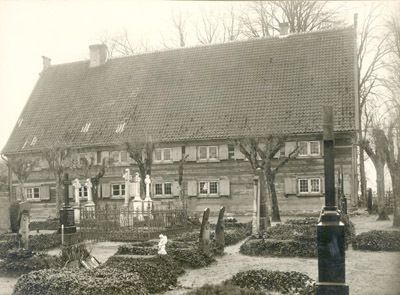
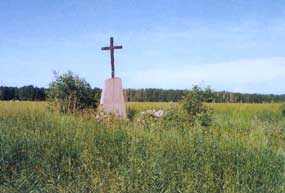
  • and most importantly to me, allowing former German residents to erect memorials to their forebears (such as the new Memorial on Zeyer’s ev. Kirche Cemetery)

As a person whose forebears were from Zeyer and Kreis Elbing, I appreciate the thoughtfulness and difficulties associated with taking this broader approach.   Hopefully tolerance and peace are finally finding a home in this long troubled area.

20-20 Hindsight

Ah, the advantages of hindsight.  Looking back in time and regretting the decisions that were made, the options that were chosen, and the events that occurred is very easy trap to fall in.  Fruitless, but easy.  In fact, spending a lot of time trying to rewrite the past, excuse events or bemoaning their occurrence is, from a family history and genealogical perspective, often counter-productive. The past is gone and not likely to be wished away. The past impacts our current actions, options and choices.  If past actions are not well understood they risk being repeated, and often are.

researchRather, it is my opinion that the following is much more productive:

  • Attempt to understand the details of events (what really happened?). This often means listening to or reading about events from perspectives that may run counter to your own view of them or perspective.
  • Place events in an appropriate time and context.  Recognize that any one event is rarely disconnected from a regional, cultural, or historical context.
  • Events occur as a reaction to related events that preceded them. Learn about them. Event B is generally a reaction to event A; understand why B would have happened?
  • People almost always act in what is termed ‘enlightened self-interest’. Try to understand why things occurred and made sense to most of those involved. This is not to say that they need make sense to you; in fact, they do not always make sense.
  • Try to remove yourself emotionally from events of the past.  The lower your emotional involvement, the more likely you are to get a clear picture of an event.  This is not to say that you need to be an abstracted automaton but rather you need to establish observational objectivity.

If you are able to achieve some number of the above objectives, you will find that events which once seemed crazy or incomprehensible possibly look more rational or are, at least, more explainable.  This is not say that you will approve of the choices or events that occurred but rather you might begin to understand the whys and wherefores of them. Most importantly, you may begin to understand what ‘really happened’ to your family.

Civility and history

Unfortunately when people are expelled from areas, civility is not always, or perhaps even generally, the rule. Such was the case in Poland.  The Polish Communist government was eager to lay claim to its newly obtained German lands and expel all Germans not simply from the lands but also from memory and history.

Over time however even this changes, as is noted in my earlier posting about the Zeyer Cemetery. However as the following story from Fred Rump relates, it was not always that way.

“I actually found some cemeteries hidden in a forest and all overgrown out in the rural parts of East Prussia and there are some WW1 German memorial and military cemeteries because these boys died fighting the Russians who were invading Poland. Some of the old maps show where the cemeteries used to be and one needs to look for them. A suspicious sign would always be a forested section in the middle of fields and farms. The area was simply left to nature after the graves had been dug up. In the cities everything was plowed over or built upon. Today there might be a memorial stone there as civility has returned to life.

But whatever remained of what used to be a village cemetery is today treacherous walking because it was full of holes overgrown with weeds as most graves had been dug up to look for rings, gold teeth or whatever people used to put in the graves with their loved ones.

[For example] In Steinort, at the estate of (Count) Heinrich Graf von Lehndorff-Steinort which had been in his family for 600 years, we found such a cemetery at the end of a huge line of trees which we followed through the woods. These trees used to be an allee of oaks leading to the family crypt and chapel as well as the cemetery of Steinort. Now they were simply part of a new forest. A few iron ornaments which were anchored too well could be found among the holes the locals dug to uncover the graves. The crypt had been stripped, the chapel lay in ruins. Later we asked one of the workers who know lived at the estate (the main house had been purchased by a Swiss investor) if he knew anything about what happened to the place.

We got quite a story. Apparently when this man was a boy he and his friends used the coffins from the crypt as boats on the lake of the estate. He further went on to tell us how it used to be. How under Gomulka the standing order was to destroy anything German that was still left standing. He recalls one drunken night when they moved all the old books out of the library and had a great big bonfire in the yard. 600 years of family history was thus burned to a crisp.”

But things appear to be changing. As Poland enters the European Union and moves passed its Communist past, acknowledgements are beginning to occur. Archives are being developed and published, memorials appear, and perhaps a brighter more civil future awaits.

Related Information:

Our readership

Yesterday was a high water mark for our readership numbers. news We had 218 unique visits; our previously most active readership day was with 206.

Thank you to everyone of you who spend time with us on ManyRoads. We are immensely pleased that you take the time to visit us. If you have comments or information you would like to share or augment, please feel free to use our contact page to let me know.

Again, thank you!

It is not a contest

It seems many people believe that genealogy, or family history, is some sort of competition or contest. Their ancestors were better, were more important, traveled further, worked harder, suffered more, were more regal…

Genealogy and family history is conceptually straightforward, it simply involves accurately identifying our ancestors, family and history. Every family has had its successes, failures, highlights, lowlights. People have lived for long times or short times, in good places and bad. They have been ruled by good people and evil. There has been war and peace. Children have been healthy and sick. Such is the nature of life.

As genealogists, we seek simply to understand their stories, their journey, their lives. By understanding them, we understand ourselves. Their travails are ours.

No, it is not a contest. It is a journey. We are their children; they are our forebears. We are their hopes; they are our history, we are their love.

Zeyer Friedhof- 2010

Vergangenheit in aller Munde (original source article has been removed)

Die Kirche und der Friedhof in Zeyer (Gemeinde Elbing) haben den Kampf gegen die Naturgewalten verloren – den gegenmenschlichen Widerwillen und Vergessenheit aber gewonnen.

Das war ein wichtiges Ereignis für das ganze Dorf. An der Stelle, wo sich einmal die evangelische Kirche und der dazu Friedhof befanden, wurde am 22. August nach sieben Jahren der Bemühungen ein Denkmal zu Ehren der dort Ruhenden errichtet. Das Denkmal entstand dank den Bemühungen des ehemaligen Einwohners von Zeyer Ewald Frost, der weitere, in Deutschland zerstreut lebende ehemalige Einwohner von Zeyer versammelte, das nötige Geld organisierte und mit Unterstützung der Gesellschaft der deutschen Minderheit Elbing sein Vorhaben, die Toten zu ehren, vollendet hat. Zur feierlichen Enthüllung sind viele ehemalige Einwohner von Zeyern und Ellerwald angereist. Das Denkmal enthüllte Ewald Frost persönlich. Anlässlich der Feierlichkeit wurde auch ein evangelischer Gottesdienst abgehalten. Für die Gemeinde Elbing legten Genowefa Kwoczek (Gemeindevorsteherin) und Zdzisław Śmigielski (Schultheiß) einen Kranz nieder, angereist war auch der Vizekonsul des Generalkonsulates der BRD in Danzig Gerd Fensterseifer.

zeyer-memorial1 Die Kirche in Zeyer entstand laut den ersten Quellen in der frühen Kreuzritterzeit und nach anderen Angaben im Jahr 1633. Sie war nicht nur ein Gotteshaus, sondern auch Zuflucht für die Einwohner zu Zeiten von Hochwasser, weil die Kirche höher als die übrigen Gebäude im Dorf gelegen war. 1945 wurde die Kirche samt Friedhof von der Roten Armee zerstört. Sie wurde nie wieder aufgebaut. Im Laufe der Zeit wucherten auf den Gelände Sträucher und Bäume. Anfangs wollten die Behörden den Plan eines Denkmals nicht akzeptieren.

Dann gab es doch eine positive Antwort und die Behörden haben sogar angeordnet, das Gebiet aufzuräumen. Als das Unkraut beseitigt war, wurden zerstörte Kreuze sichtbar. Der Anblick war sehr bedrückend. Für die Renovierung des Friedhofs hatte niemand Geld, deshalb hat man einen Mittelweg eingeschlagen: Die Pflanzen durften nachwachsen und ein Platz für das Denkmal wurde festgelegt. Am 22. August wurde dieses enthüllt.

zeyer-gottesdienst1 zeyer-gottesdienst2

Our Elbing Addressbooks

Elbinger Adressbücher
Annenkirche Mark Rabideau hat auf seiner privaten Webseite zahlreiche Elbinger Addressbuecher (1847-1930) veröffentlicht. Auch ein Telefonbuch von 1937 ist dabei. Zahlreiche weitere Adressbücher aus Westpreußen (Graudenz, Thorn, Konitz) sind auf der Webseite zu finden. Einwohnerbücher von Danzig, Graudenz und Zoppot stehen zum Download bereit. (GJ)

see: http://wiki-de.genealogy.net/Computergenealogie

I truly appreciate this acknowledgement.  These books are here for all to use as well as to honor my Oma, Opa und Mutti.
Created with Free Software #3

There are a fairly astonishing number of hidden and nearly hidden functions on good websites.

Free SoftwareIn communities communication between members is essential. The same is true of the internet.    Good websites speak with one another and need to be known to each other.  To accomplish these objectives ManyRoads employs additional hidden and not quite hidden functions, including:

  • AddToAny: Share/Bookmark/Email Button- Help readers share, bookmark, and email your posts and pages using any service.
  • All in One SEO Pack- Out-of-the-box SEO for your WordPress blog.
  • Broken Link Checker- Checks your blog for broken links and missing images and notifies you on the dashboard if any are found.
  • Enhanced Links- Allows to get better control over the links listing. Also provides a widget view of the links. Please make a donation if you are satisfied.
  • FeedBurner FeedSmith- This plugin detects all ways to access your original WordPress feeds and redirects them to your FeedBurner feed so you can track every possible subscriber.
  • Google XML Sitemaps- This plugin will generate a special XML sitemap which will help search engines like Google, Yahoo, Bing and Ask.com to better index your blog.
  • Newsletter- Newsletter is a cool plugin to create your own subscriber list, to send newsletters, to build your business.
  • Simple Tags- Extended Tagging for WordPress 2.8 and 2.9 ! Suggested Tags, Mass edit tags, Autocompletion, Tag Cloud Widgets, Related Posts, Related Tags, etc!

Created with Free Software #2

One of the great strengths of using an open source (or I suppose for fee) web development toolkit like WordPress is the wealth of add-ons that are available for you to employ to augment your site’s functionality and reach.

Free SoftwareAs I noted in an earlier posting, I am going to attempt to highlight several adjunctive software components which are employed on ManyRoads and how they help make the site a better and easier tool to use.  In this post I will focus on Plugins that are largely invisible to the end user… or so they might seem.

As you hopefully are aware, there are lots of people on the web who would use your work for their own purposes.  The most common class of these are spammers.  Yes, websites can be spammed and almost always are.  To prevent your site from accumulating undesired Comments, Posts, emails you need ‘weapons’, you need protection. The plugins, as well as other software functions, I find extremely helpful in this realm are:

  • Askismet- “Akismet checks your comments against the Akismet web service to see if they look like spam or not.”
  • AVH First Defense Against Spam-”The AVH First Defense Against Spam WordPress plugin gives you the ability to block spammers before any content is served. Spammers are identified by checking if the visitors IP exists in a database served by stopforumspam.com or by a local blacklist.”
  • Bad behavior- Deny automated spambots access to your PHP-based Web site.
  • Global post password- Enables you to define a global password for all password-protected posts.
  • HoneyPot – “Project Honey Pot is the first and only distributed system for identifying spammers and the spambots they use to scrape addresses from your website. Using the Project Honey Pot system you can install addresses that are custom-tagged to the time and IP address of a visitor to your site. If one of these addresses begins receiving email we not only can tell that the messages are spam, but also the exact moment when the address was harvested and the IP address that gathered it.”
  • Secure WordPress- Little basics for secure your WordPress-installation.
  • SI-Captcha- “Adds CAPTCHA anti-spam methods to WordPress on the comment form, registration form, login, or all. In order to post comments or regiser, users will have to type in the phrase shown on the image. This prevents spam from automated bots. Adds security. Works great with Akismet. Also is fully WPMU and BuddyPress compatible.”
  • WP-Scanner Activator- This Plugin adds <!- wpscanner -> to enable wp-scanner to scan your blog.
%d bloggers like this: