Increase font Decrease font

John Hall c. 1732 – 1794

This page is under development; research is on-going

Note: additional source materials are currently being sought.

The Grandfathers

Vol.I, The Hall and Overstreet Families
Carrol Carman Hall, Springfield, IL, 1981

Section I

Chapter 3, Page 19
From his will of 1794

John Hall c. 1732 – 1794

Miller on Rockcastle Creek

It is common among Hall family searchers to say with a great deal of respect, ‘Our John Hall.’ This is the way they distinguish him from the numerous John Halls they meet with in their researches, within or outside the immediate family. Well, he was ‘quite a man.’ But — we are not descended from him. We are descended from his brother, Hezekiah, who is discussed later in this section. +We are including a section on John Hall because after the death of his father, William, in 1757 at the hands of the Cherokees, John became the head of the family. He is also included because he became the progenitor of many of ‘Our Southern Cousins’, also to be discussed in a subsequent chapter. John spent his life in Bedford county, Virginia and most of his descendants remained there – some to be found there two and half centuries later.

A serious error was made in establishing the family line by earlier researchers, an error the present writer hopes to correct. These family line seekers confused two Hezekiahs: John’s brother and John’s son. We are descended from Hezekiah, the brother not Hezekiah the son. These searchers used John’s Will of 1794 in which the name Hezekiah (his son) appeared; thus, the error.

Hearing

We first meet John testifying at the hearing held in Bedford county in connection with the death of his father, William. The hearing had been called by the authorities at Williamsburg to gather the facts of the incidents associated with the death of William Hall. It was held near the scene of the slaying. From the report of the hearing we can establish some important dates.

The hearing placed the first Indian engagement which led to the death of William as May 1, 1757 – thus, establishing a death date for the slaying of John’s father. It was recorded that John was about twenty-five years of age. He was likely a year or so younger, but we can establish an approximate birth year for him, c. 1732. His Will was made in 1794 and he died in the same year.

John’s sixty-odd years of life covered the colonial period, the French and Indian Wars, the years of American Revolution, and he lived just long enough to see the movement of settlers surge to the westward. Prior to his death he had made a Kentucky trip to see for himself what was going on. Although most of his own family never left Virginia: his grandsons and daughters moved out of Virginia going south and west.

Change

John Hall lived long enough to experience vast changes in Virginia’s governmental, religious and social systems. The church was to be completely separated from the state; the frontier religions were to become powerful forces in his own family and in the area where he lived. Methodism took a strong hold. The Baptist sect found many adherents.

Many formerly appointed government offices now became to be held by elected not chosen representatives. A new nation had been born and Virginia which had played such an important role in its forming was to furnish a great list of national leaders. Already, the great war time general, Washington, had been selected as the first President of the struggling United States.

John Hall survived the Indian Wars, the ‘alarms and excursions’ of the Revolution and lived through the various political and economic changes. During his relatively long life, he married, raised a family, dealt in land, operated a mill, and became involved in the institution of slavery.

Family

In his Will he calls his wife, Magdalene, and her maiden name has been reasonably well established as Smith – her mother was an Evans. Her line of descent appears to be through the Smith family of Quakers who pioneered in Bedford county and for whom Smith Mountain and Smith Lake were named. ++ John and Magdalene +++ had seven children to live to adulthood: five boys and two girls. There names were: John, William, Matthew, Jesse, Hezekiah, Elisha, Tabitha, and Keziah. A son David was killed as a youth at the mill.

(John’s son, Matthew, in making a deposition in 1845 for a Revolutionary War veteran, refers to his father dying in 1794 and also gives his own age as 78. This becomes one of the best date fixing bits of information about this family. In the same deposition, Matthew also refers to his father taking a trip to the west.)

Soon after his father’s death in 1757, John became the head of the family by the legal system of ‘primogeniture’; then operating in Virginia, as result of the colony’s English inheritance. By this system he inherited all his father’s property, the younger brothers and sisters getting nothing. As was the custom, he placed his younger brothers and sisters (Hezekiah was an exception) under the courts and they were called ‘orphans.’ In turn, they were placed in other homes – more on this later. The inventory of his father’s estate was made in 1759 but the final settlement was not completed until ten years later, 1769.

Business

How good was John’s management?

The final settlement indicated that the value of the estate had risen to 189 pounds, five shillings, 5 1/2 pence: John had paid out twenty-four pounds, five shillings and ten pence to settle the debts of his father. The faded records indicate that ‘by Sail of the Estate’ and the collection of some monies owed it, the original inventory of William Hall’s property was met within the amount of one pound.

Those listed as creditors paid up, although it took them four years to do it. In paying nearly 25 pounds all the estate’s accounts were cleared. No doubt, the cash represented in the estate paid the taxes: while the land itself would be productive in livestock and crops to provide the family subsistence.

John’s start in life would be real estate owned by his father, which would include a homestead. On this basis he participated in a series of land transactions in the upper Rock Castle Creek area and in neighboring parts of Bedford county. Not only did he buy and sell on his own account, but he arranged property transactions for his sons.

Real Estate

There may have been early estate problems as his father’s titles may not have been valid. While early Hall researchers spoke of ‘crown’ grants to William Hall, no record has been found. It appears that he bought lands that had been granted to the famous Randolph family and these transactions were handled through their land agent — Richard Stith. Years later, after John’s death, there appears a law suit by two of his older sons, Willaim and John, over the title of the original land obtained through Stith.

While it is difficult to sort out the numerous John Halls in early Bedford county history, it does appear that the John Hall under discussion, did enter several land transactions both to increase his holdings on Rockcastle Creek and some for speculation as land values increased following the Revolution. He did end up with several hundred acres of land. This land remained in the family for several generations and can be traced through the estates of his descendants.

In an instance or two he made a tidy profit on his land deals. In other words, he appears to be a shrewd business man. In other instances, he literally traded land, not making a profit, but rather gaining land where he wanted it. Apparently, he did assist his brother Hezekiah in obtaining land, as he guaranteed the payment for the Back Creek land on which Hezekiah spent his life. There appears no assistance for his younger brothers. It is likely he helped his sons in getting started as he gave them nominal property in his Will. Only his sons, Matthew and Elisha are given land at his death and this land was the Rockcastle Creek property.

As a miller, he did have access to additional income and/or the obtaining of the miller’s ‘tare’ for grain as foodstuffs for his family and animals. The Mill was an important item in his own estate in 1794. ++++

Neighbor

One measure of a man is his participation in the business affairs of his neighbors. From the abstracts of Wills, Inventories and Accounts for Bedford county, Virginia, 1754 – 1787 we get a fragmentary view of his activities.

At the settlement of the Mathew Talbot estate in 1763, John is listed as a creditor. (Talbot ranked high in the county.) On November 28, 1774, John Hall was one of the appraisers of the estate of Richard Cundiff. On the same date, he with other appointed officials, sold livestock to provide Mrs. Cundiff with cash for settling her affairs.

June 26, 1775 he was one of the appraisers of the estate of Ann Creel. Ann was related to the Cundiffs’. The Cundiff family were long-time neighbors of the Halls’ in the Rockcastle Creek vicinity. John Hall’s name is found on the tax rolls of Bedford county and from them we learn of the land he owned, something about his family and his general status as a pioneer in the area. He was, indeed, a substantial yeoman – a man of standing in his end of the country.

War

During the French and Indian Wars of the colonial period, John Hall is honored as a member of the militia. For his services he was paid for being both an active combatant and for furnishing supplies.

At the time of the Revolution he was a middle-aged man. Men of his age usually did not participate in active military units. If called for the militia, he could substitute one of his older sons. See: Bedford County, Virginia in the Revolution.

There is in existence several John Hall records of furnishing supplies for the Revolution. Since there was more than one John Hall in the county, it is difficult to determine to whom the records apply. There is one that is generally accepted in the family as applying to ‘our John Hall.’

Record

From the Bedford county order book, 1774-82, page 355, the following is obtained:

‘At a Court held for Bedford county, May 27th, 1782, at the House of David Wright.

“John Hall pvd. That he furnished ye sd Comr. 50 lb Bacon for which he is all’d 7 ½ d pr. lb.’

Since he was a prosperous man, he likely made other such contributions to the War. His sons, as a group, were too young to be active particpants. *

Will

For a good number of years, copies of John Hall’s Will have circulated among those who thought they were his descendants. Although, as previously explained, the Hall – Overstreet group are not his direct line, the Will is reproduced here as it contains some interesting side-lights on the basic family of his brother Hezekiah.

Test of Will

IN THE NAME OF GOD AMEN May 10th, 1794, I John Hall of Bedford County and State of Virginia being weak in body but of Perfect mind and memory thanks be to God for the same but calling to mind the mortality of men & knowing that it appointed to all men once to die, do make and Ordain this my Last Will & Testament. (Viz) in the manner & form as followeth Princepally & first of all I give & recommend my soul to God that First give it a being, & and my body to the earth from whence it was taken to be buried in decent form and that at the Discretion of my executors nothing doubting but but that I shall receive it again by the mighty Power of God at the General Resurrection and as Touching such Worldley Estate as the Lord hath blest me with in this life I give Demise & Dispose of the same in the following manner & form; first I give & bequeath unto my beloved wife Magdalane Hall all my negroes that I possess. (to wit) Jamis Patt Jude frank Joe Bitte Patt Pegge as long as she lives & at her death I give & bequeath unto my son Marthew Hall a Negroe Man James and a Negroe Woman named Patt, Item I give unto my son William Hall a Negro man named Joe. Item I give unto my son Elisha Hall a Negroe Wooman named Judge and a Negro man named Frank. Item I give unto my son Jesse Hall one feather bed & Cow & Calf. Item Give unto my son Hezekiah Hall one horse & saddle & 1 cow and calf. Item I give unto my son John Hall one shilling starling and no more Item I give to my Daughter Tabitha Hall one Negroe Girl named Pegge at my wifes death Likewise one Feather bed & cow & calf. Item I give unto my Daughter Keziah Hall, one Negroe Girl named Patt at my wifes death Likewise one Feather Bed & Cow & Calf. Item I give to my Beloved wife Magdalen Hall a third part of my land as long as she lives and to fall to Mathew Hall & Elisha Hall my two sons to be divided as followeth to with Marthew Hall is to have the upper end, beginning at the old mill seat and then down the said creek to the fence & then along sd. Fence to the branch that comes down from John Owens then up the said branch to owen’s line, and then follow his Line round to the beginning. Iten I give unto my son Elisha Hall the balance of all the Land I now Possess together with the mill, and also an equal part of all my moveable property. And it is my Will & Pleasure that the rest of my moveable properties be left in the hands of my wife, that she may divide it as she sees cause – Between Hezekiah Tabitha & Keziah Hall. & Lastly I nominate & appoint my wife magdalen Hall as Executer of this my Last Will & Testament. I do hereby utterly Disanull Revoke all & every other former Testament, Will Legases bequeaths and Executors by me in any wise before named willed & bequeathed. Rattifying & confirming this & no other to be my last will & testament.

John Hall

Signed sealed & Delivered
In the Presents of us -
William Hancock
John Hancock
John Hall, Junr.

At a Court held for Bedford County the 22nd day of September 1794 This Last Will & Testament of John Hall, Deceased was proved by oath of William Hancock & John Hancock Witnesses whose names are there unto subscribed & Ordered to be recorded.

Teste:
Ja Steptoe CBC
Will Book 2, Page 140

Discussion

Since the Will of John Hall, d. 1794, has played such a large part in the thinking of Hall – Overstreet family members, it is to be discussed at some length. Just as a measure of a man may be had from the inventory of his personal possessions, likewise some measure of a man can be had from his Will. In it we find the names of his children, the kind of property he possesses and how he wishes it to be distributed. In it he may reflect a personal attitude toward his children and his wife. Also, we may learn something of the times, as in this case the system of land measurement used by the colonials, priors to the modern system instituted under President Thomas Jefferson.

From John’s Will we definitely learn that he had a Mill on his Rockcastle Creek property. We may infer that it was a small one – possibly a grist Mill – but important for him and his family, as well as his relationship with his neighbors. The giving of the Mill to his youngest son, Elisha, insures to some extent the extension of its use for years to come. In the treatment of his sons, we note that the older ones did not receive land, but somewhat token inheritances. This may be interpreted that as they married, they may have been given land.

As for his two daughters, (they were married) at the time of his death and their husbands were expected to provide homes for them – thus, no mention of land. The personal type of things mentioned in the Will – a saddle, featherbeds, cows and calves, indicate that they still lived closed to the land and that humble possessions were still held highly in their thinking. His son, Hezekiah, is treated somewhat differently than the other boys; some family searchers believe that this son was never married. (The reader notes that the spelling of proper names and other terms reflects the lack of a disciplined language among these pioneers – their schooling was scant and erratic at best.)

Slavery

When the Will was first circulated among Hall-Overstreet descendants, the fact that slavery had existed in the Hall family came as a shock to many. Although in referring to John Hall’s group, we are referring to a ‘cousin’ family, it does bring slavery very close to home. The basic descendants who read the Will and preserved their copies of it, were mid-westerners and westerners by the time they stumbled on to this information. Their ancestors had no slaves, fought for the Union and lived in areas where slaves were virtually unknown. It should be recalled that John Hall’s immediate family and their descendants stayed in the South, moved West below the Ohio River and supported both slavery and the CSA until that issue was decided by the Civil War. See: Our Southern Cousins. Also, Slavery in the Hall Family in the appendix.

Slavery evidently came into the area where the Hall-Overstreet families in Virginia lived, between the time of William Hall, d. 1757 and John Hall, d. 1794. A change had come in the basic agriculture (tobacco at this time) and the attitudes of a people who had originally sought more personal freedom for themselves. This change was to have a profound effect during the holocaust of 1861 – 1865.

These smaller plantation operators in Bedford county (John consistently paid taxes on 650 A. of land) did not own large groups of slaves; usually from six to fifteen. We note from the Will that they are treated as personal property and in total value represented a considerable portion of the ownership. Each has a given name only and they are of both sexes. From the record we determine their ages — but some of the same names show up in the estates of John’s children many years later.

Wife

Magdalene, John’s wife, lived on after him for over thirty years. This indicates that she was a much younger woman, giving rise to some speculation that she may have been his second wife and mother of the younger children. If she had a Quaker background as indicated by her Smith line, then like many others of that persuasion, they accepted slavery when it became a social symbol and of monetary value.

Because Magdalene lived so long, it is apparent that most of the provisions of John’s Will became meaningless. If fact, her long life caused nearly all the Principal’s of his document, witnesses, etc. to also be dead. Consequently, the legality of the estate was handled through the Sherif’s office (?) and an Administrator appointed by the Court. It remained for her son-in-law, Benjamin B. Musgrove, husband of her daughter, Keziah, to handle it. Among those purchasing slaves from the estate were other family members, chiefly John’s sons who had an inherited interest in his real estate. Magdalene, because of her long life, may have been incompetent prior to her death, thus the legal entanglements.

By the time of her death, members of John’s family were scattered, having migrated to Tennessee, Mississippi and other southern areas. It is through Musgrove’s contacts with them in the estate matters that we learn more of what became of them. Surprisingly, there was considerable property yet in the estate to be dealt with. Magdalene after John’s death likely made her home with her son, Elisha, who acted as head of the family in some matters. Elisha stayed on Rockcastle Creek during all those years and was to die in 1840. The brother, Matthew, who also inherited home place property, spent some years away from Virginia, in Kentucky, but returned to spend his final years on the home place. **

Marriages

We have a partial record of the marriages of John’s children and considering the events of the years, we are, indeed, lucky in this respect. It should be remembered that the customs changed during the Revolution and John’s group came of age in the years when the colonial period was over. They lived in a back area some distance from the county seat and legal matters were handled in a casual manner. Certainly the Civil War was not inducive to record keeping, lawyers scarce and not well-informed and families not inclined to take such matters too seriously. In general, Bedford county did a relatively good job in this respect.

Summary

John Hall, d. 1794, by standards of his time was a successful man. He raised a family, he acquired land and he was a man of property. How he did this is another question. First, he inherited all his father’s property (William, d. 1757), by the systems of ‘primogeniture’ he did not have to share it with his younger brothers and sisters. Under the law of the time, they were called ‘orphans’ and by court orders placed in the homes of others. See section on: Our Southern Cousins – Part I, The family of William Hall.

He became a slave owner. In spite of his large family, he needed help both on his land and at the Mill. His energy problem was solved by the use of slave labor. In so doing, he was merely following the pattern that had developed a century earlier in Virginia. This step was to have a marked effect on his descendants.

Of his family we have only knowledge of his relationship with our ancestor and his brother, Hezekiah. It appears that Hezekiah was so near the legal age of 21, that by the time the estate of William Hall was finally settled (1769), he was not a minor and therefore not an ‘orphan.’ Since it appears that both John and Hezekiah married late, that following the death of their father, they worked together building up John’s holdings on Rockcastle Creek. Later, John was to help Hezekiah acquire his land on Back Creek.

Marriage Bond Date

***29, 1794
John Hall, d. 1794, Family
Hall, Mathew and Mary Banks ****
dau., Samuel
Levi Best, Surety
Mar. by Rev. John Ayers *****
January 1, 1795

Dec. 15, 1796
Musgrove, Benjamin B. and Kezia Hall
Dau. Magdalean
Elisha Hall, Surety
Mar. by Rev. Wm. Johnson *****
Dec. 25, 1796

27, 1797
Hall Jesse and Elizabeth Williams
John Thrasher, Surety
Mar. by Rev. Wm. Johnson
March 1, 1797

Oct. 14, 1799
Brown, Shadrack and Tabitha Hall
Dau. Magdalean
Elisha Hall, Surety
Mar. by Rev. John Ayers
Oct. 17, 1799

24, 1800
Hall, Elisha and Sarah Best
dau. Drusala
Levi Best, Surety


+ In the text he will be indicated as John Hall, d. 1794, to avoid confusing the party or parties under discussion.
++ Read more on this in the Discussion on Hezekiah Hall, 1741-1811.
+++ Her name may have been (Mary) Magdalene Smith – but appears in the records only as Magdalene, which spelled in a number of different ways.
++++ For those interested the files on this history contain more specific information on the various land transactions.
* Other John Hall items from the Bedford Order Book, 1774 – 1782.
p. 247 John Hall, 35 pounds of bacon
p. 351 John Hall, 585 pounds beef; 5 diets, 2 pecks corn.
** Estate settlement. The amounts are now recorded (1833) in dollars not English pounds. Purchases of the slaves, principally family members gave notes as cash was a scare commodity. The clerks and appraisers were paid for their work, no longer a voluntary job. The furniture and beds brought $11.50. The court-appointed administrator recived, $5.00
*** Hinshaw, Quaker Geneal. Vol. VI, Virginia
**** Only recorded Banks marriage in Hall family
***** Pioneer Methodist ministers.

Use of [the above] Text Material

COPYRIGHT. —the material in Vols. I and II of THE GRANDFATHERS is not copyrighted, except as the term is understood in common law.

Therefore, the reader(s) of these volumes is free to copy, steal and lift for his or her own personal use any of the contents. In fact, the author will feel greatly complimented if by chance anyone would read it and honored if its contents were worth borrowing without pay.

Works such as THE GRANDFATHERS are for personal satisfaction not money — although they are among the most valuable writings that can be left for future generations. They are the true histories of a people.

The material in these volumes was obtained by relentless searching, voluminous correspondence, library haunting, travel, expenditure of money and lifting from others’ works. Most of all, by the graciousness and forebearance of those who were contacted in person or by letter. The greatest factor of all was TIME of which un-godly amounts were used in its composition.

Carrol Carman Hall, Springfield, IL, USA 1981

1. Carrol Carman Hall, “The Grandfathers Hall-Overstreet Families,” The Grandfathers, n.d., http://www.illinoisancestors.org/menard/fam/ho_toc2.html#ACK.

William Hall 1707? – 1757

This page is under development; research is on-going

Note: additional source materials are currently being sought.

The Immigrant Grandfather

Source: The Grandfathers

The death of William Hall on the first of May, 1757 at the hands of the Cherokee Indians, not only thrust upon John Hall, his oldest son, the responsibility of heading the family but also the settling and managing of his estate.

Many of the old-timers made their Wills on their deathbeds, but in the case of William Hall, death came suddenly and as a consequence he had no Will.

Fortunately, Bedford county which had been organized just three years prior to the fateful Spring of 1757 had established a government capable of handling probate matters. The colonial system of ‘Primogeniture’ automatically made the oldest son, John, recipient of the estate. The county Justices then appointed three citizens to make an inventory and appraisel of the personal property. In this case, the appraisers were men who had been in the fatal skirmish on the banks of the Staunton River.

Inventory

From the estate of William Hall of Bedford county, Virginia, December 29, 1758 we learn – that he had personal property estimated to be worth 147 pounds, one shilling and nine pence. Fort the times, the place and in a pioneer society this was an appreciable amount of property.

Let’s take a look at it: Here is what he owned exclusive of real estate: these are the things the family used; the livestock they owned; their crops; their tools and household furnishings. It is an intimate glimpse of pioneer life in Virginia in the mid-1700s.

author’s (Carrol Carman Hall) note: We have only incidental information about Wm.’s Real Estate. We know its location and that it was originally Randolph land, purchased through Richard Stith, a Randolph kin and land agent. This information comes from a study of his son John’s land transactions from 1758 – 1794.

AN INVENTORY of the Estate of William Hall, Dec’d, appraised December 29th, 1758. Be we the Subscribers. +

(Pds. Shil. Pen.)
To 26 Head of Cattle Cur’t Money 20 16 0
To 3 Horses 16 0 0
To 1 Mare & fold 5 10 0
To 1 Horse 4 10 0
To 1 Waggon l0 0 0
To 1 ditto and Harness 12 0 0
To 2 Mattocks 6 0
To 2 Sets of Plow Irons & Clovises 1 7 0
To 130 lbs. of Iron 2 1 0
To 2 Pair of Dung forks 1 set of fire tongs 5 0
To a Parcel of Old Iron 6 0
To 3 Narrow Axes 11 3
To 4 Old Sickles 2 Siths 5 0
To a Parcel of Carpenters Tools 1 0 0
To 5 Horse Bells 1 5 0
To 2 Rifel Guns 6 10 0
To lot of Silver 2 12
To Treasury Notes 19 0 0
To a Gilt Trunk 7 0
To 11 Books 16 6
To 5 Dishes 5 Plates 3 Basons 9 Spoons 1 17 0
To 3 Knives & forks 7 0
To 1 pair of Wool Cards 1 6
To 1 Box Iron & 2 Heaters 9 0
To l Large Chest 1 pair Shears 6 6
To 1 Linen Wheal and Hackell 10 6
To 11 Small Hogs 1 pr Small Stillars 1 12 0
To 1 Juggs Womans Saddle & C Bridle 17 0
To 1 Feather Bed & Bolster Bedsted Cord 2 15 0
To 2 Bolsters 2 Blanketts 1 Old Bedstick one Bedstead & Cord 3 10 0
To 1 Bed Bolster & Rugg 4 Sheet Bedsted Cord 1 10 0
To a Parcel of Tand Leather 15 0
To 1 Looking Glass 2 6
To 3 Pots & four Pair of Hooks 1 1 6
To 1 Sifter 2 0
To 2 Piggins a Pail a Churn & an Old Tubb 10 0
To 1 Claw Hammer & an Old Jugg 3 0
To 1 Pair of Wedges & Mauldings 6 0
To 1 Powdering Set 5 0
To a Pair of Wheals 1 3
To 1 Set of Shomakers Tools 7 0
To 1 Mare 2 Years old Colt & 1 year old Colt 6 0 0
To 5 Cow Hides 1 3 0
To 3 Hogsheads & a Large Tubb 6 0
To a Parcel of oats in the Straw 10 0
To a Parcel of Hemp 12 0
To 25 Barrels of Corn 10 0 0
To 1 Fodder Stack 7 6
To Hacks & Blades 15 0
To a Grindstone 7 0
To 1 pair of Cotton Cards 3 0
To 1 Pewter Bason 1 6
To 1 Iron Bell 6 6
To 1 Old ? & tea Cups 7 6
To Broken Hemp at ? 2 0
To 1 Shote at ? 2 0
To 1 1000 lbs of Pork 6 6 6
To 150 Weight of Tobacco 1 3 0
To 30 pd Treasury Note 147 1 9
Due to the Estate of Wm. Bennet 7 0 0
Due by Wm Swanson 3 5 0
  • Augustine Leftwhich ++)
  • William Verdeman ) Apprs
  • John Wheler )

At a Court held for Bedford County, Nov. 26th, 1759 the Inventory & appraisments Annexced were Returned & Ordered to be Record Teste Ben Howard CBC

  • Truly Recorded
  • Teste
  • Ben Howard CBC
  • Estate

There you have it! A Virginia pioneer’s personal property in the mid-1700s. Note: no slaves. This is what John Hall, d. 1794 inherited. He was not obligated to the younger family members and we do not know if his mother was living — likely not, as she would have the widow’s dower rights, of which we have no record.

In addition, John would inherit the land which became the Hall family base for the next 100 years. He was not clear in this inventory and Appraisement; he had to collect what was owed the estate and what it owed. This took a long time. The estate was not finally settled until 1769 at which time the last of the ‘orphans’ would be of legal age and/or married. There would be a possibility that John might die in the interim. His marriage – the date of which we do not know – may have been delayed because of property matters.

The writer (Carrol Carman Hall) assumes that John and his brother, Hezekiah, managed the property; possibly adding the Mill on Rockcastle Creek.

William Hall – from this estate – cannot be considered a poor man, although he would not be in the class with the Virginia gentry of that period. He would be in the yeoman class, a notch lower in the pecking order. We can only surmise that in migrating from Pennsylvania to Virginia he had to liquidate considerable property to make the move. His son, John, was getting a good start in life and as will be shown later, he proved to be a good manager and was himself a successful man in the standards of the period and in the area of Virginia in which he lived.

Family

As soon as the estate matters were under way, John following the custom of the times had to take careof his younger brothers and sisters. This he did by having them placed in foster homes. So, in 1759 they were classified as ‘orphans’ by court order. The actual obtaining of the homes was done by the church wardens. This indicates that at that point in time, the Hall family were members of the established church that dominated all affairs in the colony of Virginia — the Anglican.

From this 1759 placement of the ‘orphans’ we learn the names of the younger family members. They were:

  • Elisha
  • Charles
  • William
  • Thomas
  • Sarah
  • Rebecca
  • Susanna

As in all legal matters, the boys are listed first, presumably in order of their ages; then the girls are listed in order of their ages.

It is likely that John, Hezekiah and several of the younger children were born in Pennsylvania with only the very youngest being born in Virginia. If the mother was not living, she may have died during the last childbirth. +++

This group – what little is known of them – is discussed in Part I of the section titles: Our Southern Cousins, to be found later in this volume.

Brothers

John would now have to manage alone until he married; but marriage would have to be delayed. So, the author makes a bold assumption at this point. John kept his next oldest brother with him on the home place. That brother was Hezekiah, the ancestor of the Hall-Overstreet family of this history. In turn, John was to aid Hezekiah in his start in life which would be the purchase of the Back Creek property in 1762. They honored each other in the naming of their children.


+ oldest known Hall family document. The author (Carrol Carman Hall) assumes no resposiblity in identifying the articles inventoried or their spelling – nor their present-day value as antiques!

++ Augustine Lefwhich, 1712-1795, of the Va. Militia in the French and Indian Wars was father of Col. Wm Lefwhich, 1737-1820 of the Amer. Revol. – SAR genealogies of Va. Prominent Bedford family.

+++ One family researcher has suggested that Wm’s wife was a member of the Stover (Stovel) family known to have lived in the area of Pennsylvania from which Wm. supposedly migrated.

Use of [the above] Text Material

COPYRIGHT. —the material in Vols. I and II of THE GRANDFATHERS is not copyrighted, except as the term is understood in common law.

Therefore, the reader(s) of these volumes is free to copy, steal and lift for his or her own personal use any of the contents. In fact, the author will feel greatly complimented if by chance anyone would read it and honored if its contents were worth borrowing without pay.

Works such as THE GRANDFATHERS are for personal satisfaction not money — although they are among the most valuable writings that can be left for future generations. They are the true histories of a people.

The material in these volumes was obtained by relentless searching, voluminous correspondence, library haunting, travel, expenditure of money and lifting from others’ works. Most of all, by the graciousness and forebearance of those who were contacted in person or by letter. The greatest factor of all was TIME of which un-godly amounts were used in its composition.

Carrol Carman Hall, Springfield, IL, USA 1981

1. Carrol Carman Hall, “The Grandfathers Hall-Overstreet Families,” The Grandfathers, n.d., http://www.illinoisancestors.org/menard/fam/ho_toc2.html#ACK.

Christian and Mary (Roth) Wenger- A Brief History

This page is under development; research is on-going

Note: additional source materials and records are currently being sought.

Christian Wenger was born 2 DEC 1799, Basel, Switzerland

Mary Roth was born 15 NOV 1807, Dornach, Switzerland

They were married 7 SEP 1830, Burgfelden, Elsass

Christian Wenger and family migrated from Germany through Basel, Switzerland to near Hamburg, Ontario in 1835. The family lived here for 9 years. In 1844 they moved to Washington Co., Iowa north of Wayland by covered wagon, stopping overnite in Chicago where they could not find a place to stay. All the clothing they owned was on their backs as their clothing had been stolen before crossing the border in Canada. Christian was in his fifties when he arrived. Many of the descendants are still in Wayland, Iowa.

For more see “The Mennonites in Iowa” by Melvin Gingrich.

Christian Wenger is buried at Joseph Sommers burying ground in Wayland, Iowa.

ManyRoads Update- October 2011

First off I want to apologize for the few month hiatus in ManyRoads Updates. 

By way of a brief explanation, things have been extremely stressful and busy for us from a personal, family perspective.  But as we all know, life is like that sometimes…

From a genalogical perspective, things have also been very busy and ‘luckily’ quite fruitful.  If you have not visited the ManyRoads site very often recently here are some significant updates:

I’d like to say that I will be writing the Update more regularly, but I might not.  So instead I’ll promise to write Updates as time and schedules permits and wish you all the very best. As always, thank you for visiting ManyRoads and please remember we always appreciate reciprocal web site links!

Michael Senger und Adelgunde Kiehl

This page is under development; research is on-going
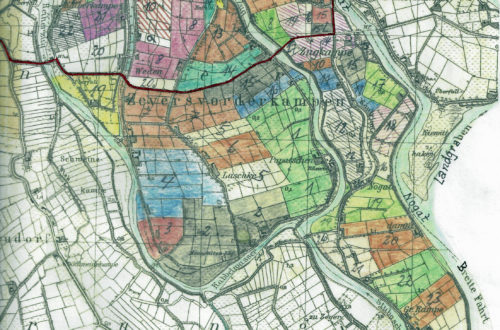
Michael Senger Familie 1918 Michael Senger and Adelgunde Kiehl were married in the area immediately adjacent to Jungfer/ Zeyer in West Prussia around 1868 (we continue to search for their marriage record). In addition to having built the family farm in Zeyersvorderkampen, they had thirteen (13) children of whom seven (7) survived to adulthood. Six (6) sons went to war (World War 1) and three (3) returned.


August Ferdinand Kunz – Catherine Elisabeth Albrecht

This page is under development; research is on-going

The family of August Kunz and Elisabeth Albrecht lived in Neuteicherwalde in Kreis Marienburg, Westpreussen (West Prussia). August was a Hofbesitzer (Farmer). It is believed that Hermann Recht and Auguste geboren Kunz inherited the family farm with their marriage shortly following the death of August Ferdinand (facts are being researched to confirm this). Erich August Albrecht- shows Elisabeth Kunz residence 1895-smallWe do know that as late as 1895 Elisabeth continued to live in Neuteicherwalde (even after Hermann and Auguste Recht had moved to Pietzkendorf). This fact is confirmed via the birth and baptismal record of Erich August Albrecht.

August Ferdinand Kunz (was born on 7 Feb 1844 in Neuteicherwalde the son of Andreas Kunz and Caroline Concordia Woelke) he married Catherine Elizabeth Albrecht (born on 10 Aug 1842 in Neuteicherwalde the daughter of Georg Albrecht and Marie Schroeder) on 3 January 1869 in Neuteicherwalde. (page 152 Baarendorf ev. Kirche) August Kunz- Catherine Albrecht- Marriage 1869- small

During their marriage August Ferdinand Kunz and Catherine Elisabeth geboren Albrecht had 5 children of whom perhaps only two survived into adulthood. This included:

  • Name: Auguste Alvine Caroline (wife of Hermann Recht).

Birth: 2 Sept 1869Auguste Alvina Caroline- Birth 1869-complete (small)
Baptism: 10 Oct 1869
Death: 6 Oct 1916
Burial: 12 Oct 1916Auguste Kunz- Elisabeth Albrecht Deaths 1916- small

  • Name: Johanna Elise

Birth: 15 Sept 1870Johanna Elise- Birth 1870-small
Baptism: 2 Oct 1870
Death: 17 Nov 1870

  • Name: Georg Andreas Ferdinand

Birth: 10 Mar 1872Georg Andreas Ferdinand- Birth 1872-small
Baptism: 7 Apr 1872
Death:

  • Name: Otto Richard

Birth: 1 Oct 1873Otto Recht Birth-Death 1899-small
Baptism: 2 Nov 1873
Death: 24 Dec 1882

  • Name: Friedrich Gustav

Birth: 18 Jan 1875Friedrich Gustav- Birth 1875-small
Baptism: 21 Feb 1875
Death: 21 Feb 1875

Catherine Elisabeth geboren Albrecht died in 1916 approximately two months after her daughter Auguste. It is probable that she had been in residence with the Recht’s in the last years prior to Auguste’s early death from Gout.Auguste Kunz- Elisabeth Albrecht Deaths 1916- small

Hermann Recht- Auguste Kunz Family History

This page is under development; research is on-going

Hermann Recht and Auguste Kunz were married in Baarendorf ev. Kirche Kreis Marienburg, West Preussen. Johann Hermann Recht, born 16 June 1869 in Zeyersniederkampen,
married Auguste Alvine Caroline Kunz on 10 March 1891 (page 192 Baarendorf ev. Kirche). Johann Hermann Recht-Auguste Alvine Caroline Kunz Marriage- 1891- small

Based upon an oral family history obtained by me from Luise geboren Senger, their grand-daughter, this marriage took place just after the death of Auguste’s father, August Ferdinand Kunz. We are also in the process of attempting to source these records.

Hermann and Auguste had five children, that we have identified, four of which lived into adulthood. The children were:

  • Elisa Hedwig Erna Recht- born: 4 Nov. 1892 – baptized: 1 Jan. 1893 Erna Recht- Birth 1892-small
  • Ernst Hermann Ferdinand Recht- born: 23 Dec. 1893 – baptized: 28 Jan. 1894Ernst Recht- Birth 1893- small
  • Ella Selma Recht- born: 21 Dec. 1896 – baptized: 21 Feb. 1897Ella Recht- Birth 1896- small
  • Frieda Auguste Recht- born: 19 Mar. 1898 – baptized: 31 Jul. 1898Frieda Recht- Birth 1898- small
  • Otto Recht- born: 1 Nov. 1898 – died: 16 Nov. 1898Otto Recht Birth-Death 1899-small


Because of the generosity of newly found cousins in Germany (we are jointly descended from Hermann Recht & Auguste geboren Kunz), ManyRoads is now able to provide additional images and insights into the extended family of Hermann Recht and Auguste geboren Kunz. (more photos and data will appear here over the next months).

Herrman Recht’s 69th Birthday celebration gathering (16 Juni/June 1939 in Pietzkendorf, Westpreussen ?):
Gathering-Key Herrman Recht Geburtstag Gathering Photo 16 June 1939-enhanced

New FamilySearch Film Ordering

This week I used the new FamilySearch.org microfilm (microfiche) ordering system for the first time. As you might expect, like any new service there are a few wrinkles but overall the new system is simply a magnificent advancement.  Here’s what I learned with my orders.

NOTE:
If you did not already know, recently FamilySearch.org placed a new online ordering mechanism on their site. According to their site this offering is being rolled out across the world and is currently available in my area (Colorado). Click this link to read the complete announcement.

As most of you know, I do a lot of Prussian research (which means I order quite a few German tapes).  What you may not know is that German copyright law is different from that in the US; and as a result, certain tapes are restricted from areas and durations within varying geographies (I will not attempt to explain the details of this set of regulations.) The net result is that I was not able to easily gain access to all the tapes I needed and should have been able to order easily.  Certain of the tapes I attempted to order had some form of odd blocking mechanism in place based upon inaccurate criteria.  That was the bad news, here is the good news:

  1. Undaunted by the system (software) denial, I contacted the FamilySearch telephone help desk.  I spoke with Sister Jones (not her real name). She patiently listened to my song of woe and contacted the appropriate Archive support help desk.  Since the queue was over 10 minutes long, she asked if it was okay to have the Archive/ systems support folks contact me directly, later.  I agreed and she gave me my ‘ticket’ number and assured me I’d hear back shortly.
  2. I did!  Within less than 2 hours, I received an email from Elder Bob Snow (not his real name) requesting that I provide some additional information on my account (like my local Family History Center-FHC) and he said once I did that, he’d give me special release on the tapes I wanted.
  3. I completed the tasks, and sure enough I received another email from Elder Bob Snow stating that my account was now granted specific access to the desired tapes.  I could immediately order the tapes I needed, the earlier blocks were removed, an apology was provided as was assurance that they (their software folks) were aware of this problem and this problem was in the queue to be fixed.

Other facts I have learned in this process include:

  1. Charges for microfilm loans have been lowered from what they were in the manual system. (Hooray!)
  2. FamilySearch provides highly effective customer oriented support.
  3. Duration of short term microfilm loans is now at 90 days (an extension from the previous system) and the rates have remained constant.

All in all, this new ordering process is a huge leap forward in accessibility and customer service.  Good job FamilySearch! If you are in a served area and would like to test this new service out, or if you are simply curious about what’s coming to your area, here’s the link.

Sometimes… magic happens

Today was one of those amazing days.

Wedhorn Family about 1944 It is often unbelievable what the universe has in store for you. Today, I received a small insight. A cousin of mine, Norbert Grohmann contacted me. Mind you, I had no idea that I had a cousin by that name or that his part of the family had even survived the Second World War. My mother, my primary source for such information, had not even known. But today a message (comment) came to me here on ManyRoads and it was Norbert… my cousin (Gott sei dank!).

Since early this morning, we have numerous email exchanges.  I have gathered photos and information from Norbert.  He has been exceedingly generous.  I have incorporated the information here and look forward to hearing and gathering more.  I rejoice in this extension of my family. I rejoice in our resilience and ability to survive.

The links below include the data I have enhanced with the help of my newly found family….

%d bloggers like this: