Ancestor Approved Award

Sassy Jane Genealogy: was nice enough a few months ago to give ManyRoads the Ancestor Approved Award. Sassy, I apologize for my delay in responding to the honor you offered ManyRoads. The honor is truly much appreciated and by now hopefully even a bit more deserved.

The
 Ancestor Approved Award, for those who may not be aware, was created in March 2010 by Leslie Ann Ballou of “Ancestors Live Here” to appreciate and enjoy geneablogs that are “full of tips and tricks as well as funny and heartwarming stories….”

Recipients provide a list ten things which surprised, humbled, or enlightened them about their ancestors and ten blogs to pass the award on to.

My “list” is pretty simple and has been published for quite a while, actually it is embodied in the set of posts that started ManyRoads called The Story (click this link to read the articles). Abnormal person that I am, I guess that means my list of 10 is actually 7 Blog postings. I sure hope the postings don’t disqualify me now…

Anyway so as to not dally further, my nominees for the Ancestor Approved award are:

Stop by and visit these blogs – I hope you will find informative or entertaining items there.

Google Search “Tricks & Tips”

Internet searching can be a wonderful adjunct to your genealogy efforts. Unfortunately most folks seem not to understand how to use search engines to their best advantage. Consequently they struggle and are often frustrated by their lack of accomplishments/ results. If you have not tried using some of the fancy features available in all search engines, I recommend that you consider doing so…

In that spirit, I offer this posting. I can assure you that this brief article will not do much more than whet your appetite; but you might just come away with a few tips and an interest in seeing what else can be accomplished with just a little effort on your part.

As I have noted numerous times, my preferred search engine is Google. As a result, the information here focuses on that tool. However, it is worth noting that I have tried using several of these same tricks on other search engines such as Mocavo and they seem to work in about the same manner.

Because I end up searching for a lot of information, printed in stored in languages other than those with which I am comfortable. I have found that you can enter a search phrase in your language. And cleverly, Google will find results in other languages and translate them for you to read. Try it out- HERE!

Also you may not be aware but there are tweaks that you can enter into your search string(s) which will modify and/or adjust the results you receive.  Here are a couple of very simple examples (I recommend that you enter these examples into Google in order to see how they work):

Search for an umbrella item/ term/ phrase:

Elbing Elbląg

Search for an umbrella item/ term/ phrase  and exclude a selected related term:

Elbing -Elbląg

Search for an item/ term/ phrase on a specific site:

“richard senger” site: many-roads.com

Search for an item/ term/ phrase and  exclude a specific site:

“richard senger” site: -many-roads.com

Hopefully this will get you on the path to more effective searches. If you’d like to watch a slick multi-media presentation on this topic, I have include one below:

Mocavo Genealogy Search (Free)

Mocavo is a wonderful genealogy search site! 

A reader sent me a message describing this powerful and well focused, genealogy search engine.  It is both powerful and accurate; and, “for now” it is absolutely free! (I guess we should not truly trust that things will stay that way…)

The Mocavo site is not very old having started on 16 March 2011. But the access it provides to genealogy resources seems quite immense.  They have even indexed the ManyRoads site! I guess we are a bit more famous because of them and now we’ll return the favor.

To quote the Mocavo blog::

The world’s largest free search engine just got bigger!  We’re announcing the addition of thousands of new sites today.  The new content added to Mocavo.com includes more than 3,000 genealogy blogs and thousands of sites submitted by users over the past month.

As the Mocavo search engine says:

Mocavo.com, provides genealogists access to the best free genealogy content on the web including billions of names, dates and places worldwide. Mocavo.com seeks to index and make searchable all of the world’s free genealogy information. While Mocavo.com discovers new sites every day, some of the existing sites searchable on Mocavo.com include genealogy message boards, family trees, state and local historical societies, the Library of Congress, National Archives, Ellis Island, Find A Grave, the Internet Archive, various U.S. state archives, and many tens of thousands of genealogy sites built by individuals. Similar to other search engines, Mocavo.com honors site owners by linking directly to their content.

If you haven’t already you might want to give them a go: visit the Mocavo search engine.

Thank you for the tip Karl! By the way if you have tips you’d like us to share, please send them to us via our contact page.

Searching for Texts (online)

Finding obscure, out of print texts covering low interest topics is an essential part of conducting genealogy research. Many of the texts you may want or need are not necessarily easily obtained from major book sources, like Amazon.com, ebay or your neighborhood bookstore. Rather than allowing difficulty associated in finding these difficult texts form a permanent road block, I thought I’d share a bit of an example search.

I’ll point out in advance that our sample search will not be wholly successful; most are not. However, hopefully you’ll find the example informative.

As our example, we’ll use is a nearly out of copyright WW2-era text entitled: Lend-lease : weapon for victory by Edward R. Stettinius, Jr. This text was published in 1944 in Harmondsworth (wherever that is.. was..) after having been written in 1943.

To begin a search, I normally recommend going to Google first. In our example search, I entered:

  • Lend Lease Weapon Victory

Nothing very complicated there.  One of the first items we see when Google comes back from its journey is a link to the Internet Archive! The Internet Archive is an excellent source for public domain information (including on the internet itself). In our example, the search on Lend Lease Weapon for Victory produces a copy of a US brochure/ document from 1944. Although this document is interesting, it is not exactly what I was hoping to find.

So a little disappointed, I wander back to my Google search. On the same search list is a link to my desired text on OpenLibrary. If the text were out of copyright you would, more likely than not, be able to find a link to an electronic version of the text from this site. But instead, our search page offers no on-line links to our desired text. Sadness strikes again!  This is where we note that a 1944 publication is not yet 70 years out of copyright… no wonder we are unable to find a bunch of on-line copies!

Undaunted by reason or fear, we see a little link on the right entitled (Borrow Physical copy, local WorldCat) Clicking on the link leads us to a page about our textbook on the WorldCat site. From this page, we see that there is an option to “Enter your location” in order to find a copy of a text nearby! (Beware that sometime “nearby” can be a long way away! This is especially true for very rare texts.)

Hopefully, our little example provides a few helpful pointers. If you are still looking for other examples of places and options, you might try examining the following:

  • National Library of Australia provides an excellent source for on-line ordering.  You may order a copy of a desired text created and sent to you directly using Copies Direct (for this text you may see an example here! )
  • HathiTrust is a partnership of major research institutions and libraries working to ensure that the cultural record is preserved and accessible long into the future. There are more than fifty partners in HathiTrust, and membership is open to institutions worldwide.
    • As for our text they offer a couple of online excerpts.  Please note because the obscure text example is not out of copyright until 2014, two years after the world ends. Consequently, this capability does not help very much in our example. Once our text is out of copyright this effort will return a much happier result.

So although not every text is available to read on-line, much information about texts and their place in history is generally easy to obtain. Additionally, if the text is out of copyright you might even get the volumes in their entirety for your on-line use.

ManyRoads Library Changes Underway

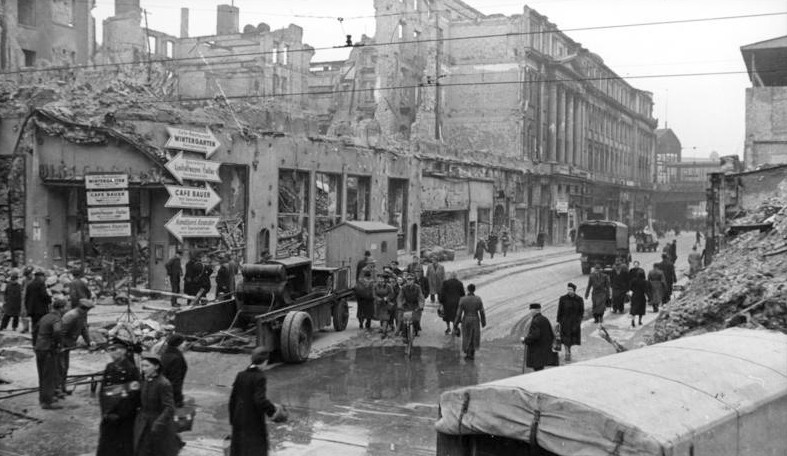
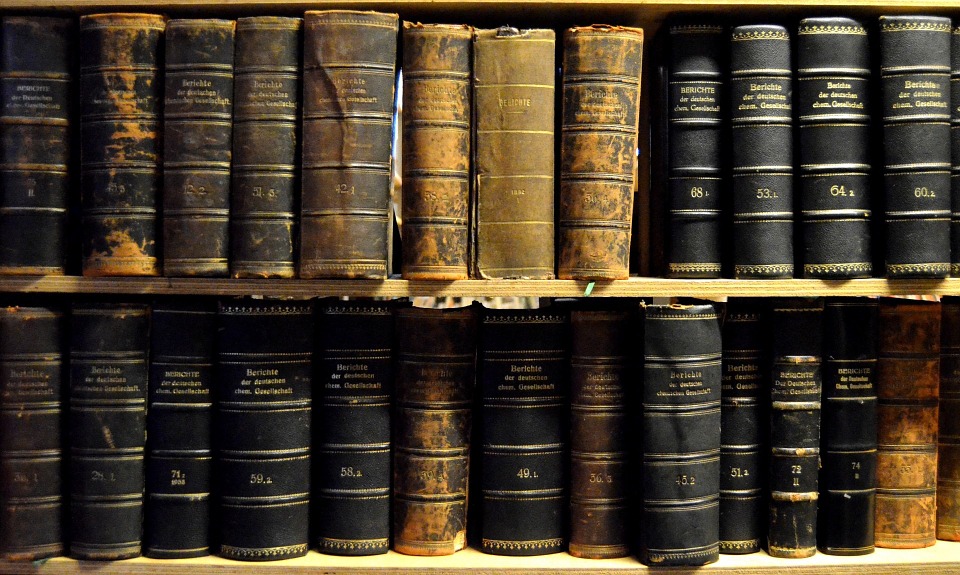
For those seeking source documents from former German areas in the region of West/ East Prussia I have added numerous Elbing City Yearbooks along with other data. In addition, I am completely reformatting the ManyRoads library pages.Genealogy Warning

The reason for the alterations on ManyRoads stems from a contact I received this week. It seems certain organizations want me to present direct links to original source documents housed in their facilities, even though I do not use their format or digitalization. To me the request sounded peculiar since all the documents are in the public domain and out of copyright. Additionally the request sounded strange to me because it seemed like a request for me to leech documents from anothers’ sites; and, I was always taught that leeching was both unethical and undesirable. But the folks were insistent that only direct, document download links would do.

So, I am in the process of gathering the links, reformatting my pages and hopefully making people a bit happier. As always, I am glad to provide every manner of kudo I can think of in appreciation for the digital images/data provided by others; and, I think I do so quite regularly and broadly. Certainly without the efforts of others, I would have missed out on a lot of information. But now, I am perplexed. Is stealing CPU and Network bandwidth good in some countries and bad in the US? I guess I don’t know.

What I do know is that I still appreciate the documents folks outside the US have digitally generated. I plan to continue to use and present their works. I also want to be sensitive to and respect their requests for credit… but sometimes these requests come into conflict with both normative professional behaviors and legal requirements in my home country. What to do?

Well, I have decided to present links to all original source documents using the name of the respective source library as a link. Here’s where I ask you to please note, ManyRoads is not responsible for the quality of any external links (security, accessibility, etc.). I sure hope I don’t get in trouble for honoring this type of linking request here at home or in other countries to which I now provide direct document links. I really would like a consistent framework for my library pages; and, I really do not want to have a unique arrangement for every country or organization from which I source materials.

Oh well! Since I have to rewrite and reformat each page now, you will note that I am attempting to convert most texts archived on ManyRoads into pdf format at the same time- per numerous ManyRoads readership requests. The pdf formatted texts are of a much lower image quality than those in DJVU format due to size limitations/ constraints (they are actually one quarter as dense). This conversion could take a long time to complete but if you use DJview or similar on your PC, you, also, have the capability to convert the ManyRoads DJVU files locally. Also please note that almost all ManyRoads files are downloadable by using a right mouse click (or similar). The same is not always true of the original source materials.

The ManyRoads library pages under revision are:

Another Deyo adventure!

I guess I could have entitled this posting, out with the old, in with the new.  But as with most genealogy not very much of this information is actually new; including the fact that I had yet another problem in my Deyo lineage.

Here’s the long and short of what has happened.  Barb (one of my  Deyo ‘cousins’) reviewed my latest Deyo line and noticed that my information and hers were not in synch. She is the proud owner of many things Deyo including photos, death certificates, folklore and the like. And as luck would have it, Barb’s copy of Mary (Bonah) Deyo’s death certificate indicated that Mary’s parents had names sounding like Paul Bonah and Nora Bolack. Mary Bonah Deyo Death 18 Feb 1938 My records showed a Calixte Bonin and Hedwige Delaire as Mary Bonah Deyo’s parents, opps! I had come up with Calixte and Hedwige as Mary’s parents based upon a match with Mary (Bonah) Deyo’s birth date, which was close but not perfect (I have to admit I also really liked their names!).

Anyway a new hunt was on! We needed to right this fairly obvious mistake -note: By the way all genealogists make mistakes, just not all are as enthusiastic about publishing them on the web as I seem to be. ;)

So to begin my search, I looked for a Paul Bonah and Nora Bolack. It probably comes as no big surprise, neither name produced anything approaching a reasonable result. Given that these folks were ‘most likely’ French Canadian (remember my Prussian- Quebecois ethnicity) I needed their names revised into something more French and less Italian, German sounding. Again to the rescue came my cousin. She suggested that Bolack might be Beaulac and Burnah/Bonin might ‘originally’ have been Bonin. She further suggested that Paul might appear in French records as Napoleon and that Nora could appear as Honoree/ Honoret. So the search now was for a father-mother combination of Paul Bonin and Honoret (Nora) Beaulac to fit with our Mary Burnah/ Bonah/ Bonin.

By way of a hint, with these new criteria for search values I was able to find all manner of interesting things. More on that and the next phase of this adventure in a follow-on posting.

100,000 Visitor

Today (a snowy Colorado day in May) ManyRoads was visited by our 100,000 visitor. What can we say except, thank you! We know that by big site standards this is not a high traffic rate, but for us 100,000+ unique visitors is both amazing and wonderful.

If you find our little site of benefit, please consider joining as a member.  If you are looking for something you think we might help you find, please ask.

For those of you who might be interested, the following is a list of the 20 countries from which we have had our top 20 number of visitors.

  1. United States- 19,709
  2. Germany- 17,944
  3. Canada- 5,616
  4. Poland- 1,881
  5. United Kingdom- 1,573
  6. Russian Federation- 1,360
  7. France- 721
  8. Australia- 683
  9. Netherlands- 651
  10. Ukraine- 540
  11. Switzerland- 401
  12. India- 388
  13. Belgium- 312
  14. Brazil- 304
  15. Spain- 297
  16. Austria- 295
  17. Sweden- 280
  18. Italy- 239
  19. Mexico- 184
  20. Romania- 184

Worse than War

In keeping with our emphasis on die Vertreibung and Ethnic Cleansing, we recommend you either view Daniel Jonah Goldhagen’s documentary “Worse Than War” or read his book of the same title.

To quote Dr. Goldhagen: (source website)

I hope that you choose to have a look at it. Whether or not you end up agreeing with every conclusion and proposal in Worse Than War, the [documentary] offers a plethora of new information and perspectives not just on genocide or eliminationism but on critical aspects of humanity and modernity, society and politics. I hope to rouse your intellect and conscience, even if I at the same time challenge your views about the most foundational matters of politics…

A new ethnic group? Prussian-Quebecois.

Everyone claims an ethnicity. Me, too.

So far as I  know, my sister and I form a rather distinct, maybe even a unique, ethnic group.  Yep, we are Prussian-Quebecois. We like to think of ourselves a being fairly unique and special.  After all our parents said we were special, and they wouldn’t lie. Would they?

The really sad thing is it looks like our ethnic group is about to die out.  Today, we are both approaching 60 and in our youth we demonstrated immensely poor ethnic planning skills when it came to choosing our spouses.  Neither of us remained within our ethnic group! My sister chose an Irish-German guy; and I chose a German-Swedish-Norwegian girl. Sacré bleu!

Now, not even our own children fit into our ethnic group.  What can you do?  And now! It looks like all the things we value most about our ethnicity are soon to disappear… but, never mind.

Odd thought stream, I know. 

Yet as I encounter more and more folks doing genealogy work, I also seem to encounter many who are ‘worried’ or ‘concerned’ about proving their ‘ethnicity’.  Do we even have a good, solid, mutually agreed upon definition of what an ethnicity is? Or, is ethnicity simply a convenient way for us to self-identify and affiliate based upon a personal, familial, or desired preference?

As a genealogist, I think about such things. I know- I know; I probably ought to think about something else…

“Dit” Names

The use of Dit names in French Canada (Bas Canada) is both very common and confusing.  Currently, I am working with another Deyo cousin to attempt to unravel yet another Deyo mystery. This part of my family line is now being reworked for the fourth time!  I think I might be getting good at it.  Briefly here’s the mystery…Genealogy Warning

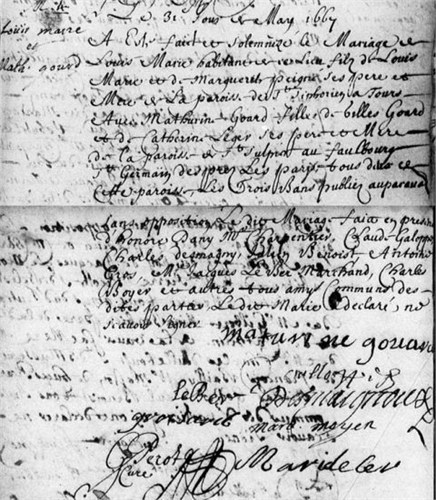
It appears, now, that I might be descended from a woman we believe was named Honoree Beaulac. Her family name (surname) has the following common dit names (there may be others as well):

  • Desmarais
  • Lake
  • Lefebvre
  • Marest
  • Beaulaque
  • Hertel (a nice German sounding name, eh?)

(Click here to view an excellent table which maps common dit names to Surnames French-Canadian: Variants, Dit, Anglicization, etc. provided by the American-French Genealogical Society. on the American-French Genealogical Society.) By the way you will also find a listing of variations in Tanguay’s text (volume 7)… we keep a copy on ManyRoads.

To add even further joy into the equation, her first name (given name) is also commonly altered to include or be (in French/ English):

  • Honoret
  • Nora
  • Honoré
  • Honorée

(Click here to view an excellent table which maps common given names in French-English-Latin on the American-French Genealogical Society.)

As you might well imagine, this combination of names gives us a little bit to search and rummage around in.  More importantly if you are researching family members in Bas Canada, you too will certainly encounter this form of adventure. Enjoy the mystery and challenge!

Here is a list of some sites providing explanations of “Dit” names:


Rituel du Diocèse de Québec

If you are performing research in Quebec, the Rituel du Diocèse de Québec may prove useful in providing clues regarding the name or names of your ancestors. To quote the PRDH:

Among Catholics, choice of first name wasn’t left to chance or parents’ imagination. On the contrary, the church liked to control the attribution of first names to ensure that on the day they were baptised, children received the name of a saint who would guide them throughout their life. In the Rituel du Diocèse de Québec, which laid out the rules to follow for writing baptismal, marriage, and burial certificates in Quebec, Monsignor de Saint-Vallier stipulated, “The Church forbids Priests from allowing profane or ridiculous names to be given to the child, such as Apollon, Diane, etc. But it commands that the child be given the name of a male or female Saint, depending on its sex, so that it can imitate the virtues and feel the effects of God’s protection.”

%d bloggers like this: