Increase font Decrease font

Whoa, Backup!

Backups, file duplication, redundancy, security are essential dimensions of performing quality genealogy work; well honestly they are required for any type of computing.  Having said that, most people don’t bother with any of this unless, and until, they have a catastrophe, and even then only for a short while after an accident.

To my mind these functions need to be easy, seamless and nearly automagic once they are established.  All this is to say, data synchronization and backup must require very little, if any, extra effort or thought.  Extra effort or thought are almost always extra… and extra things tend to get forgotten.

Like many of you over the past few months, I have read and ‘participated’ in numerous discussions regarding “what happens to my data when I’m gone“.  Truth be told, it is worth even more to have a plan to make certain you can use your data while you’re hereAnd then, you can make certain it is available for others when you are gone.  If your data does not survive you working on it, it hardly matters what is left when you’re gone.

So let me provide a bit of food for thought on the topic. To begin, I will briefly describe my simple working computer environment:

  • in my home office, I have a slow and unreliable Qwest “high-speed” network, which really means we have a poorly performing DSL network;  the only reason we keep this network is because no one else will bring us a network of any type (sad but true)
  • my primary PC is an Asus K52F running 10.4 LTS Ubuntu Linux (yep, a geek)
  • my travel buddy is a netbook PC- an eeePC 1000HE running 10.10 Ubuntu Linux
  • I also have a nifty iPad to augment my image as super geek and cool old genealogy guy…

Given I have multiple PCs and I’m lazy, my objective is to keep the Netbook and K52F fully synchronized so that the same data is available on whichever PC (Asus) I pickup. My super cool iPad is slightly different in that it is set to access pre-selected information/data for reading and display purposes (this information, too, needs to be both current and synchronized with my other machines).  In addition to gaining information access, I want to be certain that my PCs are continually backed up and that all data is available for easy recovery, at any time. Lastly, I want my data to be 100% secure, redundant, and stored non-locally, call me paranoid.

What all of this means is that:

  • I need to store my data on a Cloud server which offers a zero-knowledge account; in my case, all my files are directly encrypted on my source PC and my password never leaves my PCs.  Sooo, I have to be certain NOT to loose either my username or password (they are my responsibility, not the responsibility of some service provider).  My service provider can access neither my files nor my passwords.
  • all of my data is encrypted using AES, RSA and SHA for security purposes- the same algorithms used for government security
  • the Cloud server needs to have its files stored redundantly and in different locations, in my case this includes storage in Switzerland, Germany and France (I live in Colorado)

Wuala, the provider I am currently using, does all these things.  Plus, it offers its services on Windows, Mac, and Linux.  Their tools can also be operated directly from any PC using a browser, without one of my PCs ever being involved. Finally, this system integrates on each of my PCs as a network drive, so I am able to open and edit my files in the application of my choice (there are one or two other providers of roughly similar services, including SpiderOak).

As a genealogist, this system also allows me to send links to files and folders to anyone. Recipients can click directly on a provided link and access designated files in their browsers.  This feature will allow me to provide better information access to my clients, a service which I am about to begin providing.

So what does this really do for me?  Here’s a small list of what I see as benefits:

  • my stuff is backed up- I am pretty certain (99.999% certain, I will always be able to get at a copy of my information)
  • each of my PCs have access to current data (anything I view is current and accurate)
  • my data is less prone to local disaster, because it is spread across the planet
  • once setup, all of this takes place with very little intervention on my part (remember I am lazy)

And perhaps most importantly, I can give my designee access to everything I own. My information is safe for use both while I am here and when I am gone. By either handing a designee my PC or by setting them up to share all or parts of my data files, images, videos, a full, or partial, suite of my materials can be securely transfered to my successors, users, and/or clients.

If you might want to learn more about the specific environment I use from Wuala please use this link.  If you sign-up for a free account, I’ll get some additional disk space added to my available allotment.

Genealogy- iPad or Netbook?

Lately, I have gotten a lot of questions about the little computers I carry around to help with my genealogy tasks. Questions like:

  • What do you think of the iPad?
  • Do you like your Netbook?

In general, people want to know how I like the devices and whether they should consider buying one or more for themselves. This post is an attempt to respond to those questions.

Let me begin by saying I have been working with computers since 1974.  Yep, I am an old guy, old PC habits, old PC biases.  I have them all.  But in fairness, you need to be aware of this as I am certain my background colors my opinions.

Data entry:

Let me start this out by saying I am writing this post on my regular PC; I am not using either of the little guys. To my mind this speaks to the biggest problems with these little devices- data entry. Both machines offer facilities to perform data entry but one is much more severely constrained than the other.

The iPad’s on screen keyboard is nothing short of horrible, to be honest it is my greatest disappointment with the iPad itself. iPads offer an peculiar two stage alphabetic/ numeric keyboard which is missing any directional positioning keys (arrows). It is, for me, an incredibly uncomfortable and difficult typing experience. Not being a perfect typist to begin with, the iPad brings my error rates to new heights. And as for speed, it takes me at least three times longer to enter text on the iPad than it does on the Netbook (which is slower than my regular laptop). Oh how I long for the days of Palm/ Handspring Graffiti.  In fairness, it’s not as if the netbook is without it’s faults here, too. Tiny keys, too big fingers make for difficult and slow typing; but, functional it is.

Compatibilty with other PC applications:

Here I have to say the Netbook is again the winner. The iPad has a large application base but they are different from those available on PC platforms, be they Windows, Mac or Linux (like I use). All this is to say, your favorite genealogy programs will not run on an iPad but they will (with just a little planning) run very nicely on a Netbook.

Screen image quality:

WOW! what else can I say about the iPad screen.  My Netbook is okay, but not WOW!

Adverts/ Advertisements:

iPads are an advertisers’ dream. Adverts are simply everywhere. To eliminate them requires that a user “Jailbreak” the iPad in order to get access to ‘apps’ that block adware. Netbooks, like regular PCs, are perfectly capable of blocking ads; all you need are the correct browser(s) and correct browser plugin(s). This function may not seem that important on a 17″ monitor but it is hugely significant when you have only ~60% of the screen real estate – as is offered on these little guys.

USB, webcam, SD card availability:

Netbooks offer these on even the cheapest models. Not so the iPad.

OS (Operating System) interoperability:

One of the most frustrating aspects of the iPad, for me, is the fact that the iPad does not recognize, interface well with, or support Linux. It requires a Windows or Mac to initially boot and from that point to backup. It assumes all systems functions will be managed through an iTunes (Apple) proprietary interface. The Libertarian in me does not like that at all. Netbooks do not have that same proprietary bend.

Modification or removal of included applications:

All PC vendors seem to want to pollute their devices with preferred apps. Netbooks and iPads are no exception. However although it is time consuming to clean up a Netbook of undesirable applications, it can be done. But the iPad, nope. You get to keep the silly map, video, photo, iPod apps whether you want them or not. So I have moved mine onto an unused subordinate-screen.

Window to window (screen to screen) navigation:

Because of the tiny screen sizes, navigation is not easy on either machine. But it is easier on the Netbook because of a users ability to use short-cut keys and traditional navigation to move from A to B. However, the iPad touch screen navigation is much more Fun & Cool. iPad navigation is also built around some very nice eye candy, like turning pages. Truly cool and not bad, just different. I am certain that the iPad screen navigation is the wave of the future.  The zoom and movement functions are intuitive and fun to learn, but learn them you must because the iPad smart phone navigation screens will surely take over.  They are simply to good not to.

Size & weight:

Both devices are in the same weight and size class. Screens are about 10 inches, and the weight is in the 2-3 (US) pound range- about 1 kg.

Cost:

The iPad is the clear winner here! An iPad costs, on average, twice what a Netbook does. Hmmm, maybe that’s not being a winner? Well, Apple thinks it is.

Coolness & fun factor:

Although the Netbook does have a certain Lilliputian coolness to it, it is nothing like the coolness the iPad has. People really seem to like the iPad form factor and ‘finger’/ touch screen navigation. As always, Apple has a real design winner in the iPad space. The Netbooks really simply look like laptops that were washed in too hot water and were left for an extra cycle or two in the dryer.

The bottom line:

The bottom line, is I will gladly keep them both. I like them both, a lot. But if I am forced to carry only one device with me to do my research, I choose the Netbook.  But I have my weights out and am building my strength because I don’t want to leave my iPad behind.

9th Semi-irregular ManyRoads Newsletter

I apologize for delay in getting our semi-irregular newletter out.  Things have been a bit hectic and my network has been unreliable.  Also for those who follow my writings in the various Groups within which I am a participant, you may have noticed I have been uploading a lot of information to ManyRoads.  Unfortunately that becomes very problematic when the network doesn’t work well.

Once again, numerous, very thoughtful and generous folks have sent us materials to share on the web. We greatly appreciate the ‘donations’ and will make them available as we are able. If you have photos, maps, stories that you think fit with our audience and subject matter, we’d love to hear from you.

Anyway here are ManyRoads major updates for the last 30+ days:

Danzig Maps – Danziger Landkarten
Übersichtskarte von Mitteleuropa Danzig- 1902
Danzig
Danzig- 1886
Danzig- 1910
Danzig- 1910(2)
Danzig- 1918
Danzig- 1932
Danziger Gebiet
Danziger und der Weichselkorridor
Danzig-Westpreusssen
Gebiete Freie Staat Danzig

Germany until 1945
Northern Germany (Nord Deutschland)- 1910
Germany – Deutschland- 1937
German Empire- Deutsches Reich- 1937

Stettin
Stettin- 1910

Königsberg
Königsberg-1887
Königsberg-1910

Thorn
Thorn- 1910

East & West Prussia – Ost und West Preußen
Ostpreussen
Ostpreussen- 1882
Ostpreußen 30 April 1945
Ostpreussen- 1882
Ostpreussen Landkarte- unknown date
Preussen- unknown date
Preussen- 1751 (La Prusse)
Preussen Politische Uebersicht
Westpreussen
Westpreussen- 1882
Westpreussen- 1900
Westpreussen- Mallek Gross
West und Ost Preussen- 1896
West & East Prussia- 1906
Ost und Westpreussen
Westpreussen und Danziger Bucht
Ostpreussen- 2
Westpreussen- 2
Heimat Preussen

Vertreibung Landkarten (German Expulsion Maps)
Vertriebene aus den deutschen Ostgebieten 1
Vertriebene aus den deutschen Ostgebieten 2
Vertriebene aus den deutschen Ostgebieten 3
1945 Aufteilung Deutschland

For those researching Central Europe and the Baltic regions, I have placed 14
maps covering the time from the late Roman Empire (around 400) up to 1812 on
ManyRoads.

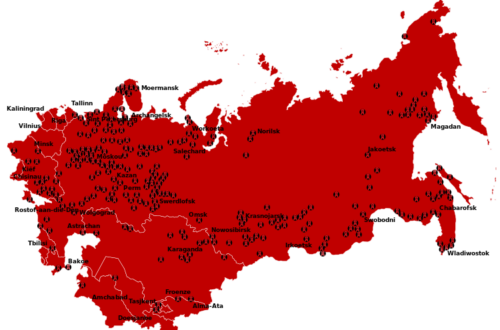
Soviet Gulags
Gulags
Gulag Slavery
Russian Memorial Gulag Map

World War 2 Maps
Allied Occupation Zones- 1945
Attack of the Red Army- Jan. to April 1945
Eastern Front- Jan.to May 1945
Generalne Gubernatorstwo- 1945
Aufteilung Deutschland- 1945
Reichsgaue- 1941
Abstimmungsgebiete

On one of the Yahoo groups in which I participate, I noticed that people seemed to be struggling a bit to understand when, where, and when Germans moved into Eastern Europe (including places like Pommerania, West Prussia, East Prussia). I have posted a VERY simple, map tutorial covering German and other Central European peoples migrations and/or locations before the World Wars.

I hope this post helps makes it a bit easier to understand and find what types of people may have lived near the areas you are researching.

The following West/East Prussia addressbooks (and now we have several from Pommern as well…) have newly been added to ManyRoads. Looks like it about time to rearrange things.

Marienwerder Adressbuch- 1909
Marienwerder Adressbuch- 1912
Marienwerder Adressbuch- 1917
Marienwerder Adressbuch- 1926

Elbinger Jahrbuch- 1923
Elbinger Jahrbuch- 1933
Elbinger Jahrbuch- 1936

Die Familiennamen von Stolp und Umgebung im 16 Jahrhundert
Stolp Adressbuch- 1914
Stolp Adressbuch- 1920
Stolp Adressbuch- 1931
Stolp Adressbuch- 1936
Stolp Adressbuch- 1938

Stettin Adressbuch und Geschaeftshandbuch-1900
Stettin Adressbuch- 1901
Stettin Adressbuch- 1903
Stettin Adressbuch- 1906
Stettin Adressbuch- 1943
Stettin Adressbuch- 1914
Stettin Adressbuch- 1931
Stettin Adressbuch- 1932

Zoppot Adressbuch- 1911
Zoppot Adressbuch- 1917-1918
Zoppot Adressbuch- 1936-1937

Finally the list! Here are other ManyRoads items of note published during the past month or so:

As always, I want to request any/all of you who have genealogical websites please consider reciprocal linking with ManyRoads. There is no cost and both your site and ManyRoads will benefit from the links. Simply place a link to http://many-roads.com on your site; send me an email letting me know you have made the link; and, I’ll place a link to your site.

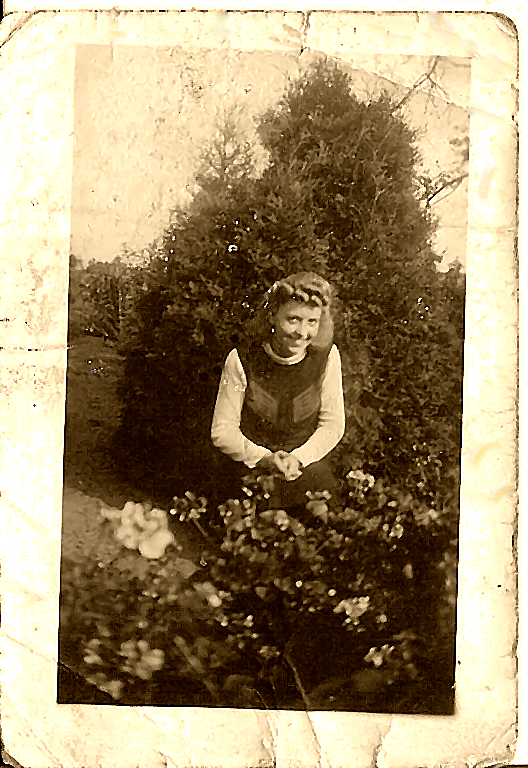
Frieda Senger- Cyrillic Conversion

As many of you are aware, I have been trying to decipher a Russian document that Soviets created as justification for sending my grandmother into a Gulag following WW2. To help me with my sleuthing, I have found and used the following tools:

  1. Russian letters & script
  2. Russian online keyboard
  3. Automatic Cyrillic Converter

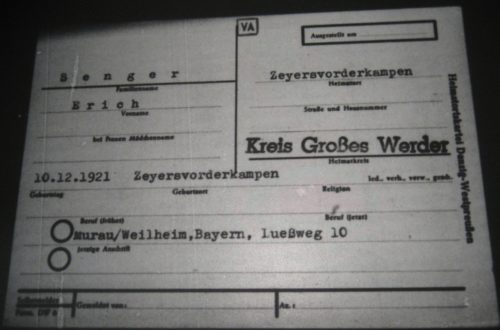
My grandmother’s document may be viewed here: Frieda Senger -Suchdienst & Soviet Records.

What I did to help me in my search was to carefully look at the Cyrillic script and attempt to define each letter using the script as presented on the site at item 1 above. Once I found (or thought I found) the script letters, I entered them in using the Russian On-line Keyboard (using item 2 above). With the typed words in hand, I Googled and yanexed (Russian search engine) seeking hits on my words. In my case, they did not find anything useful.

SO next, I used the Automatic Cyrllic converter (item 3 above). Entering phonetic variations on my grandmother’s hometown (Zeyervorderkampen) in the converter, I discovered that the Cyrillic script/ typing looked an awful lot like Zeyervorderkampen.  Originally it had been translated as Zecher Werder- Kosipel, but I could not find anything that matched that name or anything close to it.

Being a big proponent of following the obvious, I now assume that my Oma’s bill of indictment does not place her in a location other than Zeyervorderkampen prior to her 2 plus year incarceration in the Chelyabinskaya Gulag.

Also today, I received the following note from my friend Martin:

Mark, hier kommt nun mein Versuch zur Klärung Deiner Frage:
1. In der russischen Anklageschrift wird als Geburtsort Pietzkendorf , Rayon (Kreis) Groß Werder genannt. In dem Schreiben vom DRK München vom 15.1.2010 heißt der Geburtsort Zeyer(s)vorderkampen. Pietzkendorf liegt etwas westlich von Tiegenhof, das andere Dorf Zeyersvorderskampen liegt östlich, im Nogatdelta, aber beides im Kreis Großes Werder. Woher die widersprüchlichen Angaben kommen, ist mir nicht klar.
2. in dem gleichen russischen Papier, nur eine Zeile tiefer, wird der Wohnort bezeichnet mit “Zecher-Ferder- Kaxxxx.
Ich lese das als Zeyervorderkampen. Das Y im Zeyer… hat der Mann wohl als X gelesen, das ist das cha im russischen Alphabet, also Zecher…
Ferder könnte man wohl mit Vorder.. übersetzen (wie gehört, gesprochen), und das dritte Wort beginnt zumindest mit Ka.., die weiteren Buchstaben kann nicht mal meine Irina entziffern. Dafür habe ich meinen Freund, russischer Übersetzer, morgen hier, und dann hoffe ich, dass wir das endgültig klären.
Grüße über den Teich – Martin

I may not be right, but I feel confident that I am closer to the truth today than I was two days ago when I started.

Zeyer- the end

Recollections of an officer of the chief administrative district in Zeyer.

Johannes Jahn, farmer and farm owner in Zeyersvorderkampen.
see original document

This document has been translated and reworked with additional family history
by Mark Rabideau.
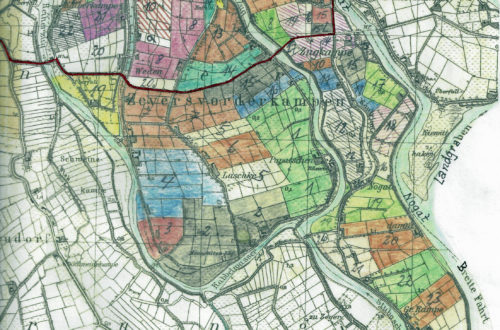
zeyer ev. kirche The District of Zeyer was located in the northeast corner of the Free State of Danzig, in the area that included the towns of Grosses Werder, Zeyer, Stuba and Schlangenhaken. The district followed the Nogat River, starting at the village Zeyer to the Vistula Lagoon estuary. The total area of the District was about 2510 hectares (~6200 acres)  of which 480 hectares (`1200 acres) were the village of Zeyer, Stuba with the village of Neudorf was about 610 hectares (~1500 acres) , Zeyersvorderkampen about 1020 hectares (~2500 acres)  and Schlangenhaken another 400 hectares (~1000 acres). The total population of the district was roughly 1735 inhabitants of German descent and origin. The population was exclusively engaged/ employed in agriculture and related professions.

Up until 1945, the farms located in the area were in good condition. The majority of the farms and agricultural property holdings were small to medium sized. The lands of Zeyersvorderkampen were particularly favorable to dairies; the larger farms historically were also devoted to rapeseed, wheat, and sugar beet cultivation.

While Zeyer and Stuba were built-up areas, Zeyersvorderkampen and Schlangenhaken were so-called scattered settlements. Zeyer was considered to be the oldest settlement in the district. School texts chronicled settlement in the Zeyer village area as early as 1200; followed somewhat later by the village of Stuba.  Zeyersvorderkampen, which consisted of several islands in the Nogat delta, was settled much later, around 1730.  The town of Schlangenhaken was newest settlement in the district, it came into existence in 1929. Schlangenhaken was settled in the uncultivated areas of the Kampen Nogatmündung by order of the Danzig Senate.

Milk production was the key agricultural commodity produced in the district. Even during the war (WW2), a modern dairy under private ownership was located in Zeyer; while a cooperative dairy was located in Zeyersvorderkampen [Papatschen cooperative was partly owned by Richard Senger].
[see:

A third dairy, with offices in Stuba, was shut down during the war and merged with the dairy supplier in Zeyer.

In the commercial sector, there were four shops located in the village Zeyer including, grocery and hardware stores; one wind mill; a restaurant with bakery operations; a dry goods store selling clothing, footwear and dry goods. Additionally, there was a bakery and an inn (guest house).

Commercial enterprises in Zeyer included: a dairy, a butcher, a wheelwright, a blacksmith and two container manufacturers. The public sector in Zeyer included government buildings, two schools, two customs officers houses, a post office, a parsonage, and three village offices and a fire station.

The Zeyer Lutheran Church was located on the opposite bank of the Nogat in Elbing County.

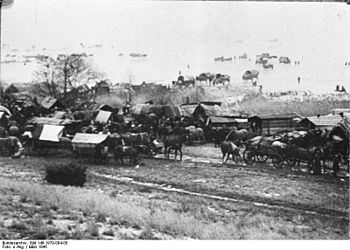
On January 21, 1945, the first Russian tanks arrived unexpectedly in Elbing, just 8 km away. The population of the administrative district Zeyer received notification that night from the district office in Tiegenhof to immediately evacuate the area. Although the evacuation was prepared for in theory, it did not go according to the pre-arranged plan.  The original plan was to evacuate across the Vistula but because early that morning all the roads had become congested and overrun by the fleeing population, that evacuation plan was impossible. Additionally, the rural population found it very difficult to leave their farms. At the same time, the German Wehrmacht had hurriedly constructed a front along the Elbing River behind which people felt temporarily secure. Only the population of villages of Zeyer and Stuba fled towards Zeyersvorderkampern and Schlangenhaken.

During that same time, the entire livestock of the region had been driven off by Räumkommandos (Jeeps, personnel carriers) and grain reserves had been taken, as well. All that remained in the area were food stuffs capable of feeding the population for a short time.

The church came under artillery bombardment during the course of the fighting on February 3, 1945 as did the Zeyersvorderkampen dairy, three taverns, two dry goods stores, the forge and public buildings including: a school, five town buildings and the fire station.

Local horse stocks were taken over by the army. At the onset of battle, destruction of the buildings in Zeyer was limited to those on the edges of town. Initially only 3 properties were burned to the ground. However, very many buildings suffered heavy damage from artillery shelling and gun fire. But, the greatest destruction to the Zeyer area occurred after the area was occupied by Russians and Poles.

After the occupation, those who were left behind in the area no longer had any way to escape, since the Russians had already pushed through the province of Pomerania to the Baltic Sea.

On March 8, 1945, the German army was forced to retreat from its positions on the Nogat. The remaining civilian population was forced to withdraw to the Vistula Spit, where they were met by ships, mostly brought from Denmark. A small portion of the population in Zeyer could not bring themselves to leave their homes and awaited the arrival of the Russians. Most of those remaining people were working class families, the elderly as well as farming families [including Richard and Frieda Senger, ages 66 and 46 respectively.].

Based upon statements from a number of the survivors of the fall of Zeyer, those who were later expelled by the Poles, we know the following. After the arrival of the Russians in Zeyer on March 9, 1945, the entire remaining population was rounded up. All men between the ages of 16 and 60 were transported to the east [for incarceration in Soviet Gulags- concentration camps]. A number of the remaining survivors were held for questioning by the Soviets and ultimately tortured to death. Shortly after the arrival of the Russians in Zeyersvorderkampen the first murders began. The following were executed by the Russians for unknown reasons:

  • Farmer Franz Thiessen (7O years)
  • Farmer Adolf Block
  • Hulda Janzen and her daughter Klara Eichhorn with 1 year old son/ grandson
  • Mr. & Mrs. A. Mierau
  • 18-year-old Christine Wichert
  • Anna Braun of Zeyersvorderkampen
  • four-member family of farmer Fritz Dudenhöft
  • disappearing without a trace were Mr. & Mrs. Rathke Zvk

All women who remained were forced to be available for the pleasure of the Soviet troops, until the Soviet troops were withdrawn. [On the 17th of March 1945 Frieda Senger was indicted by the Soviets and assigned to forced labor camps- concentration camps. She was released in 1947. Between 1945 and 1947 Richard Senger was a forced laborer on what used to be his farm.]

What remained of the population of Zeyer was forced to go to Elbing to try and find food, as none was provided.

As the Russian troops withdrew and the first Poles moved in as an adventurous, unruly rabble. They looted houses of anything that remained from what the Russians had left behind. The Russians took all surviving animals and the best furniture. Agricultural implements and machinery were gathered by the Poles, bartered and taken away. The Vistula and Nogat dikes were breeched or blown up thereby flooding the entire countryside. The withdrawing Russians built bridges and walkways as needed from the materials remaining of destroyed homes and buildings. Under the management of the Poles, the devastation continued.  Buildings were abandoned due to lack of heating fuel or power; according to reports, many houses were also left without windows and doors.

The loss of life continued as many committed suicide. The remaining German population lived in Poland under the worst possible conditions; they received far too little food and were forced to do hard labor every day under severely abusive conditions.

Germans were outlawed. The new residents could do with them what they wanted. Under these brutal circumstances, the forced 1947 German expulsions were initiated. [This includes the same time frame during which 68 year-old Richard Senger began his walk on foot to West Germany. ]

Old, frail people; women with young children were forced to walk the 15 km [9 miles] [from Zeyer] to Tiegenhof in the freezing cold. In Tiegenhof, they were loaded into open rail cars bound for Marienburg; any baggage weighing more than 30 pounds was taken from them. From Marienburg, the journey continued to Halle in the eastern zone [Soviet Zone] of Germany where the deportees usually were force relocated. Numbers of deportees did not survive the hardships and died.

In the villages [Soviet style] collective farms were established because the Poles were not able to manage the farmlands privately.

The church came under artillery bombardment during the course of the fighting on February 3, 1945 as did the Zeyersvorderkampen dairy, three taverns, two dry goods stores, the forge and public buildings including: a school, five town buildings and the fire station.

Deutsche Mundarten- German Language

The maps on this page indicate where various European German speaking peoples lived prior to the German Expulsions (Vertreibung) post-World War 2.

1937-Deutsche-Mundarten

Auf deutsch
* Beschreibung: Darstellungskarte der deutschen Mundarten im Jahre 1937. Daneben werden auch die Dialektgebiete in Holland und Belgien angeführt, die in der deutschen Sprachwissenschaft noch bis 1945 als Teil des deutschen Sprachgebietes galten. Diese Gebiete sind farblich blasser gestaltet.
* Zeichner: Postmann Michael
* Lizensstatus: Public domain

English:

* Green: Upper German
* Blue: Central German
* Orange: Low German
* Light orange: Dutch
* Rose (light and intense): Frisian
* Light blue: Limburgish

Description: Representation map of the German dialects in the year 1937. Mapmaker: Postmann Michael

The following map gallery illustrates the historical migration of Germans to the East as well as the pre-World War 1 location of other linguistic groups.

For some its Groundhog’s Day

2 February is one of those days that adds a bit of winter fun to many Americans’ lives. For me though, it is something much more. It was 122 years ago today (2 February 2011) that my grandfather was born. As readers of this site will most likely know, he remains one of my life’s great influences. He is one of those loved people to whom much of my ManyRoads work is dedicated.

Richard Senger Photo Front Richard Senger was born on this day in 1879. He was born the third child of ten to Michael Senger and Adelgunde geboren Kiehl in Zeyersniederkampen, Westpreussen, Deutschland (a heimat -homeland- that is no more). He survived fighting in the trenches of World War 1 France, the occupation and removal of all his possessions by the allies after World War 2, the abduction and incarceration of his wife in Soviet Gulags. He was a stoic, thoughtful, hard-working man.

The second of February is to me, first and foremost, my Opa’s birthday.

Frohe Geburtstag, Opa.

%d bloggers like this: