This is a copy of my Quebec Genealogy presentation delivered on 9 October 2010 at the Parker Genealogical Society in Parker, CO. You may download it to your PC or read it on-line below.
Technology can and should be an crucial adjunct to your genealogical efforts. As a matter of fact, I contend that no effort is complete, nor can your genealogy efforts be fully effective, without effective technological support. The support can be as simple as using a word processor or as complex as writing large databases to manage and maintain your data, documents and images.
As I am sure you are aware, today’s technology options are both extensive and cost effective. They can even be free. As a web developer and genealogist, I, personally, rely almost exclusively on OpenSource technologies. To give you a rough example of my software costs, I will enumerate my most significant and vital adjunctive technologies:
WordPress (the Blog/ Content Management System I use)- Free
OpenOffice (the PC Office Suite I use for most document creation)- Free
GRAMPS (the Family Tree software I use to manage genealogies and export to my website)- Free
The GIMP (the image, photo editing software I employ)- Free
Geany (the tool I use to write code for my websites)- Free
php, html, java (the languages used most frequently in my websites)- Free
The list could go on; but you can see from the above list, the costs need not be high. Even the ‘expensive, proprietary tools’ (note my bias!) most people purchase are very cost effective.
Having said this, what do these tools and technologies really do for me and my genealogy efforts? Quite simply, they allow me to perform tasks such as:
clean up documents
enhance and/or repair photos
write family histories
maintain family trees
But most importantly, they allow me to share my work with both known and unknown family members, complete strangers, and those interested in researching the same areas I do. They make it possible for each of us to create an information explosion out of the tid-bits of information we each hold or have individually, and thereby these technologies enhance our understanding of our families and of our past.
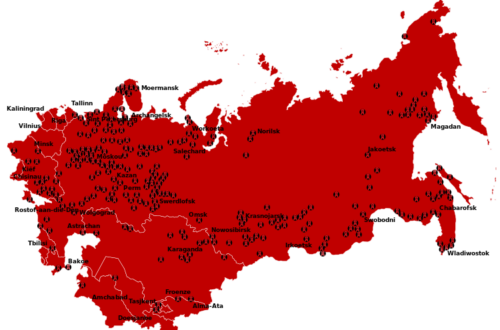
While doing research today, I came across two affiliated human rights sites in Russia. Both seem interested in archiving, remembering, and teaching about oppression of the past and present in Russia and the old Soviet Union.
Memorial is a movement which arose in the years of perestroika. Its main task was the awakening and preservation of the societal memory of the severe political persecution in the recent past of the Soviet Union.
Memorial is a community of dozens of organizations in different regions of Russia, Ukraine, Kazakhstan, Latvia, and Georgia.
Memorial is a group of specialized research, human rights, and education centers in Moscow, St. Petersburg, and several other cities.
Memorial is a museum, a repository of documents, and a number of specialized libraries.
Memorial is the Solovetskii stone on Lubianka Square in Moscow, placed across from the KGB headquarters on 30 October 1990. On that date in 1974 prisoners in the Mordvinian and Perm’ political camps voted to declare a Day of Political Prisoners in the USSR. In 1991, on the initiative of Memorial, the Supreme Soviet of the RSFSR officially recognized this date as a Day of Remembrance of the Victims of Political Repression.
“Memorial” began initially as an historical and educational association with a significant part of its work dedicated to protecting human rights. Each of “Memorial”’s regional divisions is involved in protecting human rights, specifically in vindicating the rights of former prisoners.
The organization appeals to society to not forget the cruel and massive human rights violations in our country’s [Russia's] past, but also not to ignore that human rights violations continue to occur.
Today while I was reviewing at the locations of the ManyRoads readers I came across, what for me was, a rather large surprise. ManyRoads had a reader from Chelyabinsk, RU. For those who follow the site closely, you will note that this is the same town where my Oma (grandmother) was forced to work for several years in one of Stalin’s Gulags as a slave laborer (then refered to as a mobilized German).
I am very pleased to welcome the Chelyabinsk reader to ManyRoads. добро пожаловать!
I hope they find the information presented here interesting and informative.
A lot has gone during the past month or so. Not only have we added a lot of new material to ManyRoads but we have achieved some important milestones, as well. Per normal, rather than bore you with a lot of details, I will outline most of the key happenings. But before I do that, a couple of important ManyRoads items have transpired. Firstly, we have signed up our first customers. We are excited and progress is beginning to be made. Also I have been invited to write periodic articles for http://geneabloggers.com. Also our readership numbers have almost doubled in the past month. Please invite your friends, we hope they are able to find useful information on our site. And last but certainly not least, I have been invited to speak at the Parker LDS Family History Center on 16 September 2010; stop by if you are in town!
Now on to the other major postings I placed on ManyRoads over the past month or so (just click on a title to read the article…):
ManyRoads is pleased to announce that we have been published on Geneabloggers.
It is our hope to have generalized thoughts & opinions available for publication on that great site on a monthly basis (or thereabouts!). Like most things, our publication schedule will ‘most likely’ be semi-irregular. Kind of like me, semi-irregular.
We encourage you to visit the Geneabloggers site, if you have not done so already. It is interesting, informative and they have some good writers, I hear.
Most often those looking for their relatives follow the tried and true paths of searching the Internet as well as searching the ‘traditional’ genealogy venues such as town halls, LDS Family History Centers, etc. Many people even go so far as to restrict their searches to the Internet only, typically relying on the ever popular:
Truth be known, these are all very good and useful search locales. However, there are at least two items worth noting:
one, not everything ‘you need’ can be found on these venues and
two, not everything labeled as genealogical represents the totality of genealogical information available.
You do yourself and your family a disservice if you restrict or limit your searches to the traditional and/or Internet sources.
You really need to look outside the box. There are few reasons why this is helpful and reasonable. Firstly, all genealogy and family history occurs with the context of time and place; and secondly, most genealogy sites do little to help you develop a comprehensive understanding of either historical context or external events. Having said that, there is a lot of information available ‘out there’ that is freely provided to those who will simply bend over and pick it up.
So, where is the outside of the box? Where do I recommend you look? Well here’s a brief set of pointers to other information and enlightenment:
Stores. I recommend you visit businesses and people specializing in old things. Better yet visit those that/who specialize in old things like those your ancestors may have used, owned, or even enjoyed. Why? Well, every one of them may help you understand life as it was lived by those who preceded you.
Book places. Read books! Yes, I know history was boring in school. But perhaps if you read about the wars, politics, migrations, etc. that your ‘folks’ lived through, you might understand them and their choices a bit better.
Museums. Go look at old things and images of old places. Every look might help you understand a little more about where you came from, what was going on, how people lived.
Simply stated look around. Information and ideas are everywhere. Besides you might just discover that this expanded searching adds pleasure, adventure, and ‘stuff’ to your life as well.
I debated whether or not this was the correct title for my posting but settled on it anyway!
I really do not have a long list of items to present here, but rather a very small listing with only two, wonderful, non-genealogy genealogy places; they are:
Flea markets
Antique shows
Yesterday, my wife, mother-in-law and I went to a flea market. It was a very hot day and we had no idea what we might find.
As is typical of flea markets, there was everything from bread to vegetables to “old things”. Given my genealogy interests you can imagine that my focus was on old things- more precisely old German things. Only infrequently do I discover items of interest. This visit was different from the norm. What I stumbled upon was a basket full of Wanderstocks (hiking sticks/ canes). All had medals on them but one was special, to me. It was from pre-1933 Germany and had 48 medal badges afixed to it- auf Deutsch: es war ein alter Wanderstock mit Eisenkuppe und 48 Plaketten. Not only did the stick have 48 medal badges but two of them were indicators of the original owner’s political sentiments -which although they are not mine, they do provide an interesting historical context for the time.
Medal badge number one reads: Deutschlands Nationale Erhebung (Germany’s National Awakening or Rise) — 1933 with images of the Reichstag flanked by images of Hindenburg and Hitler. (similar but not exactly like the one on this page).
Badge number two reads: Landhaus Adolf Hitler Obersalzburg
The other 46 badges were obtained by the original owner from hikes across Bavaria (Zugspitze, Muenchen, Linderhof etc.) , the Erzgebirge, not to mention Venice, the Dolomites, etc.
Quite a find for a flea market in Littleton, Colorado.
Antique markets offer similar items, old photos, memorabilia, etc. The only problem with each is that they often tend not to have belonged to your family, but they certainly can help you flesh out history, illustrate peoples’ thinking during certain crucial time periods, all the while providing great entertainment.
If you have not seen this video, I recommend it. It provides a good basic introduction to the National Genealogical Society (NGS), what they offer, and who they are.
ManyRoads has had the great good fortune of being linked on several very nice genealogy websites. I must admit I am really pleased with the listings. I am also a bit ashamed to say that I missed noticing one of them for more than 8 months. I guess that just shows how ‘quick’ I can be.
What a cruel thing is war…to fill our hearts with hatred instead of love for our neighbors, and to devastate the fair face of this beautiful world.
Robert E. Lee
Wars are destructive. The glory of war is an illusion. Wars accomplish little more than to cause death, heartache, pain, and loss. If you have read our family history, you will know that many family members have gone to war; fewer have returned. It matters not whether their cause was victorious or even remembered; their sacrifice was total.
In honor of these family members and in the hope that their sacrifices are neither repeated nor forgotten, we dedicate two ballads from Steve McDonald. Je me souviens…
Based on some very insightful and caring comments from an email friend and genealogist, today I have taken a pause to reflect. What do I mean when I wish people “pax vobiscum”; how does the world deal with difference, historical wrongs, reconciliation? Obviously there are no simple answers here but I do have some thoughts on these matters.
When contemplating concepts such as pain, peace, family, tolerance I often read the writings of one of my favorite thinkers and authors- Thich Nhat Hanh. Today as I read, the following seem particularly relevant.
on genealogy:
If you look deeply into the palm of your hand, you will see your parents and all generations of your ancestors. All of them are alive in this moment. Each is present in your body. You are the continuation of each of these people.
On ancestors & parents:
We are the continuation of our parents and their ancestors. The object of transmission is our body itself. And the one who receives the transmission is us. If we continue to meditate on this, we will see clearly that the transmitter, the object transmitted, and the receiver are one. All three are present in our body. When we are deeply in touch with the present moment, we can see that all our ancestors and all future generations are present in us. Seeing this, we will know what to do and what not to do–for ourselves, our ancestors, our children, and their children.
On peace:
And once we have the condition of peace and joy in us, we can afford to be in any situation. Even in the situation of hell, we will be able to contribute our peace and serenity. The most important thing is for each of us to have some freedom in our heart, some stability in our heart, some peace in our heart. Only then will we be able to relieve the suffering around us.
On understanding and tolerance:
Understanding and Love are not two separate things, but just one. To develop understanding, you have to practice looking at all living beings with the eyes of compassion. When you understand, you cannot help but love. And when you love, you naturally act in a way that can relieve the suffering of people.
On reconcilliation:
Reconciliation is to understand both sides; to go to one side and describe the suffering being endured by the other side, and then go to the other side and describe the suffering being endured by the first side.
The following obituary was published in Mennonite Weekly Review: 8 Dec 1926 p. 7
Verda Marie Rich, wife of Paul Henss, was born to Mr. and Mrs. Frank G. Rich, May 9th, 1905 near Crawfordsville, Iowa and departed this life in Wayland, Iowa, November 27, 1926 at the age of 21 years 6 months and 18 days.
Early in life she was admitted to the Eicher Mennonite Church at Noble. Her Christ-like disposition won the respect and admiration of all who knew her.
She graduated with honors from the Wayland High School with the class of ‘23.
Two years ago the mother was taken from the home after which Verda, with the help of her older sister, was untiring in her efforts to fill the place of a mother and by her sacrifice and devotion filled the vacancy remarkably well.
The young mother leaves to mourn her departure, the husband and infant son, Robert Rich, also her father, five sisters and four brothers, Edwin, Mrs. Mabel Allen Irvan, Orville, Vivian, Irene Florence, Glenn and Evelyn.
Although her years be few her sterling qualities will always remain a heritage to those whom she loved.
I am pleased to announce that I will be speaking at the Parker (Colorado) LDS Family History Center.
Meeting Location: Parker LDS Church Colorado
7160 E Bayou Gulch Rd
Parker, Douglas, Colorado, United States
Phone: 720-851-0916
My session will take place on 16 Sept. 2010. The presentation will run roughly from 7:15 pm until 8:15 pm (or military time: 1915-2015). The topic will be Surveying Genealogy Technology.
I will post a link to the presentation on this site for those of you who are interested to download and read.
I apologize for the fact that ManyRoads was down this morning (18 August 2010) from about 0200 until 0900 Mountain Daylight Time.
Late last night, we experienced a resource usage problem and exceeded allowable usage limits on our server. A software script (cron) created too many ‘background processes’, ran wild, and ate up a lot of systems resources. The bottom line is, we both exceeded CPU user limits and our disk space utilization/ growth moved into ‘out of bounds’ conditions. (The problem with having lots of things going on…)
Hopefully things are now back in order with our temporary patch. I hope to have a more permanent solution operational soon.
Numerous Henss forebears were devote Quakers. Robert Owen was even incarcerated for 5 and a half years for his beliefs and finally brought to the New World from Wales by William Penn.
The following 9 Questions provide good insight into Quaker (Friends) traditions and beliefs.
Who are the Quakers?
Quakers are members of the Religious Society of Friends, a community which began in England about three hundred and fifty years ago. Friends were probably first called “Quakers” by a seventeenth-century judge who wanted to insult them; Friends, however, accepted the name.
What do Quakers believe?
Friends rely on direct experience of the Inner Light, which the Gospel According to John identifies with the divine Logos, the eternal and living Word of God, and which Friends see manifested in the ministry of Jesus of Nazareth. Consequently, Friends reject formal creeds and doctrines. They expect their community to be held together not by conformity of thought but by love. Their religious life is centered on seeking to discern and follow the divine Light.
What are the Quaker “testimonies”?
Through their openness to the guidance of the Light, Friends have been led to live in certain ways. Friends often try to describe their way of life by enumerating certain principles, or testimonies, which seem essential to it. These include simplicity of life, equality of both sexes and of all persons, personal integrity, active concern for the liberation of the oppressed, love of enemies, the cultivation of non-violence, open worship, and free ministry. In practice, the testimonies take sometimes a positive form, sometimes a negative one. Positive forms include the Quaker United Nations Office, which assists with international conflict resolution, and the American Friends Service Committee, which provides relief to both sides in armed conflicts and also works for social and racial justice and harmony. Negative forms include Friends’ refusal to swear, to gamble, or to take part in war. Some testimonies, such as the simplicity of Friends’ meetinghouses or the lack of ritual in Quaker worship, are highly positive to Friends but may seem negative to others.
How do Friends worship?
In traditional Quaker worship, there are no pastors, rituals, or programmed activities such as readings or music. Worship is held “on the basis of silence,” so that each worshiper may, in unity with all those assembled, open her mind and heart to the leading of the divine Spirit. Historically, this has been called “waiting on the Lord.” During the silence, which usually lasts for about an hour, anyone who discerns a call to ministry may rise and speak. (Friends have never restricted ministry to ordained persons, males, or any other group.) When the meeting for worship has been “gathered into the Life,” those present feel themselves joined together in love, transformed in spirit, and strengthened for service.
How do Friends make decisions?
Friends make their decisions in a spirit of worship, waiting upon the Light for guidance. All persons have an equal say in the process, because the Light is accessible to all. No vote is ever taken; when the community comes to be united as of one mind, then it recognizes that a decision has been reached.
Do Friends believe in the Bible?
Friends see the Bible as a precious record that has been left to us by writers who were inspired by their encounters with God. Friends assert, however, that the same encounter and inspiration are available to us today. Quakers have always maintained that only those who are themselves inspired by the same Spirit that inspired the scriptures can understand the meaning of the Bible. So it is the experience of the Light in one’s heart, and not the Bible, that is the primary source of truth for Quakers. Since the Bible is not the Word of God for Friends, but only a pointer to the living Word, Quakers are not concerned with such questions as biblical inerrancy. The Bible is for them a tool, not a rule.
How do Quakers view other faiths?
As John Woolman, the Quaker “saint” and anti-slavery activist, wrote long ago, the pure Light of God in each human heart is “confined to no form of religion, nor excluded from any, where the heart stands in perfect sincerity.” Having experienced for themselves the truth of Woolman’s statement, Quakers do not seek to “convert” others to Quakerism, but only to help others to discover the leadings of the divine Light within and among themselves.
What is Friends’ history in the United States?
Quakers arrived in the colonies of North America in the middle of the seventeenth century. In some places, they were persecuted and killed by the Puritans. Baptist leader Roger Williams, who believed that God abhors intolerance, sheltered some Friends in Rhode Island. When King Charles II ceded the colony of Pennsylvania to the Quaker William Penn, Friends established a government there based on Quaker principles. Members of any faith were permitted to live in the colony. Native Americans were compensated for their lands and were not warred against. Quaker merchants established strict standards of honesty in business. This “holy experiment,” centered in Philadelphia (“the City of Love”), lasted until non-Quakers gained control of the state legislature and began a war against Native Americans. Quakers have been active in many of the great movements of United States history. Due to the efforts of Friends like John Woolman, by the time of the Revolutionary War Quakers as a group had renounced slavery. Friends were among the most active and vocal abolitionists, working also in the “Underground Railroad” to help slaves escape to freedom. Quakers have also made important contributions in prison reform, education, social work, racial equality, the peace movement, and the women’s movement.
Is there a very brief summary of Quakerism?
Because Quakerism is a way of life rather than a system of belief, the best brief summary of what it is about is probably George Fox’s exhortation to early Friends. “Be patterns, be examples,” Fox wrote, “in all places, islands, countries, nations, wherever you come, that by your life and example you may preach among all sorts of people, and to them. Then you will come to walk cheerfully over the world, answering that of God in every one, whereby in them you may be a blessing, and make the witness of God in them to bless you….”
Gerald Deyo was one of the first US paratroopers trained in Panama, during World War 2. After his training, he became a member of the the 503 Parachute Battalion. Ultimately he attained the position of Jumpmaster.
During the war, Gerald was based in Australia and fought mostly in New Guinea. On one of his jumps into New Guinea he was wounded by the enemy with a bayonet stab to his back, as he landed.
this account was related by Fred Rabideau to Mark Rabideau and Linda Ziegler
While in Northern France his platoon unwittingly captured a German payroll truck. After the capture, his squad got drunk and burned all the money to keep warm.
Clarence’s most traumatic incident in the Second World War involved the killing of a German sniper, who had pinned down his platoon and was shot out of a tree. Upon examining the dead sniper, he discovered a pretty young French girl. That incident troubled and haunted him for the rest of his life.
this account was related by Fred Rabideau to Mark Rabideau and Linda Ziegler
Date calculations are quite useful and necessary in doing genealogy work.
If you are like me, I constantly need to count backwards and forward from one event to another: death to birth, birth to marriage, etc. I find this type of calculation is more necessary when there is a paucity of information and documentation available for a single person.
The changes are a-coming! Some of the changes to the site are fairly significant others tiny. However, although I have tested them all, I would greatly appreciate hearing from our readers if they are either helpful or problematic. Please use our contact page or the comments on this page to let me know what you think.
Summary of the modifications
ManyRoads Category, Monthly Archive, and Search pages have all been reformatted to be more compact; they also all now have the same layout.
Breadcrumbs have been added to Posts and Pages
I have added a new advanced Cache function to the site. The plugin is developed by W3 Total Cache by W3 EDGE ®
Our front page (Landing page) has been modified to include a list of the 5 most recent posts.
A Broken Link checker has been implemented to validate, edit and ultimately cleanup our links and redirect situation. We have over 1150 unique URLs in 1420 links. We seem to be maintaining zero (0) redirects now.
We eliminated a few ‘extra’ plugins by consolidating functions into a more robust few; I’ll post a listing of our current plugin use later.
Hopefully you will notice that the site now responds a bit better and is easier to use. As always your input and insights are welcomed.
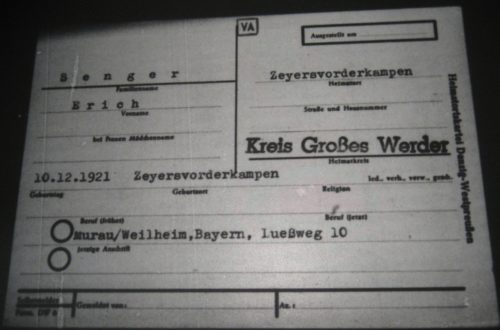
Erich Senger was born in Zeyervorderkampen, West Prussia on 10 Dec 1921 to Richard and Frieda Senger. He spent his youth growing up on the Senger farm along with his sister Luise.
Erich was a mischievous, precocious and inventive child. As a children he and his sister Luise walked from their home across the Schulweg to attended a small public school in the village of Zeyer. When they were out of school they both helped work the farm, as best they could. However as with most children their love was with their pets, a chicken and a little dog named Fifi.
Among his early childhood adventures, Erich built a small electric generator to power a radio and other small electric devices on the farm; the generator power was obtained by conscripting his little sister, Luise, to sit on a modified bicycle and peddle. Without a battery to store the generated electricity, things only worked while Luise peddled. It was a project that pleased Erich but frustrated Luise.
Perhaps Erich’s most audacious escapade involved Erich and his best friend Willi Foellmer building an airplane out of left-over construction lumber. They dragged the plane to the top of the barn, got it out onto the roof and were going to ‘fly’ it off the roof. Onkel Rudolph (Senger) who was in his room (upstairs in the house) saw them on the roof getting ready to fly. He went and got Papa (Richard Senger). The men rushed into the barn and up on its roof and stopped the boys before they launched the plane; saving both Erich and Willi from severe bodily injury.
By 1939, Erich had been enlisted into the Deutsche Luftwaffe. As a Luftwaffe enlisted man, he rode as a rear gunner on a Stuka fighter. Early on in the war he was stationed in the East, first in the Georgian Soviet Republic and later on the Eastern front itself, ultimately obtaining a severe and lifelong injury from freezing in Stalingrad.
After he recuperated from his frostbite injury, he was sent to fight on the Western front; again as a rear gunner on a Stuka. In 1944, his plane was shot down over France. He was captured by the British and as a Prisoner of War (PoW) he was transferred from France to England to serve in a PoW Camp. While in transit on a British PoW truck through Paris, he was machine gunned in the back by members of the Free French. The wounds he received in this incident were ultimately the major contributing factor to an aneurysm from which he died some 35 years later.
After being wounded, Erich was transferred to England for recuperation and incarceration. He spent the next 3+ years in a Prisoner of War camp in England, mostly working as a cook.
Finally in late 1947 or early 1948, Erich was allowed to return to Germany, joining with his parents and sister in Murnau, Bavaria. When Erich returned to Germany he needed a job. Luise (his sister), who was working as a secretary to the US Military Community Affairs officer went to her boss Frau Pichler and asked for her help. Frau Pichler located an American Army Captain (we believe his name was Captain Knight) who was married with three children and was looking for a nanny and household help. Based on Frau Pichler’s recommendation, Erich was given the job, where he rapidly became the Hausmeister and basically ran the household. He took care of the three children (who loved him dearly), did the gardening, and generally kept the household running smoothly. He did his job so well, and the children were so attached to him, that when Captain Knight was given orders to go back stateside he tried to convince Erich to go with them.
After the American family went home, Erich again, needed a job, Luise and Frau Pichler were able to help Erich find a job working in the US Army motor pool as a mechanic.
In 1949, he married Jutta Goldbrunner and adopted her 7 year old son Robert. Due to his frostbite injuries, Erich was never able to father children of his own.
In 1956, Erich rejoined a reconstituted Deutsche Luftwaffe as an air traffic controller. Most of his post World War 2 service took place in Penzing Air Field near Landsberg in Bavaria. He was finally forced to leave his beloved Air Force in 1974 due to age. By that time Erich had attained the highest rank available to an enlisted man in the Luftwaffe.
Sadly on the 26th of June 1981, Erich Senger died of an aneurysm; one caused by the wounds he had received those many years before in France.
this account is a composite of stories related by:
Luise Rabideau, Fred Rabideau and Erich Senger to:
Mark Rabideau and Linda Ziegler
ManyRoads has been acknowledged as providing a helpful source of original Prussian & German archives and documentation by Archivalia. You may see our mention on their site.
As perhaps most of you already know, it is our objective to be a provider of useful genealogical and historical information, especially with regards to those areas we research most heavily. Most of our information is readily available from our:
If you know of information including documents, images, video or sound media that you believe would be a positive adjunct to our libraries, please use our contact page to let us know.
Learning about your past, the past, any past requires an open mind and open eyes. An attention to detail, circumstances, and motivation are crucial. Preconceived notions, biases and wishes need to be set aside so that a clear and open mind is available to absorb the scenery. As an Frank Zappa once said:
A mind is like a parachute- it works best, when open.
Over the past few months, I have come into contact with a fair amount of web traffic, email and other-wise, where it seems, to me anyway, that many people are operating with a “closed parachute”. It seems to me that many conversants seem to be operating from a bias of pre-conceived notions. I hear from others that I can be counted among this group, as well.
Even so, I have to say that all of us need to be more aware of the possibility that history may not be quite as simple as our preferred belief systems would have it be. Or as Steven Hawking said:
The greatest enemy of knowledge is not ignorance, it is the illusion of knowledge.
Or stated ‘slightly’ differently by Reverend Denny Brake:
Some minds are like concrete: thoroughly mixed up and permanently set.
I have noticed innumerable attempts by ‘folks’ to rewrite the past either by misinterpretation of historical context or because of discomfort with the facts. Many attempt to justify unconscionable historical actions as being an outgrowth or reaction to previous historical mistakes. Still others believe that if they speak loud, hard and passionately enough the past will somehow be changed.
Historical errors, mistakes, atrocities were all built by fallible humans; no different from the fallible people of today. The fears and concerns of the past mirror those of today. Blind, insensitive anger, negativity, and misguided passions have always led to negative behaviors with even more negative consequences.
We can not change the past. It is unalterable. We can, however, make a choice to understand past within its own context and situation(s). We can even choose to learn from what we observe; and further, we can choose to repeat the past or not. What we ought not do is think that we are somehow better than those who preceded us. Rather, we are the same as they. We will make mistakes; make unwise choices and either accidentally or by design hurt those around us. But under no circumstance, will we alter or fix the past.
As I have mentioned before, it never ceases to surprise me how much Winnie the Pooh knows about life, genealogy included.
I searched and found the following quotes and they just seemed to be very insightful. I hope you find them so as well.
“Here is Edward Bear, coming downstairs now, bump, bump, bump, on the back of his head, behind Christopher Robin. It is, as far as he knows, the only way of coming down-stairs, but sometimes he feels that there really is another way, if only he could stop bumping for a moment and think of it.”
– Winnie the Pooh
“Well,” said Pooh, “what I like best — ” and then he had to stop and think. Because although Eating Honey was a very good thing to do, there was a moment just before you began to eat it which was better than when you were, but he didn’t know what it was called.
– Winnie the Pooh, The House at Pooh Corner
“I don’t see much sense in that,” said Rabbit. “No,” said Pooh humbly, “there isn’t. But there was going to be when I began it. It’s just that something happened to it along the way.”
In an effort to improve the speed and performance of ManyRoads, we have initiated several crucial improvements. At least, I hope they are improvements.
Included among these are:
Installed Cache (Quick Cache Plugin) on the site; our cache is set to refresh every 60 minutes and immediately on page changes
We tweaked our wp-config file to enable WordPress Object cache and possibly most risky…
We modified our php.ini file to turn off about 10 default php settings (hopefully these are the items we do not need; but maybe we do; we’ll see!)
Please let us know via our contact page should you encounter site problems. We’ll get on them as soon as we can.
ManyRoads achieved a significant milestone during the month of July 2010.
Over 5000 of you visited our site!
Thank you!
We hope to see you here often. Please know that if there is information or improvements you wish to share, we are eager to hear from you. Do not hesitate to use our contact page to get in touch with us.
A lot has gone during the past month or so. Not only have we added a lot of new material to ManyRoads but we have achieved some important milestones, as well. Rather than bore you with a lot of details, I will outline most of the key happenings. But before I do that, a couple of important personal items have transpired. Firstly, even though I’m not much of a joiner I have taken membership in both the National Genealogical Society and the Association of Professional Genealogists (here’s more). I have also decided to offer more services and tools to the genealogical community (more specifically the ManyRoads readership). (here’s more and still more).
Now on to the other major items or changes to ManyRoads:
I completely restructured the ManyRoads Menuing system (hopefully making it easier to get at things). It even seems to work in Internet Explorer!
I have added over new 30 postings to ManyRoads covering Wales, Quaker, Mennonite, German, Quebec ancestors (they’re all here)
I have added over 5 GB of new source documentation to our online libraries, much focusing on Mennonites and Quakers (more here) and Switzerland (more here)
Added about a dozen new photos to Elbing Damals (Elbing Back Then)
We passed a significant readership milestone… our 25,000th unique visitor dropped by this past month; also July will top our highest monthly readership number ever (we may hit 5,000 unique visitors!)
I fixed (using a new tool) over a 175 broken links… sadly most of the links were to sites where useful information evaporated. (more on my lament is here)
This list of Genealogy Courses & Certificates is by no means complete. If you know of certifications or courseware that you think should be on ManyRoads please use our contact page or email me directly. If you have comments to share on any of these they are also most appreciated.
Have you always wanted to learn how to trace your family tree or solve a difficult brick-wall genealogy problem? Perhaps everyday commitments or the cost of attending an institute or conference get in the way of your dream of knowing your ancestors. Or maybe you prefer to work at your own pace, mostly in the comfort of your own home.
Developed in collaboration with nationally recognized experts, the Certificate in Genealogical Research is ideal for those who wish to develop the knowledge and skills essential to conducting quality genealogical assignments. The Center for Professional Education offers both classroom-based and online multi-week Genealogical Research Certificate Programs. The classroom program, offered on Saturdays at our Boston campus location, provides hands-on training in basic genealogical principles, techniques, and core competencies. The online program offers students both flexibility and easy access to Boston University’s genealogical research curriculum over multiple weeks. Both programs are completed in only 14 weeks of study and lead to a Certificate in Genealogical Research from Boston University upon successful completion.
Brigham Young University, Provo, Utah, offers a Certificate Program in Family History as an independent study course. College credit is granted for each course successfully completed within the certificate program; however, the certificate is not a college degree.
Certificate in Genealogy & Family History (University of Washington)
Developed in partnership with the UW History Department.
Learn to unearth new facts about your ancestors and view the information within the political, economic and social changes that shaped communities of that time. Focus in-depth on a selected project to better understand the course of your ancestors’ lives and the lives of the subsequent family members. Uncover fascinating stories not just about your past, but also about the forces and people behind societal transformations.
In affiliation with the Continuing Education, University of St. Michael’s College in the University of Toronto NIGS provides web-based courses for both family historians and professional genealogists.
Certificate of Family History Skills and Strategies (Intermediate).
The Society of Genealogists is delighted join forces with Pharos Teaching & Tutoring to offer the esteemed SoG courses and education programme to a wider audience than can attend the Society’s classes in London. Together we are introducing a new joint programme, the distance learning Certificate of Family History Skills and Strategies (Intermediate).
Everyone has ancestors and many of us can’t help but wonder about our roots. Who are our forgotten forebears and where did they live? This fascinating course helps budding genealogists unlock the hidden secrets that until now have been lost in time. Easy-to-follow lessons provide a gentle introduction to genealogy and reveal the who, what, where, why and how of this intriguing and enormously popular subject. The course will familiarize novices with the steps of scholarly genealogical research into their family history and explain how to tap online resources, locate and evaluate records, organize research materials, and how to share your findings with others in the genealogical community.
John & Isabella (Solomon) Musgrove are in the Henss branch of our family lineage. We are in search of additional information and photos regarding John & Isabella that may be available. We are especially keen to find military information (for John’s service and death), gravestone images, marriage documentation and death certificates. Please use our contact page if you have any information to share.
John Musgrove is one of our family’s honored war dead.
He died in the service of his nation from wounds he suffered at Vicksburg, MS.
1850
The 1850 US Census finds the Musgrove family living in Livingston, Clark County, Illinois. At that time, John was a farmer age 26 living with Isabella, his wife age 21. They had two children Henry age 2 and Kesiah age 1. Their farmer real estate was estimated to be worth $500. John was reported to have been born in Ohio, Isabella in Kentucky and both children in Illinois.
1856
By 1856, the Musgrove family had moved to Marion Township in Henry County Iowa. As of the taking of the Iowa Census, they had been in Marion County for 1/4 of a year. John is reported as being 33 years old and a farmer also serving in the militia; Isabella is a 29 year old homemaker with three children:
Henry 9 years of age
Keziah age 6
Christopher age 1.
Also, now living with the family is a Miss Jane Johnson age 16 from Ireland.
1860
1860 finds that the family is prospering and growing. John now age 37 and his wife Isabel age 33 own a farm worth $2500 and have personal assets valued at $1000. Their children are now:
Henry age 13
Kesia age 11
Christopher age 6
Isabel age 3
John age 4 months
Notably Isabel (age 3) is reported to have been born in Illinois which, if true, would indicate that Isabella (the mother) was pregnant at the 1856 Iowa Census taking and she went ‘back to Illinois’ to have the baby probably in 1857.
“John Musgrove, a member of Company H, 25th Iowa Infantry, died in the service.”[ref]ManyRoads Iowa Library see p.274. Original Text: Portrait and Biographical Album of Henry County, Iowa Containing Full Page Portraits and Biographical Sketches of Prominent and Representative Citizens of the County, Together with Portraits and Biographies of All the Governors of Iowa, and of the Presidents of the United States. Chicago: Acme Pub., 1888. Print.[/ref]
John Musgrove “Union Army 3rd Sgt. Company H, 25th Iowa Volunteer Infantry [was] shot during Battle of Natchez, died on board a Riverboat Steamer.” Per Marcia Witt [unknown source]
Isaac W. and Keziah Allen are in our Henss family lineage. We are in search of additional information and photos regarding Keziah and Isaac Wade that may be available. We are especially keen to find gravestone images, marriage documentation and death certificates. Please use our contact page if you have any information to share.
1870
According to the 1870 US Census, Issac Allen (reportedly born in Ohio was age 25) and Keziah (reportedly born in Illinois was age 21) were living with their daughter Cora Belle Allen in Mt. Pleasant, Jefferson Township, Henry County, Iowa. Issac was earning a living as a blacksmith and Keziah was noted as Keeping house.
1880
By 1880, the family had grown. Issac (reportedly born in Iowa was said to be age 36) was now a farmer living with his wife Keziah (reportedly born in Illinois was age 30). They had 4 children living with them including:
Cora (age 11)
Ella (age 8 )
Jackson (age 4)
Bessie (age 2)
1885
In the Iowa Census of 1885 Issac W. Allen (age 40, born Ohio and a blacksmith) and his wife Keziah (age 35 born in Illinois) and their children were reported to have lived in Jefferson Township, Henry County, Iowa.
Cora Belle (age 15)
Ella (age 12)
Jackson (age 9)
Bessie (age 6)
Anna (unreadable smudge)
1900
In the 1900 US Census, Isaac and Keziah were reported as having been married for 33 years meaning they were married about 1867). At this time Issac, still a farmer, was reported to be 55 (reported to have born in Ohio in Oct. 1844) and Keziah 50 (reported to have born in Illinois in Aug. 1849). By this time, it was noted that Issac and Keziah owned their farm. They had 4 remaining children in the household including:
John J. (age 24) reported as being a farm worker
Bessie (age 22)
Anna (age 17)
Edith J (age 10)
1910
By 1910 Isaac Allen (born in Ohio and now 65) and Keziah (born Illinois and now 60) lived with two of their daughters:
Bessie (age 31)
Edith (age 20)
Isaac and Keziah continued to own and operate their farm. Keziah is reported to have had 6 children all of whom reportedly remained alive in 1910.
1914
Isaac Wade Allen died on 11 April 1914.
1920
1920 US Census reports that Keziah (age 70 and now a widow) was living with her daughter’s family including:
Son-in-law Orus P. Boshart (age 39)
Daughter Edith J. Boshart (age 39)
1925
By 1925, Keziah (age 75 and a widow) was living with her extended family in Wayland, Henry County, Iowa. The extended family included:
Son-in-law Orus P. Boshart (age 35)
Daughter Edith J. Boshart (age 35)
Grandson James O. Boshart (age 4)
Keziah owned the real estate free and clear, it was valued at $2000.
Grab the data while you can. I guess that is what every online genealogist needs to have as their motto these days.
Today I uploaded a very useful (helpful) WordPress plugin called:
Broken Link Checker- It checks your blog for broken links and missing images and notifies you on the dashboard if any are found.
Well much to my dismay and surprise when I installed and ran the plugin, it found nearly 175 out of 1055 links ManyRoads to be broken or redirected. That seemed like a lot to me. I had been running several ‘free’ services to check my site for broken links and every week; they were reporting ‘happily’ that everything was ‘just fine’- zero broken links. Obviously, these checkers were not doing their job very well!
In addition to noticing that a site as large as ManyRoads needs good automation, I think I can safely conclude you ought never to trust that another website will either stay online or keep reference information, which you need, intact. I even discovered lost links to lengthy articles from Wikipedia. They were simply removed!
My recommendation for self-protection is that when you find something useful and relevant do the following:
take a copy (keep it offline)
ask permission to publish (Keep it offline if you must); do not violate copyright laws!
check your sources periodically to see if they are still alive
if not… well then I really do not know what to advise. On ManyRoads I am simply stating that the material is no longer available where I found it, placing a date on the text and removing the link (Since WordPress keeps backups of my Pages/Posts hopefully I can find an old link if I need it.)
clean up your dead links; you need to do that in order to keep your search engine optimization in good health.
Robert Owen, of Dolserau, came over in the ship Vine, of Liverpool, sailing from Dolyserre, near Dolgules, Merioneth, with his wife, Jane, son Lewis, and a servant boy and four maid servants, and arrived at Philadelphia in Sep. 1684.
He had been a Justice of the Peace at Dolserau, near Dolgelly, (and near Bala), Where he was incarcerated five years in the jail because he was a Quaker. He had been the Governor of Beaumaris, and became a Quaker about 1660. When he came over here, he settled on Duck Creek, in New Castle Co., where his son, Edward Owen, who had come over earlier, in Hugh Roberts’s party, in Nov. 1683, was then settled. Both Robert Owen and Jane, his wife, died in the next year.
They had altogether nine sons, and all were of age before 1684. Their son Lewis Owen returned to Wales to reside, but their son Dr. Griffith Owen, who bought his brother Edward Owen’s land, in the Thomas & Jones tract, Merion, remained here, and became prominent in the Province.[ref]BROWNING, CHARLES H. Welsh Settlement of Pennsylvania. Philadelphia: William J. Campbell, 1912 p.160 [/ref]
I am currently working on a portion of the Henss family and am ‘visiting’ Virginia/ Maryland at the time of the Revolutionary War. The person I am closely examining is a Mister John Hall; his wife is Mary Magdelene Smith. I just love it when the names are so incredibly unique!
So here goes, I have three mysteries!
Please use our Contact page to let me know if you have any firm data or information to help solve these!
Mystery 1
I found a document (located in the National Archives) addressed to ‘some guy’ named George Washington. [SinglePic not found]
The document is transcribed as the following in Letters to Washington and Accompanying Papers. Published by the Society of the Colonial Dames of America. Edited by Stanislaus Murray Hamilton:
Sworn to this 27th. day of August 1757 –
BALTIMORE COUNTY SS The Deposition of Thos. Hudson, taken before me the subscriber one of his Lordship’s Justices of the peace for the County aforesd. in the Province of Maryland; who being duly sworn on the Holy Evangelists declares. That he this Dept. was present with Mr. Nathaniel Gist & John Hall when the said John Hall was going to sign his assent to being Enlisted in his Majesties Service; That the said John hall on taking the Pen in his Hand, said I will not sign for any more than Six months, Upon which said Mr. Gist made answer, Thats what I want; (or thats what I desire) but which of those words this Dept. can’t exactly remember. That Mr. Saml. Owings a Magistrate for this County was then also present; and on the said John Hall going to sign as aforesd.–Said unto the aforesd. Nathl. Gist, this Boy is too Young; to which the said Gist made answer he was the highth of their Standard; and farther Saith not –
… before
… BUXTON GAY
A Brief Look at John’s Genealogy
The genealogy I have for John Hall and Mary Magdelene Smith is:
John Hall
b:1732 Chester, Pa.
d:1794 Bedford, Va.
m:1759 Bedford, Va.
Mary Magdelene Smith (wife)
b:1734 Bedford, Va.
d:1833 Bedford, Va.
My thoughts are that since Baltimore, Maryland is in a straight line between Chester, Pa. and Bedford, Va (and is approximately in the middle), well you get the point; this could be my John Hall.
The real question is: Does anyone have any hard information on this subject?
And..as if that were not enough, I also have the following for a John Hall (again any firm data or ideas are most appreciated).
Mystery Two
Letters of Delegates to Congress: Volume 18 March 1, 1781 – August 31, 1781 John Hanson to John Hall
My Dear sir Philadelphia June 4th 1782 I inclose you the two last papers-the Accounts given of the battle in west Indias are upon the whole rather unfavourable yet there are some Circumstances that render their Authenticity some what Doubtful. No official Account is yet come to hand at New York and it is reasonable to suppose if their Account be true that a Communication of a matter of Such Importance, to their Commander in Chief here would not have been so long delayed. There are other favourable Circumstances and I hope for the best, but am afraid the french have received so much damage in the Action, as will prevent the intended Attack on Jamaica at least for a time. An embarkation of Troops at New York is talked of, and a number of Transports it is said are going from thence to take of the Garrison at Charles Town. We hear nothing from Sir Guy. I very Sincerely wish you may Adopt the five per Ct Duty in the manner recommended by Congress, because I think an impost on all imported goods is a mode of Taxation the easiest that can be proposed. The Merchants in the first Instance pay, the people insensibly refund, every man pays in proportion to what he Chuses to Consume. The Extravagant man pays for his folly and the foreigners And strangers Among us are made to Contribute.
I sincerely wish you health and happiness, being my Dear sir, your friend & most humble Servt. John Hanson
RC (MdHi: Gilmor Collection).
…AND…
Mystery Three
Letters of Delegates to Congress: Volume 5 August 16, 1776 – December 31, 1776- Benjamin Rumsey to John Hall?
Sir (1) Joppa 19th Decr. 1776 Engaged in the Commission and the Business thereof in which we met with great Difficulties & Interruption I never attended Congress till this Day Week and should not then as the Business remained unfinished had I not heard Mr. Tilghman and Mr. Carroll had gone Home and left the Province unrepresented.(2)
When I got into Congress where I came determind to stay ’till the last Extremity, altho exceeding inconvenient to me, I found that Congress had two or three Days before that determined by the Advice of their Generals to remove from thence to Baltimore, Upon a presumption that the Enemy being possessed of the Jersey above by marching Parties opposite the City might make a push in the Night in Conjunction with the Tories and seise the Persons of the Congress, and this might have been done with great Facility as the City Militia had all marched to join General Washington.
The Enemy are posted on the Banks of the Delaware at Trentown and from thence have pushed their parties as low as Burlington and as high as Penny Town. They are commanded by General Howe who has with him it is supposed the whole Brittish Force that can be spared from their Conquests and are thought to amount to about thirteen Thousand Men.
General Washington had not when we came away above 5000 Men with the Junction of the Militia posted on the opposite Banks with forty Peices of Cannon. Genl. Lee was posted about 25 Miles in the Rear of the British Army at a place called Chattam about 3 miles from Morris Town with a large Body of Forces composed of a Detachment from the Northern Army Troops returning from Ticonderoga and encreasing daily with the Jersey Militia Numbers unknown to me but between 5000 and 12,000 from whence he has positive Orders to march and join Genl Washington very injudiciously in my Opinion but the Slowness of the coming in of the Militia in the State of Pennsylvania possibly may justify the Measure.
If the Militia would join Genl. Washington in such Numbers as to make him strong enough in Front to prevent the Enemy’s crossing Delaware and taking Philada. Lee by strong Detachments may cut off all their Supplies and destroy the British Army without striking a Blow or if they decamp expose them to two fires in Front and Rear.
My Colleagues Colo. Contee and Mr. Hanson have just parted from me after finishing our Business as far as we could to lay before your Honours and this in some Measure will account to you for my not writing.
I understood that as the Pennsylvania Militia rather moved slow the Congress had come into a Resolution to request the Militia of our State to march to the Assistance of Genl. Washington. I understood too Col. Ewing undertook voluntarily to bring them up and rode away without any written Orders; my Intelligence was from One of the Officers of our Army. You know Colo. Ewing (I presume the Congress do) and eer this or at their first setting at Baltimore You will receive a written Requisition.
I heard Mr. Chase tell Mr. Robt. Morris that all our sick, the Baggage of the Congress and even Mr. Morris’s Effects which are pretty considerable would be removed with Ease as he had wrote for Vessells to transport them but none were at the Head of Elk as I came by, at least they pressed Colo. Aquila Halls Vessell for that purpose. How Mr. Chase has transacted this whether in a public or private Capacity I cant tell, he can best answer it.
I had just received Orders from the Brigr. Genl. to give my Battallion Notice to hold itself in Readiness (If I am yet a Colo. which I doubt of from Report) and in Letters to the Officers was communicating that Intelligence when the Express brought to me your Letter directed here by the honorable John Hancock Esqr. on his Way to Baltimore. I much approve of your giving the Militia Notice to hold themselves in Readiness but I now tell you that will be totally useless without more, that they are without Arms, Blanketts many of them & Baggage Waggons with a numerous &ca. that ought to be supplied them before or on their March, and that they ought really to be better supplied than other Troops especially at this severe Season. I have advertised the 8th Battallion that if I am still their Colo. I will with the greatest alacrity do myself the Honour to march at their Head if the Province is represented without me.
A Doubt may arise with You respecting the Reason of the Tardiness of Pennsylvania. You know great Part of Philada., Bucks and Chester are Tories and the Councill of Safety of Pennsylvania have cried Wolf, Wolf two or three Times falsly to the back Counties and now the Wolf is really come they think it still a false Alarm. They are distracted too abt. the State of their Governmt., People being of various Opinions about it.
I have opened Mr. Presidents Letter (3) but shall seal and send it by Express to Baltimore to Mr. Chase who I expect by this Time is there. Seamen were much wanted and your Orders in sending the Seamen will be very agreeable to Congress. For if Philadelphia should ever be taken by some Coup de Main of the Enemy, wch. by the by a well manned Frigate will render much more difficult, there being no Ships of the Enemy in Delaware Bay, the Frigates and a great Quantity of Stores may be saved thereby.
You are also requested by me to inform Mr. President that it has not been either with my privity, Consent or Knowledge that Individuals have been applied to, that I am exceedingly sensible it rather tends to delay Business and that he and the whole Board I hope will acquit me of any Design in being Wanting in Respect to the cheif executive Power in the State, the Dignity of which I was always strenuous in supporting while I had the Honour of Seat there and still am ‘tho I have not thot I am (besides my Love for my Country), added to other Motives, actuated- by a Friendship and Esteem for the Individuals of that Board that will always induce me to treat them with the Utmost Respect, Esteem and Regard.
I am Sir, Your most humble Servt. Benjamin Rumsey
RC (MdHi).
1 Perhaps John Hall, vice president of the Maryland Council of Safety. Rumsey obviously directed this letter to a member of the council of safety and in the course of it twice mentions “Mr. President,” Daniel of St. Thomas Jenifer.
2 Matthew Tilghman and Charles Carroll, Barrister, are known to have been in Philadelphia as late as December 9, the day they and Samuel Chase requested money for the removal of sick troops to Maryland. Tilghman and Carroll apparently left soon afterward, leaving only Chase and William Paca to represent Maryland, which until February 15, 1777, required the presence of three delegates to cast the state’s vote in Congress. See William Paca to the Maryland Council of Safety, December 7, 1776, note 3; and JCC, 7:111.
3 Probably the council’s December 15 letter to the Maryland delegates. See Md. Archives, 12:530-31.
This page is under development; research is on-going
Note: additional source materials are currently being sought.
Keziah Hall (Musgrove) 1782
In her father’s Will of 1794, Keziah, his youngest child, was given ‘one Negroe Girl named Patt at my wifes death Likewise one Feather Bed & Cow & Calf.’ Since her mother lived to 1833, it is problematical that she ever received her slave. She may have received the bedding and livestock as wedding presents.
Keziah, named for her aunt Keziah (Banks) Hall wife of Hezekiah, d. 1811, was married to Benjamin Barton Musgrove 15 December, 1796 at the age of 14. In spite of her youthful marriage, Keziah, according to a family descendant, ‘was quite a woman!’ She was to have a family of twelve children, to live and maintain the family ‘plantation’ for nearly a quarter-century following her husband’s death, to look after other family members and live through most of the Civil War. ^
According to one of his descendants, Benjamin B. Musgrove came to Virginia from Maryland and settled down on the Staunton River. ^^ He had a number of full brothers and sisters in Bedford county and a number of half-brothers, some of whom settled in the Shenandoah Valley. The Musgrove family for many years was prominent in the affairs at the southern edge of Bedford county and Benjamin Musgrove acquired much land, many slaves and numerous relatives through his large family.
Family
It was commonly said among the old-timers of Bedford county that, ‘the Musgroves were so doubled and twisted that you couldn’t unravel them!’ This homey reference to the family and yarn is literally true, as was revealed by this study into family as regards the Hall – Musgrove – Wilkerson – and other family combinations. As late as 1980, correspondents to the author have discovered relationships that they did not know existed. As in case of many southern families that resided for long periods of time in an isolated, rural area there were many ‘cousin’ marriages extending through the first to third generations and later. This was the result of limited contacts among the younger family members and in some cases they were made to keep ownership of properties intact in the families.
The family can be ‘unraveled’ but it takes a bit of doing. This job has been left to family descendants, which are numerous and widely scattered, although considerable numbers of them still are to be found in Virginia. Of especial interest to this volume is the fact that as time went on, descendants of the Musgrove family were marrying into the families of Keziah’s brothers, especially those of Mathew, d. 1855, and Elisha, d. 1840, because they had remained in the Rockcastle Creek area of Bedford county – the home base of the John Hall, d. 1794, family.
Musgroves
By inheritance and purchase, the Musgroves until the Civil War and for a generation or so afterwards owned large amounts of land in the Staunton River area. Farming on this bottom land was hard and frequently crops were lost in the Spring floods. The Musgrove men as a group were especially noted for their of horses and were exceptionally kind in their treatment and care of the animals. So much so, that many of their horses became blind from a diabetic condition brought about by overfeeding them with corn. One of the Musgroves’, known as “Big Ben” (Benjamin B. Musgrove Jr., 1822 – 1902), was found dead in his barn from dropsy, where he had spent many hours with his horses.
Women
In his delightful book, Cause and Effect, in which he reminisces about Bedford county, D. Claytor Brooks has this to say about the Hall – Musgrove – Wilkerson relationships:
“Up the River (the Staunton) from Anthony’s Ford — was the Musgrove land – quite a large estate.”Somewhere among the Musgroves’ land lived some Wilkersons. In those days all the Wilkerson men married Musgrove women. Someone said that the Wilkersons were lazy and the Musgroves were hard workers, so they married Musgrove women so that they would wait upon them. Be that as it may, they have become so well blended by now that there isn’t much discernible difference. There were not enough Wilkerson men to marry all the Musgrove women, so there is Musgrove blood in folks of many names around here (including mine).
“Somewhere alongside the Musgroves lived a family of Halls … the Halls owned several hundred acres across the head waters of Mill Creek …” (Mill Creek is a later name for Rockcastle Creek, possibly a tributary to the main stream.)
Patriarch
The patriarch of the group was of course, Benjamin B. Musgrove, 1774 – 1840, who had married Keziah Hall in 1796. We learn of him again in 1833. In that year Magdalene, Keziah’s mother, died and Musgrove was appointed by the Bedford county court as Executor. Being a man of property he could qualify with a proper bond. Other Hall family members were involved in the settlement and a complete record of the proceedings is in the records. Since Magdalene had lived nearly thirty years after the death of her husband, John Hall, d. 1794, the settlement was complicated.
The settlement of Musgrove’s estate which extended through the year 1842 lists fourteen slaves and we know their names and valuations placed on each of them. The total for them was about $5,000 of which slaves to the value of over $1600 were allotted to the widows dowry. There are some interesting side-lights to this procedure and they will be discussed in the section: The Hall Family and Slavery, in the appendix.
The widow, Keziah, received 137 acres of land for her share and a remaining two hundred fifty-six acres was allotted to the twelve children. All told by the sale of some land and a few of the negroes and when the expenses of probate were deducted, each of the children, as heirs, along with their mother received $397.07 each.
Family
It will be impossible to give all the known details on this family. They were deeply involved in slavery and in the Civil War – some incidents to be given in the special sections devoted to those subjects.
In order to ‘unravel’ a large chart on the family has been prepared and will be place in the files of the Illinois State Historical Library at Springfield. In addition, important correspondence by other researchers of the family will be filed.
To conclude this section the children of Benjamin B. and Keziah (Hall) Musgrove will be listed giving synoptic form some information about each of them:
The Musgrove Family of Bedford County Virginia
(compiled from marriage, estate and other legal records, family
correspondence, etc.
1. Musgrove, Christopher, 1798-1870, m.1, 1826, Elizabeth Best Jones: m.2 Harriet Ashworth. Slave story in family. Cousin marriages into the Elisha Hall family. Elisha, brother of Christopher’s mother, Keziah.
2. Musgrove, Rev. Henry, 1800-1869, m. Elizabeth Craig in 1816. Ran away from home; lived in Ohio, Ill. and Ia. Died in Ia. Cousin marriages in this family.
3. Musgrove, Magdalean, 1804 – , m. 1827 William Wilkerson. ^*^
4. Musgrove, Rebekah Hall, 1805 – , m. Hal L. Pearson, 1824
5. Musgrove, John Hall, 1806 – 1888; m. 1 Lucy Lazenby, m.2 Lucy Cunningham.
6. Musgrove, Rachel, 1808 – 1889, m. 1830, Owen Wilkerson
7. Musgrove, Keziah Stover, 1811 – 1892; m. 1828 Wm Lockett Wilkerson.
Slave story in this family. Civil War. Cousin marriages.
8. Musgrove, Minerva, 1822 – ; m. 1. 1837, Harrison W. Baker; m. 2. ________ Swain.
9. Musgrove, Benjamin B. Jr., 1822 – 1902; m. 1842, Sarah (Sally) Ann English.
10. Musgrove, Demetrious P., 1826 – 1865; m. 1846 Martha H. Watson.
11. Musgrove, Millicent, 1827 – ; m. 1, 1843, Henry B. Anthony; m. 2. Thomas Mitchell
12. Musgrove, Tabitha, 1832, ; m. 1 1836, John Sun Gill; m. 2, Parmaris English. Cousin marriage in family.
Some tracing in this family through the seventh generation from William Hall, d. 1757.
The English and Anthony families were considered by some residents of southern Bedford county as leading families – above average.
Benjamin B. Musgrove, Sr., had ancestors who fought in the American Revolution.
Elizabeth Craig, wife of Rev. Henry Musgrove was born in Germany
Typical cousin marriages – (not all accounted for)
When Dr. Hugh Brown Wilkerson, 1856-1929, son of Keziah (#7 on list married Ellen Rebecca Mount, 1859-1940, he was marrying a grand-daughter of Rev. Henry Musgrove(#2 on list.).
The marriage of Christopher Musgrove (#1 on list) to Elizabeth Best Jones was a marriage of two persons who were first cousins to the children of Elisha Hall, d. 1840. Christopher through his mother and Elizabeth or Eliza through Elisha’s wife who was a Best.
John Henry Gill, son of Tabitha Musgrove (#12 on list) married Mary Rebecca Wilkerson, daughter of Keziah Musgrove (#7 on list) he was marrying a first cousin.
Many of the Musgrove family marriages were performed by Rev. Abner Anthony. Here is what D.C. Brooks said about him in Cause and Effect, p. 19.
“Rev. Abner Anthony licensed to preach in 1826, was active 50 years until 1876 he performed his first marriage on May 28, 1827. He performed 999 ceremonies. Anthony had a large estate and owned many slaves.”
+The author thinks, but does not know, that the John Hall, Jr., was a son of a John Hall, brother to William Hall, d. 1757. In 1794, John Hall, Jr., became a licensed Baptist preacher in Bedford county and died in 1799. He was a carpenter. Our Hezekiah, d. 1811, then the oldest of the Bedford Hall clan was the Executor of John Jr.’s modest estate.
++using the order of names as given by a grandson of John, d. 1794.
+++William Hall may have lived in Franklin Co. Va. prior to 1818.
++++Other Civil War stories will be told later in this section.
+++++also Matthew
*see section on William Hall d. 1757
**From the History of the Morgan Church, Bedford Co., Va.
***James P. Marshall, a descendant, was Sheriff of Bedford Co., Va. for twenty-seven years.
****The name Elisha was the most common given name for males in all branches of the Hall family. Unless carefully noted, the name can cause much confusion in patterning out the history of the group.
*****Comments: Elisha had 10 children, one not shown, Magdalena, who may be dead in 1840. The writer believes that this is a good listing of the family in birth order, as the Commissioners likely took them in order of age. No wife is listed for Elisha, Jr., nor for Banks B. in 1840, although he is known to have married later. The names in parentheses indicate family name of respective spouses.
Only information on daughter not given land:
22 Jan 1827 Greer (Green), Jas. & Magdalena Hall
dau. Elisha
Jas. K. Shaver, Surety
Mar. by Rev. Wm. Leftwich
^and marrying off her daughters
^^he may not have lived in Maryland but his ancestors did.
^^^D.(Dabney) Claytor Brooks, Cause and Effect, Carleton Press, NYC, 1972. A Bedford county, Va., historian, visited by the author and voluminous correspondence between them. As result, he is somewhat of a clearing house for other family searchers.
^^^^At the time Brooks wrote his book, he didn’t know of the exact family relationships. Recently, he has discovered a closer relationship with the Halls in his own line – I warned him!
^^^^^The writer does not accept the 1774 birthdate for Musgrove. He thinks it was 1780. Keziah and Benjamin married – he believes – almost as children; 14 and 16 years of age respectively. Their first child was not born until two years after the marriage – unusual for those times. Using the 1774 date causes some confusion among those studying the Musgrove family line.
^*^Wilkersons related; Wm. L. and Owen – half-brothers sons of a Joseph Wilkerson. Wm. grandson of Joseph.
COPYRIGHT. —the material in Vols. I and II of THE GRANDFATHERS is not copyrighted, except as the term is understood in common law.
Therefore, the reader(s) of these volumes is free to copy, steal and lift for his or her own personal use any of the contents. In fact, the author will feel greatly complimented if by chance anyone would read it and honored if its contents were worth borrowing without pay.
Works such as THE GRANDFATHERS are for personal satisfaction not money — although they are among the most valuable writings that can be left for future generations. They are the true histories of a people.
The material in these volumes was obtained by relentless searching, voluminous correspondence, library haunting, travel, expenditure of money and lifting from others’ works. Most of all, by the graciousness and forebearance of those who were contacted in person or by letter. The greatest factor of all was TIME of which un-godly amounts were used in its composition.
Carrol Carman Hall, Springfield, IL, USA 1981
1. Carrol Carman Hall, “The Grandfathers Hall-Overstreet Families,” The Grandfathers, n.d., http://www.illinoisancestors.org/menard/fam/ho_toc2.html#ACK.
Organized at Mount Pleasant and mustered in September 27, 1862. Ordered to Helena, Ark., November. Attached to District of Eastern Arkansas, Dept. Missouri, to December, 1862. 3rd Brigade, 1st Division, District of Eastern Arkansas, Dept. Tennessee, December, 1862. 2nd Brigade, 11th Division, Right Wing 13th Army Corps, Dept. Tennessee, December, 1862. 2nd Brigade, 4th Division, Sherman’s Yazoo Expedition, to January, 1863. 2nd Brigade, 1st Division, 15th Army Corps, Army Tennessee, to December, 1863. 3rd Brigade, 1st Division, 15th Corps, to April, 1864. 2nd Brigade, 1st Division, 15th Corps, to September, 1864. 3rd Brigade, 1st Division, 15th Corps, to June, 1865.
SERVICE.–Expedition from Helena to mouth of White River, November 17-24, 1862. Sherman’s Yazoo Expedition December 22, 1862, to January 2, 1863. Chickasaw Bayou December 26-28, 1862. Chickasaw Bluff December 29. Expedition to Arkansas Post, Ark., January 3-10, 1863. Assault on and capture of Fort Hindman, Arkansas Post, January 10-11. Moved to Young’s Point, La., January 17-23, and duty there until April. Expedition to Greenville, Black Bayou and Deer Creek April 2-14. Demonstration against Haines and Snyder’s Bluffs April 28-May 2. Moved to join army in rear of Vicksburg, Miss., via Richmond and Grand Gulf May 2-14. Fourteen-Mile Creek May 12-13. Jackson May 14. Siege of Vicksburg May 18-July 4. Assaults on Vicksburg May 19 and 22, Advance on Jackson, Miss., July 5-10. Siege of Jackson July 10-17. Briar Creek near Canton July 17. Canton July 18. Duty at Big Black until September 22. Moved to Memphis, thence march to Chattanooga, Tenn., September 22-November 21. Operations on Memphis & Charleston Railroad in Alabama October 10-29. Cherokee Station October 21 and 29. Cane Creek October 26. Tuscumbia October 26-27. Battles of Chattanooga November 23-27; Lookout Mountain November 23-24; Mission Ridge November 25; Ringgold Gap, Taylor’s Ridge, November 27. March to relief of Knoxville November 28-December 8. Garrison duty in Alabama until May, 1864. Atlanta (Ga.) Campaign May 1 to September 8. Demonstration on Resaca May 8-13. Snake Creek Gap May 10-12. Battle of Resaca May 14-15. Operations on Pumpkin Vine Creek and battles about Dallas, New Hope Church and Allatoona Hills May 25-June 5. Operations about Marietta and against Kenesaw Mountain June 10-July 2. Bushy Mountain June 15-17. Assault on Kenesaw June 27, Nickajack Creek July 2-5. Chattahoochie River July 6-17. Battle of Atlanta July 22. Siege of Atlanta. July 22-August 25. Ezra Chapel, Hood’s second sortie, July 28. Flank movement on Jonesboro August 25-30. Battle of Jonesboro August 31-September 1. Lovejoy Station September 2-6. Pursuit of Hood into Alabama October 1-26. March to the sea November 15-December 10. Clinton November 22. Griswoldsville November 23. Statesboro December 4. Siege of Savannah December December 10-21. campaign of the Carolinas January to April, 1865. Reconnaissance to Salkehatchie River, S.C., January 25. Salkehatchie Swamps, S.C., February 3-5. South Edisto River February 9. North Edisto River February 12-13. Columbia February 15-17. Lynch’s Creek February 25-26. Battle of Bentonville, N. C., March 20-21. Occupation of Goldsboro March 24. Advance on Raleigh April 9-13. Occupation of Raleigh April 14. Bennett’s House April 26. Surrender of Johnston and his army. March to Washington, D.C., via Richmond, Va., April 29-May 20. Grand Review May 24. Mustered out June 6, 1865.
Regiment lost during service 2 officers and 63 Enlisted men killed and mortally wounded and 2 Officers and 207 Enlisted men by disease. Total 274.
Source[ref]ManyRoads Iowa Library see p.334 Original Text: Portrait and Biographical Album of Henry County, Iowa Containing Full Page Portraits and Biographical Sketches of Prominent and Representative Citizens of the County, Together with Portraits and Biographies of All the Governors of Iowa, and of the Presidents of the United States. Chicago: Acme Pub., 1888. Print.[/ref]
ISAAC W. ALLEN Of Henry Co., Iowa, he resides on Sect. 9, Jefferson Twp., and is engaged in farming. Jackson Allen, father of our subject, came with his family from Clarke Co., OH, in October 1846, and located in Henry County, and filed a claim upon land one mile south of where Wayland now stands. Braxton Benn had built a small cabin and for this and his claim Mr. Allen traded a span of horses. In Ohio, Jackson Allen wedded Mary Ann Wade, and eleven children were born to them in that state, two of whom were twins who died in infancy, their names being Mary A. and Julia A.; John, who is married and resides near Stockton, CA; Maria became the wife of Erastus Warren, who died in the army; Jesse, husband of Rachel Anderson is a farmer residing in Jefferson Twp.; Reece wedded Melissa J. Warren, and resides in Jefferson Twp; Ellen D. wedded J. N. Allen, now deceased, who was ex-County Clerk of Henry Co.; his widow resides in Mt. Pleasant; our subject then followed; then came Jane who died unmarried; Samantha, residing in Council Bluffs, is the wife of Edward Sayles, agent at the Union Depot in that city; Sarah E., is the widow of Dennis Warren, and Alvin S., husband of Ara Mahafsfy, resides in Wayland and was born in this county. Alvin was older than Sarah. The last three were born in Henry Co.
Jackson Allen entered 40 acres and purchased the claim mentioned. After a long lifetime spent on the farm, he sold the first purchase, and removed to Wayland. Mrs. Allen died at the age of 67, and Mr. Allen is in his 80th year. He was for several years in the early history of the county, Assessor, and Township Trustee. He was active in the erection of the M. E. Church at Wayland, of which his wife was a member. He was by birth and profession a Friend, worshiping at their church in Wayland.
Isaac Allen was born in 1844, and since age two has been a resident of Henry Co., with the exception of three years in California. He was educated, married, and has reared a family on her soil and is one of her best known men. In 1867 he married Miss Keziah Musgrove of this county. She was born and raised in Clark Co., IL. Her people have all removed from that State to KS, and her father, John Musgrove, a member of Co. H, 25th Infantry, died in the service. Reece Allen was a member of the same company and regiment, and also Erastus Warren.
Since the marriage of Isaac Allen and Miss Musgrove five children have graced their home: Cora B.; Ella M. who married C. C. Wenger, Jr.,of Wayland, Dec.8, 1887; John Jackson, Bessie I., and Anna. Mr. Allen resides on the farm 1st purchased by his father, adjoining the town of Wayland, known as the R. M. Pickle farm, and a portion of which comprises the village plat of Wayland. When a young man he learned the blacksmithing trade of M. C. McCormick & Son, and started a shop of his own in Wayland, at which trade he worked 20 years, then bought his present farm and went to farming.
Family tree templates are only available through a few select websites. Usually you have to have a membership to receive free printable blank family trees or purchase each family tree chart individually. Here you’ll find high quality charts that you can print on your home printer or take them to a professional print shop and print them on heavy or oversized paper.
ObituariesHelp Free Genealogy Forms and Downloads: ObituariesHelp offers free downloadable genealogy forms to make finding and organizing ancestry search easy. Their forms allow you to carefully copy your ancestor’s information and keep that information in your own records. You can also keep track of your research, the data you’ve collected, records, family trees, family groups and more with these genealogy forms. It’s so important to stay organized and keep family search information recorded on templates and genealogy forms. Feel free to download these forms to your computer and print them out at home. Our forms are all professionally designed so you can take them to a professional printer to have them put on heavier paper, or enlarged to make more room for handwriting, or even to make a wall chart. Check back to this page often because we are always adding new free genealogy forms for downloading.
FamilyTree Magazine: Getting organized and knowing how to address government agencies and organizations can help you get quicker, more effective results. Family Tree Magazine has created forms that can help you access and organize your family history information. They’re available in two formats: text and portable document format (PDF). The text versions give you the basic form structure in files you can open in your word-processing software. You can print, edit or even type your information right in the file. The PDF versions are read-only files with snazzier designs—they’re suitable for displaying or sharing your research with others.
GRAMPS- This is the software we use at ManyRoads! Gramps is a free software project and community. We strive to produce a genealogy program that is both intuitive for hobbyists and feature-complete for professional genealogists. It is a community project, created, developed and governed by genealogists.
Family Tree Builder- Family Tree Builder is a genealogy software for Windows. It offers excellent quality, supports 12 languages and is one of the best genealogy software programs you’ll ever find. It’s available for you to enjoy for free!
GedMark – Free Download!-A utility used to secure author information on every individual in a GEDCOM file during import and export. No longer Free.
GeneWeb Genealogy software program with a Web interface. It can be used off-line or in a Web environment.
Are you looking to establish a web presence for your genealogy work? Do you want to communicate more effectively to a diverse audience that is geographically dispersed?
Communicating your genealogical facts to friends and family can be both rewarding and important.
At eirenicon and ManyRoads, we pride ourselves in the quality and professionalism of our websites. Hopefully, you can appreciate the results of our more than 40 years of software and web development experience on our site here.
If you would like to have a ‘affordable’ genealogy website built using techniques and ‘Created with Free Software ‘ technology like those you see on ManyRoads, we are very happy to help. Please use our Contact page to begin a dialogue.
ManyRoads (an eirenicon llc group) is excited to announce that we now offer personalized, professional genealogical research services.
Our areas of focus historically have been on those areas were we have researched for our own family genealogy and family history including:
East & West Prussia (pre-1947; we have special expertise in the area formerly known as Kreis Elbing and Freie Stadt Danzig)
Quebec (especially in the areas of Quebec City and Montreal down to Vermont/ New York)
New York State (especially in the Champlain Valley to Canada)
Western New England
Iowa (especially in Henry, Des Moines and Washington Counties)
Mid-Atlantic region of the US
If you are desirous of a more complete family history, stumped in your genealogical research, or just looking to ‘kick start’ your genealogy efforts, please use our Contact page to initiate a discussion on our service capabilities and fee arrangements.
In keeping with my theme on Free Genealogical ‘education’; here are some webinars and Web TV no-cost options.
If there are others you would recommend I list, please use our Contact page to let me know, or leave a Comment.
Webinars
NEHGS Online Seminar Series. Lectures are presented by our staff of genealogists. We offer new seminars on a regular basis so please check back frequently for updates.
Ancestry.com Webinars: There is no cost to register for webinars. Audience members may arrive 15 minutes before scheduled webinars. Archived Webinars below contain actual video and may be viewed at any time at no cost.
Family Tree Magazine Free Podcasts:Hear about the best genealogy tools and tips directly from Family Tree Magazine‘s editors and experts! Tune in for a dose of genealogy education and fun.
Family Roots Radio: Hosted by well-known genealogical author, speaker and researcher, Kory L. Meyerink, the show will feature a wide range of “how-to” elements designed to assist all people interested in family history, from the novice to the professional.