Genealogy, Data Quality
Data Quality is the first in a series of posts on “Genealogy Gotchas”.
(I thought this might present useful tips & pointers to our readers while I await your votes on my little poll.)
More
Data Quality is the first in a series of posts on “Genealogy Gotchas”.
(I thought this might present useful tips & pointers to our readers while I await your votes on my little poll.)
More
Based upon an incredible interest (110+ reads in under 24 hours is immense interest in one of my posts!), I thought folks might like to see other reviews.
As most of you, I use a LOT of tools and tricks to help me find the people and history around my family. I am happy to share my experiences and ‘insights’, such as they are, with you. However, I‘d like to take your interests into account as I build my posts- assuming you are willing to share your desires. So… More
It has been on my mind for quite a while that I should share a bit of insight into which Genealogy tools I find useful, have tried to use, etc.
I’ll expand this posting theme over time but here goes…

database
This document and information is sourced from email messages sent to Mark Rabideau by Patty Gravel.
In 1982 Wilfred Deyo, the son of Richard Deyo and the grandson of Eli Deyo, went to Altona to trace the Deyo family line. While there he met with family members to gather their oral history. His findings made there way to me via my Mom (Today my Mom is 85; her mother was Mina Deyo Oconnor, the daughter of Eli Deyo and Philomen Lafountain). More
This image gallery contains images of all the Senger family records we have been able to identify thus far, and have available for publication. As you will note, some of the documents are a ‘bit difficult’ to read.
Krieger, Dr. Viktor. “Chelyabmetallurgstroy of the NKVD of the USSR — The Largest Forced Labor Camp for German-Russians.” Volk auf dem Weg, June 2006, 20-22.
source article used with permission from from the Germans from Russia Heritage Collection, North Dakota State University Libaries, Fargo, ND (www.ndsu.edu/grhc)
For those of you who keep track of such things, here’s a quick list of our latest discoveries and happenings.
This next week promises to be eventful in our genealogy space…
This write-up is my effort to document the circumstances and images surrounding the Gulag complex to which Frieda Senger was assigned and interned after World War 2 by the Soviets For more information see:
English:
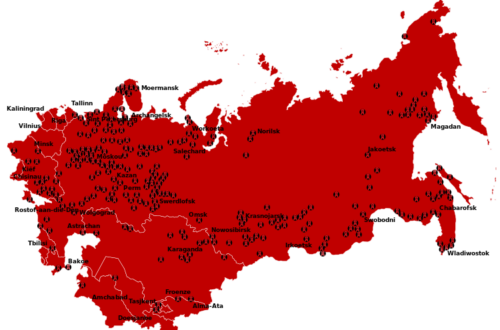
Chelyabinsk was the location of a Soviet Gulag. Chelyabinsk ITL (Work Improvement Camp) was in existence from November 1941 until October 1951. At its height, it held 15,400 persons who were employed building a smelter used for Industrial, Highway, Civil and Residential construction, as well as in open-cast mining.
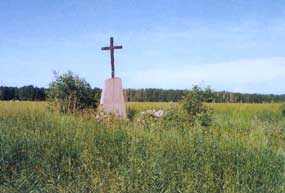
Additionally there was a Prisoner of War Camp #68 for German POWs in Chelyabinsk. Severely ill POWs were treated in POW Hospital 5882. A German POW mass grave was found about 12 km (8 miles) East of the city.
More
Today when I arrived home a letter from the Deutsches Rotes Kreuz- Suchdienst awaited me. I have to admit the contents were, for me extremely exciting!
19 August 2010 Update: Thanks to my good childhood friend Sharon we now have a translation of these records.
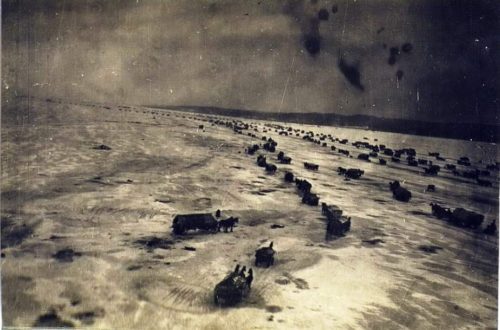
Based upon the Suchdienst records, we have identified photos from one of my Oma’s camps (see below). More information on the Camp is also available at: Gulag Memorial DE.
Here are the documents (with the translations I have in English and German).
(See bottom of page for the complete text.) |
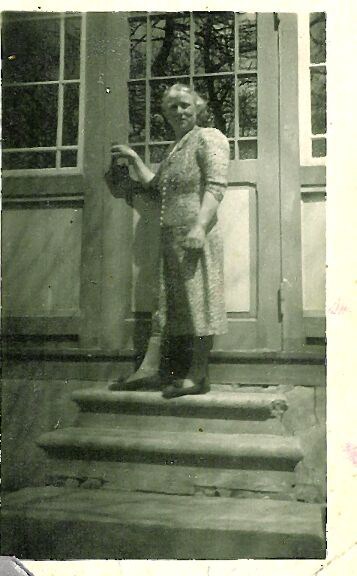
Frieda Senger before her incarceration in Soviet Gulags, circa 1940. |
|
Translation:German, member of fascist organization (abbreviation in the left corner)Dossier/Document Start: 17th of March 1945 Übersetzung:Senger Frieda Anfang 17. März 1945 |
|
Hr. Kireev Manager of the operations Group of the NKVD (People’s Commissariat for Internal Affairs- Stalin’s Secret Police) in the Region of Chelyabinskaya and a Major responsible for National Security. 07.Juli 1945
Hr. Kireev Leiter der operationellen Gruppe NKWD (Volkskommissariat für geheime Angelegenheiten)im Region Tscheljabinsk, Major für nationale Sicherheit genehmigt: 07.Juli 1945 Bill of Indictment:I, a worker of the operations group Concentration Camp number 507 under the command of NKVD Lieutenant Hr. Makarov, sentence, with the complete authority of the NKVD of the USSR, number 00315 Frieda Senger born in the year of 1898 in Pietzkendorf Kreis Großwerder and currently living in the village of Zeyervorderkampen into the 48th Army “Sideras” category Gulag effective 18 April 1945. Anklageschrift:Ich, Mitarbeiter der operationellen Gruppe des Bewährungskonzentrationslager Nr. 507 der NKWD Leutnant Hr. Makarov, verhafte mit Bevollmächtigung der NKWD UdSSR Nr. 00315, Senger Frieda geboren im Jahr 1898 in Pizchendorf Kreis Großwerder, wohnhaft im Dorf Zeyervorderkampen, von 18. April 1945 an die 48. Armee “Sideras” Kategorie Gulak. Finding:That Senger Frieda was a member of the German Civil Air Defense, a Fascist Organization, since 1935. Her husband was a member of the NSDAP.
Ermittelt:Dass Senger Frieda seit 1935 in einer fasch. Organisation “Luftschutz”war. Ihr Mann war ein Mitglied der nationalsozialistischen Partei. |
|
Decision:Senger Frieda is sentenced for further punishment to a workers battalion of mobilized Germans. Beschluss:Senger Frieda wird für weitere Inhaftierung dem Arbeitsbatallien mobilisierte Deutsche zugewiesen. Signed:Worker in the operations group of Concentration Camp 507 Unterschrift:Mitarbeiter der operationellen Gruppe |
|
|
The text from the Suchdienst follows:
Deutsches Rotes Kreuz
DRK-Suchdienst Munchen
Chiemgaustr. 109 81549 MunchenMark F. Rabideau
711 Nob Hill Trail
80116 Franktown/Colorado
Vereinigten Staaten von AmerikaMunich, 15.01.2010
Senger, Frieda, born: 19.03.1898 in Zeyervorderkampen/WerderDear Mr. Rabideau,
Thank you for your inquiry of 07 September, 2009.
The research in our archives, which included the records received from The Central Archives of the Ministry of Defence of the Russian Federation on German prisoners of war and civilians in Soviet captivity, revealed the following record for Mrs. Frieda Senger:
She was taken a prisoner by the Soviet Army on March 17, 1945.
Since 1935 she was organized by the Empire antiaircraft union [ger.Reichsluftschutzbund (RLB)].
On July 7, 1945 she was transfered from the camp 507 (Cheljabinskaja region/ Satkinskij district/ village Bakal) to the working battalion No.1083 (Cheljabinskaja Region/City Kopejsk/ Station Potanino) of mobilized germans.
She was discharged for repatriation on July 1, 1947.
Unfortunately, further data are nonexistent.
According to our record cards dating back to the post-war-years, the last known address of Senger Frieda was from January 9, 1955: Lindenburgweg 202 (or 262), Weitheim/Murnau.
Enclosed, please find a copy of the file in the original Russian language. Due to the quantity of the documents, which come to us to work off, we cann’t unfortunately translate these records . We ask kindly to excuse us.
At present we dont have any other records from The Central Archives of the Ministry of Defence of the Russian Federation on your other relatives: Richard Senger, Frieda Senger, Erich Senger und Luise Senger.
The information from our record cards you will receive in a separate letter.
Sincerely yours,
Anna Repa
case worker
German Red Cross
Tracing Service Munich
Generalsekretariat Suchdienst
Standort Munchen
Zentrale Auskunfts- und Dokumentationsstelle
Chiemgaustrasse 109
D-81549 Munchen
Tel. (089) 68 07 73-0
Fax (089) 68 07 45 92
www.drk-suchdienst.org
[email protected]Additional Information
Note: I have solved this mystery and established the link. John’s parent’s were, in fact, Joseph Dion (Deo- Deyo) and Julia (Julie/ Julienne) Denis (Denys, Lafay, LaFaille, Dennis).
The most commanding piece of obvious genealogical evidence is immediately below (John’s death certificate).
As for the rest of the story, I am writing and plan to post a more complete history. My previous post on this subject is below:
So here’s the dilemma I have, on the last census it seems John parents are Canadian (John & Julie Deo); earlier evidence seems to indicate John was born in the US (what we don’t know is who these people were before they came to the US).
After performing a detailed analysis of all the Deyo’s it is highly unlikely that I have yet found the parents of our John Deo/ Deyo. My analysis of the Joseph & John Deo’s in Altona circa 1870-1880 would seem to point to Joseph Deo being the father of John… however, we have no proof . My sister Linda is going to visit NYS records to see what may lie there. I have contacted Holy Angels Church in Altona and also Altona (NY) Town Clerk to see what they might offer. Oh and yes, I have contacted the genealogy group from Altona. My sister is going to also examine the adjoining town of Chazy for records… and look in Altona for any property records (because 1880 and 1870 Censuses both indicate the Deo’s were property owners- farmers). It is quite the mystery.
Any help or insight is MOST appreciated!
Genealogically, here’s what I had (and now believe to be incorrect!):
1837 – 1924
| Birth | Abt Dec 1837 | Rosendale, Ulster, New York USA | ||
|
||||
| Gender | Male | |||
| Census | 1870 Census | Altona, Clinton, New York USA | ||
| Census | 1850 | Rosendale, Ulster, New York USA | ||
| Census | 1900 | Wilton, Saratoga, New York USA | ||
|
||||
| Census | 1910 | Altona, Clinton, New York USA | ||
| Died | 1924 | Altona, New York USA | ||
|
||||
| Father | Deyo Christian J, b. 11 Apr 1807, New Paltz, Ulster, New York USA , d. 11 Dec 1887, New Paltz, Ulster, New York USA | |||
| Mother | DuBois Blandina, b. 17 Jul 1812, New Paltz, Ulster, New York USA , d. 25 Jul 1885, New Paltz, Ulster, New York USA | |||
| Married | 8 Sep 1831 | New Paltz, Ulster, New York USA | ||
| Family | Burnah Mary Ann, b. Abt Apr 1853, d. 1940, Altona, New York USA | |||
| Married | Abt 1864 | |||
| Children |
|
|||
| Notes |
|
|
It pleases me beyond words to say that I have successfully identified the grave of my Great Uncle and made certain that his grave stone in the battlefields of WW1 France is now updated and complete.
Were it not for the wonderful help of the Volksbund Deutsche Kriegsgräberfürsorge this would never have been possible. However, with their initial work and my good fortune in finding Albert’s birth record in the Zeyer ev. Kirche; we have made certain that Albert is fully identified and honored.
In October I received this note:
From: [email protected]
To: [email protected]
Subject: Antwort: Re: Antwort: Re: Albert Senger, + 03.12.1914 – Vg.Nr. 847.278
Date: Wed, 28 Oct 2009 07:28:57 +0100Hallo Mark,
kurz möchte ich Ihnen noch mitteilen, dass es sich bei dem von Ihnen genannten Datum 27.05.1888 um den Tag der Taufe handelt. Als Geburtsdatum ist im Kirchenbuch der 31. März angegeben.
Mit freundlichem Gruss/best regards
Ilka Borowski
——————————————————————
Volksbund Deutsche Kriegsgräberfürsorge
Werner Hilpert-Str- 2 34112 Kassel
Tel.: 05617009169 Fax : 05617009246http://www.volksbund.de
Today on their website you can see the following record:
Nachname: Senger
Vorname: Albert
Dienstgrad: Reservist
Geburtsdatum: 27.05.1888
Geburtsort: Zeyervorderkampen
Todes-/Vermisstendatum: 03.12.1914
Todes-/Vermisstenort:
Albert Senger ruht auf der Kriegsgräberstätte in Noyers-Pont-Maugis (Frankreich). Endgrablage: Block B Grab 2148
Es freut mich sehr dass dies fuer mein Ohr-Onkel geschaft ist. Vielleicht ruehrt er jetzt ein bischen besser.(It pleases me to know that this was accomplished for my Great Uncle. Perhaps he can rest a bit more peacefully.)
I will now try to do the same for his brother and my Uncle Adolf…(see our 2011 Update)
Contributed by Researcher 230112
People in story: Thomas Fischer
Location of story: Neissbach, Grafschaft Glatz
Article ID: A1070371
Contributed on: 06 June 2003 More
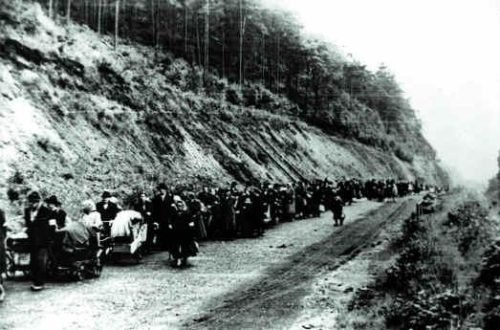
During the period of 1944/1945 – 1950, as many as 14 million Germans were forced to flee or were expelled as a result of actions of the Red Army, civilian militia and/or organised efforts of governments of the reconstituted states of Eastern Europe. Hundreds of thousands of ethnic Germans were detained in internment camps or sentenced to forced labor, some of them for years. The number of expellees and refugees, whose fate could not be ascertained, was estimated to be around 2.1 million, according to two major studies conducted in 1958 and 1965, which were commissioned by the German Bundestag. Millions of German women were raped (the process of escape and expulsion includes the actions taken by the Red Army against German civilians). Private property of the expelled Germans was confiscated. More 4 million Germans resettled in Germany from the end of 1950s, joining the 14 million expellees and refugees.
A German source from the mid-1980′s gives the following estimates of the population transfers.
| German Expellees | |
|---|---|
| Expelled from | Number expelled |
| Eastern Germany | 7,122,000 |
| Danzig | 279,000 |
| Poland | 661,000 |
| Czechoslovakia | 2,911,000 |
| Baltic States | 165,000 |
| USSR | 90,000 |
| Hungary | 199,000 |
| Romania | 228,000 |
| Yugoslavia | 271,000 |
The integration of expellees and refugees into the German society required great efforts from 1940s till 1960s. In some areas, for instance in Mecklenburg, the number of inhabitants doubled as a result of the influx. Other areas, like Bavaria, which had been predominantly Roman Catholic before the war now had to deal with an influx of non-Catholic and non-Bavarian Germans from the East.
The areas, from which the Germans escaped, or which were ethnically cleansed from Germans, were subsequently re-populated by nationals of the states to which they now belonged.
There is considerable, contentious debate over how much blame for the deaths and suffering of the expelled Germans should be placed on the shoulders of the nations who expelled the Germans.
Whether the actual death toll be 1 million or 2 million, it is clear that the blame must be shared among the Allied Powers who made the decision to authorize the population transfers, the Soviet Union which had effective control over the countries involved, the national governments that put the expulsions into motion, and also the paramilitary organizations and local civilians who took advantage of the opportunity to rob, rape, torture and murder the expellees as they transited out of their homelands.
Many of the deaths were caused by death marches ordered by Soviet officials, banditry, famine and widespread disease that accompanied postwar conditions in that part of Europe as well as appalling conditions in the concentration camps created to hold German civilians awaiting expulsion. Probably one of the worst examples of the latter was the labor camp “Zgoda” in Świętochłowice , Poland which was run by Salomon Morel, a member of the Polish Communist Party. (The camp held Upper Silesian local population listed on Volksliste, and some people from other regions and abroad. Morel was accused of war crimes and crimes against humanity. Israel rejected several Polish requests for extradition, the last one in July 2005.)
During the Cold War era, there was little public knowledge of the expulsions and thus scant discussion over the morality of the policy. Perhaps the primary reason for this is that Cold War geopolitics discouraged criticism of post-war Allied policies by the West Germans and of post-war Soviet policies by the East Germans. There was some discussion of the expulsions in the first decade and a half after World War II but serious review and analysis of the events was not undertaken until the 1990s. It can be surmised that the fall of the Soviet Union, the spirit of glasnost and the unification of Germany opened the door to a renewed examination of these events.
Today is a big day for me.
As of this writing I now have full-time access to all but two of the Zeyer ev. Kirche books. It is like having my mother’s family come home. Or more precisely, it is more like have them nearer to me. I am now able to go to the local LDS Family History Center (in Parker, Co) and read the texts, research my family, or reread the texts whenever I have the need or desire.
Over the next month or two, I should have the remainder of the Zeyer ev. Kirche records here on a permanent basis. I am not certain which microfilms will follow; but I am certain there will be quite a few.
Today was one of those days I enjoy; I spent much of the day doing family research in the local LDS Family History Center. Some of the highlights included:
But the best part of the whole day was that my sister (Linda) had the opportunity to spend the day with me and visit some of old German family members. Probably the highlight of the day being sharing a look at our grandfather Richard Senger’s birth records.
Bitte besuchen Sie es zu Errinerung. (Please feel free to visit it and remember.)
Fals Sie andere Fotos haben oder davon wissen bitte benutzen Sie unser Contact page. (If you know where I might find additional photos to add to the gallery, please use our Contact page to let me know.)
…mark
We have just installed a new approach to navigating the ManyRoads website. Hopefully you will find it both easier and more productive than the previous approach.
To quickly explain the system, there are two main tabbed menu blocks on the right. Each tab opens a unique section. Some of the sections contain menus and pointers, others contain tags etc. To use the menus, simply click on the desired tab and selct the option of your choice. The menu system uses Java (Ajax) and has been tested with Firefox, Epiphaney and IE 7 & IE8. Although the menus are degraded in IE (as most IE sites tend to be) things should work just fine and look ‘pretty good’.
If you encounter any problems with our new menuing system, please use our contact page to let me know.
A lot has happened during the past few weeks on ManyRoads. In order to keep things brief I just list them out:
…mark
ManyRoads is pleased to anounce a new translation service for German/English and English/German. And… For those of you who have read my German, you know it can’t be a service provided by me!
Truthfully… if you seek professional and expert “English to German” or “German to English” translations (old German & Fractur/ Gothic script included), please use our Contact form for an for an estimate.
Unfortunately my LDS ev. Church books for Zeyer – Ellerwald (West Prussia) are reaching an end…I’d love to hear from you if you have any pointers as to where I might look for earlier data (pre-1774).
I am looking for information on the following family members:
…mark
UPDATE:
I just received the following note:
Hallo!
Für Ellerwald waren die evangelische Kirchen in Elbing zuständig:
Heilig Leichnam und Sankt Annen.Schöne Grüße,
Fritz Schulz
I guess this is what makes genealogy addictive… I found another generation of Saengers in my mother’s family. Not only did I find a set of g-g-g-g-parents but I found all of their children as well as the spouses of these children.
I am always amazed at what original source documentation provides in terms of insights and clues to the past. In spite of bad handwriting, blurry photos and water damage, ancestors just seem to jump off the page at me. It is a true journey into the past.
I have come across a few extra-special web based resources for genealogy and history research. The resources include:
I have discovered numerous extremely valuable documents on these sites, all of which are now located on ManyRoads, in addition to existing on their original home(s).
Enjoy!
Because many of our visitors have been attempting to read the postings of our Filles a Marier and Filles du Roi, I am attempting to gain permission for web publication of the data I have. Unfortunately much of our current data is extracted from the fine work of Peter Gagne and we must respect his copyright(s). Until permission is obtained we are unable to make our information ‘generally available’.
We are pleased to announce that ManyRoads now allows for the Printing of both our Posts and Pages. At the bottom of our site Pages, you will see a small Print Icon and label; the same icon and banner appear in our Post banner. Simply click on the Print icon to generate a printable document. Please let us know via our contact page if you have problems with this new function.
Additionally, you may noticed a new Social Bookmark function at the bottom of our Pages/Posts. Simply clicking on the “Social Bookmarks!” opens a table of popular Social Networking options. Select your favorite Social Networking tool icon (ie. Facebook) to link to any of our Pages/Posts. Again, please contact us with any problems or difficulties.
It is our sincere hope that these tools will assist in the usefulness and friendliness of the ManyRoads site.
…mark
We are going to test Twitter to see if it proves useful in communicating ManyRoads efforts, updates and news. To follow us, simply click on the little Twitter Bird (and fill out the appropriate items on Twitter).
We are also testing a Tweet/reTweet plugin across our site. Please reTweet or Tweet if the Post/Page has never been Tweeted before.
Please use our contact page to let us know if you find this communication vehicle useful.
New Photos added! Neue Fotos!
We add new photos to our “Elbing Damals” image gallery as we come upon them. (Wir stellen neue Fotos hier so oft wie moeglicht.) We hope you enjoy them. (Viel spass beim schauen.)
13. Mar 2010. (update- Mark Rabideau)
Also should you happen to have any Photos of the Jungfer-Zeyer-Ellerwald area prior to WW2 that you are willing to share we would LOVE to hear from you.
We are pleased to announce that the following documents have been added to our ManyRoads library:
Most of our Johnson family (Johansson and Sivertsen) forebears have a long history in Scandinavia.
MENNONINTE HISTORY OF HENRY COUNTY AREA
by Melvin Gingerich
This is a series of articles written by Melvin Gingerich, a well know Mennonite minister, and, I believe Bishop. The series was published on a weekly basis in The Wayland News until its conclusion. — Ann Miller White. - 1/9/1931 – Wayland News
This Wikipedia article excerpt is provided in order to give a bit of historical context to the circumstances surrounding Henss and Rich family history and migrations. More history texts are available here.