Increase font Decrease font

Dedication

This site and effort is dedicated to all my forebears.  Without them we (my family) would not exist.  Their lives, their loves and their journey has made us who we are and who we will become.

Special recognition however is merited to:

  • Robert R. Henss- he began the family genealogy effort and set a standard for excellence that we hope to carry forward. We hope our work makes him proud.
  • Fred & Luise Rabideau- the papers they saved from the ashes of World War 2 have kept an entire branch of the family alive.
  • Becky Henss Rabideau- she has the patience of a saint and puts up with my working endless hours on this effort.
  • Jeremy Henss Rabideau- he is my part-time co-conspirator and a research animal.  He has uncovered family facts that no one thought were attainable.

Mark F. Rabideau (temporary custodian of this information)

Les Filles Du Roi- “Daughters of the King”

The information contained in this Posting was sourced from numerous websites (all noted below) and is presented here to facilitate our genealogical research.  All rights belong to the original authors. This is being used under the laws of ‘fair use’.

Wikipedia has an article on the subject  of the Daughter’s of the King (Les Filles du Roi) as well.

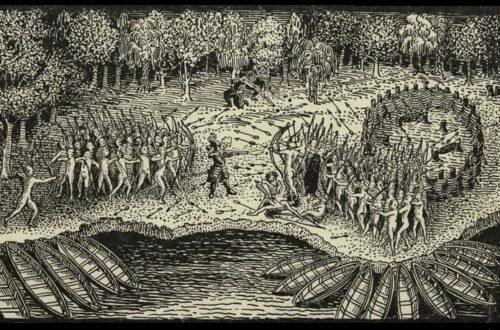
The filles du roi, or King’s Daughters, were some 770 women who arrived in the colony of New France (Canada) between 1663 and 1673, under the financial sponsorship of King Louis XIV of France. They were part of King Louis XIV’s program to promote the settlement of his colony in Canada. Some 737 of these women married and the resultant population explosion gave rise to the success of the colony. Most of the millions of people of French Canadian descent today, both in Quebec and the rest of Canada and the USA (and beyond!), are descendants of one or more of these courageous women of the 17th century.

More

Carignan-Salières Regiment Officers and Soldiers

The following information was sourced from: http://www.fillesduroi.org/src/soldiers.htm and is presented here to facilitate our genealogical research. All rights belong to the original author. This is being used under the laws of ‘fair use’.

This listing is a copy of one the original to be found at the following link:
Alphabetical listing of the Carignan-Salières Regiment Officers and Soldiers (who settled in Canada).  Those highlighted are Rabideau ‘family forebears’.
More

Jean Bourdon

Though Jean Bourdon was an important figure in the early days of New France, there is a lot of confusion over his personal life.  Some have even given him three wives (married to two at the same time), and attributed accomplishments long after his death.  However, in the days of early settlement, there were two Jean Bourdons, possibly brothers, who were both employed by the Company of 100 Associates. Jean or Jehan (b: 1612 and d: October 23, 1665) was an Attorney, and spent most of his time in France, while Jean-Francois was a Surveyor and former ‘doctor’ (barber at lowest end of the medical profession).
More

Anne Cloutier

Anne was born on January 19, 1626, in St. Jean De Mortagne, Perche France.  She was just eight years old when they arrived in Quebec and her father was always stirred up about something; constantly feuding with Robert Giffard.  Despite that, the family did quite well.
More

Jean Cote

Jean Cote – Was born on February 2, 1643 and died on March 26, 1722 in Ville De Quebec.  He married Marie-Anne Couture; daughter of Guillaume Couture and Anne Emard; on September 11, 1669; and the couple had seven children:  Jean-Baptiste, Noel, Marguerite, Marie, Pierre, Guillaume and Anne.  Jean’s first wife died on November 26, 1684; and he then married Genevieve Verdon; daughter of Vincent Verdon and Genevieve Pelletier; on February 25, 1685; with whom he had ten more children: Marie-Charlotte, Joseph, Marie-Josephe, Jean-Marie, Francois, Ignace, Gabriel, Charles, Thomas and Marie.

Source

Marie-Francoise Hebert

Marie-Francoise Hebert was born on January 27, 1638, in the small Quebec settlement; the daughter of Guillaume Hebert and Helene Desportes.   Her paternal grandparents were none other than Louis Ganton Hebert and Marie Rollet, and though Louis only lived for a short time at the French Trading Post, Marie kept the family together through epidemics, war and even British occupation. More

Marguerite Langlois

Marguerite Genevieve Langlois was born about 1602 in St. Xiste,  Montpelliers, France; one of four children to Guillaume Langlois and Jeanne Millette.
In 1619, Henri De Montmorency II and Samuel Champlain were recruiting workers for New France, and preference was given to young men with families.  At the time, many French people were becoming disillusioned with the way things were at home, in the aftermath of the costly Religious Wars. Unemployment was high and the cost of living even higher, so when her brother-in-law, Pierre Desportes, a director in the Company of 100 Associates, announced that he would be going to the New World, the seventeen year old Marguerite and her nineteen year old sister, Marie; decided to go with them. More

Abraham Martin

There is a lot of confusion over the origins of Abraham.  He was born about 1589, probably at La Rochelle, but since his father Jean Galleran Martin, was known as “The Merchant of Metz”, he could have also been born at Metz, Lorraine, France. His mother was Isabel Cote.  Throughout his lifetime, Abraham Martin was referred to as the “Scotsman”, so many believe he was born in Scotland.
More

Jean Nicolet

Jean Nicolet was a well known Coureur Des Bois, who first arrived in Kebec in 1618, settling amoung the Algonquins in Upper Ottawa, and the Nipissing on Allumette Island; learning their language and customs.  While on the island, he married a local woman and they had a daughter Euphrosine Marguerite, born in 1630.  At the age of 13, she would marry Jean Leblanc, but spent most of her life on the first “Indian Reservation’ in Canada at Sillery, where she died on September 30, 1689. More

Marie Crevet

Marie Crevet was born in 1621 at Benouville, Bayeux, Normandy, France; the daughter of  Pierre Crevet and Marie Le Mercier.  At the age of 15, she signed a marriage contract to become one of the  Filles à Marier or “marriageable girls”;  the first single women to set foot in New France since its return from the English in 1632. More

TreeMagic

I have added a very powerful feature to the ManyRoads site called TreeMagic- Cypress.  TM-Cypress is a javascript tool that allows a webmaster (me in this case) to provide site users with easy information access from a place in their site (ManyRoads) to selected websites, including this one.   I know that sounds a bit confusing but it is very simple…

Simply highlight any term or phrase; and a pop-up will appear.  In the pop-up you have the option of selecting one of our offered genealogical sites.  Once you select an item from the pop-up a java window will open highlighting all related items from your selected site (basically it is a search result).  You may scroll and or read from the pop-up to gain deeper insight into what you requested.  Once you are done simply close the window and you will return to the place you left (on ManyRoads, in this case).

This WordPress plugin was developed by AmbientWebs/ eirenicon and is freely available. More sophisticated web tools like this are also available for a ‘fee’.

Francois Langlois

Francoise Langlois was born in 1599; in St. Xiste,  Montpelliers, France; one of four children born to Guillaume Langlois and Jeanne Millette.

About 1618, she married Pierre Des Portes, an employee for the Company of 100 Associates,  representing France’s interest in the New World.

Soon after the birth of their only child, Marie-Helene; Pierre and Francoise left for Quebec, taking along her two younger sisters; Marie and Marguerite.

The little group arrived at Tadoussac aboard the ‘Le Sallemande’, on August 30, 1620; and from there were transferred to the Kebec Habitation, where Pierre would be engaged.

Source

Senger Family

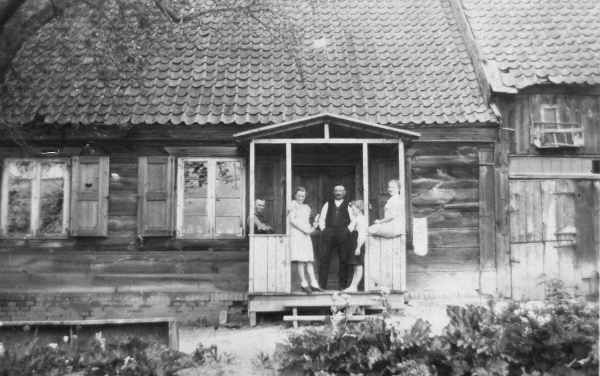
The Senger family had lived in Kreis Grosses Werder area of West Prussia since at least the late 1600′s. Both 20th Century World Wars took a heavy toll on the entire ‘clan’.  Many family members and all the Senger lands and possessions were either destroyed or taken.

The those who were not killed in the fighting were forced to leave their homes as a result of the WW2 allies ethnic cleansing pograms following the defeat of Germany.  Along with as many as 12 million other Germans the Sengers were either force marched to work in Russian labor camps or left behind to work as slaves on their own lands.

Finally ending up in Bavaria with none of their possesions except their lives… the Richard Senger family were among the fortunate ones, they found each other and survived.

Confluence of Past and Future

I am at the nexus of an indefinite past and indeterminate future. My history will forever remain clouded, built of conjecture, legend, and images. The future is shrouded in hope, desire, and uncertainty. It is my sense of belonging, and relatedness that joins the two and forms a unity of design and purpose.
More

Hope in the Future

As you most certainly know by now, my mother is German. She is a product of having grown up during the time of the Third Reich. My father, on the other hand, has always thought of himself, or so he says, as one of those conquering heroes who had the great good fortune of meeting the love of his life in the rubble that was post World War II Germany.

It has always be a curiosity to me that such a time and place could produce the circumstances and love of which I, my sister, and my children are all products.

Everyday, when I am home, I look at the wedding picture of my parents. In that frozen image, I see youth, hope, and joy. Absent understanding the circumstances of their lives, a wedding photo ought to evoke those images and emotions.

Luise und Fred Rabideau Wedding 1950- 2

However, there is more to this story. In the years immediately preceding my parents marriage in 1950 “a lot went on”. In 1945, my mother’s family had been dispossessed of their family holdings (farm) by the Russians and Poles as part of Germany’s surrender conditions. At the time of dispossession, my grandfather was forced into servitude by the Russians on his own lands for its new Polish owners. These lands and farm been his family’s legacy to him. They were his livelihood, his pride, his joy and his bond to his past. They were lands for which he could and would never accept compensation from the German government.1 It was his opinion that there was no compensation that could adequately assuage this loss.

Coincident with my grandfather’s transition from land owner and farmer into servitude, the Russians forced marched my grandmother, who was about 47 years old at the time, into a slave labor camp (salt mine) in an area just east of the Ural mountains. After her enslavement, my grandfather, who could no longer tolerate the conditions of his servitude, escaped and marched, at age 67, over 600 miles across Poland and East Germany into Bavaria where he ultimately found my mother and sanctuary.

I suspect that there are few who would argue that Hitler’s Germany ought not to have been defeated in World War II. However, it seems a horrible trick of fate that this same man, who suffered so much in World War I, should now have everything he, and his family, had worked for stripped away, including in so far as was possible, their dignity, tranquility, security, and future. It does not seem right.

Yet, in spite of all these circumstances, I have this photo of joy, hope, and aspiration.

As I reflect on my recent encounters with misfortune, illness, age, and infirmity, I think about my parent’s wedding photo and the five short years that preceded it. I am forced to acknowledge that many wrongs occurred, many perpetrators ‘conspired’ to harm, even break, the future and happiness of my family. But, they did not succeed. They did not succeed because my parents and family chose not to let them succeed; they chose not to be broken or defeated. Instead they chose to look forward, to pull together in the face of significant hardship and adversity; they chose to persevere. They put all their energies towards a positive future, one of which I, and my family, ultimately became an integral part.

My challenges of today are no greater than theirs; my fears are no larger; my hardships no more severe. They are just different and they are mine.

As I face my fears, the most important lesson for me is that our hopes need not be made small by adversity. The challenges through which we pass make it possible for us to respect our past, reflect on our joy, and have hope in our future. Even if it is not the future we had planned, hoped for, or anticipated.


1- The post world war German government offered limited compensation to those in the “East” for the lands that were lost in the surrender of Germany. Acceptance of any compensation offer meant a formal release on any future claim of ownership or eventual ‘right of return’.

Zeyer- das Ende

This article has been translated and reworked with family events.

Erinnerungen eines Amtsvorstehers des Amtsbezirkes Zeyer.
Johannes Jahn, Landwirt und Hofbesitzer in Zeyersvorderkampen.

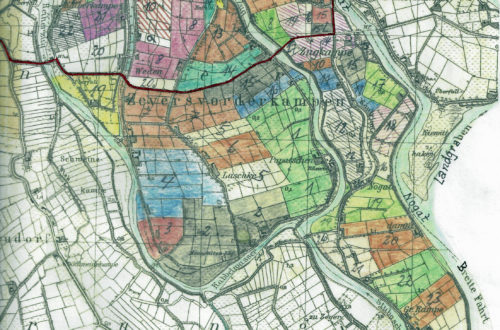
Der Amtsbezirk Zeyer lag in der nordöstlichsten Ecke des Freistaates Danzig, im Kreis Großes Werder und umfasste die Ortschaften Zeyer, Stuba und Schlangenhaken. Er zog sich entlang der Nogat, beginnend bei der Ortschaft Einlage bis zur Mündung der Nogat in das Frische Haff. Das Gesamtareal betrug etwa 2510 Hektar Davon fielen auf Zeyer 480 Hektar, Stuba mit der Ortschaft Neudorf circa 610 Hektar,Zeyersvorderkampen circa 1020 Hektar und Schlangenhaken 400 Hektar Die Gesamteinwohnerzahl betrug etwa 1735 Einwohnen deutscher Abstammung und Herkunft. Die Bevölkerung gehörte ausschließlich der Landwirtschaft und der damit verbundenen Berufe.

Die Höfe befanden sich bis 1945 in gutem Zustand. Die Größe der landwirtschaftlichen Grundstücke lag durchweg im Mittel —und Kleingrundbesitz.

Besonders günstig lagen die Verhältnisse in Zeyersvorderkampen, wo die größeren Betriebe dem Herdbuch angehörten und seit längerer Zeit Raps- /Weizen und Zuckerrübenanbau betreibe.

Während Zeyer und Stube geschloßene Ortschaften bildeten, waren Zeyersvorderkampen und Schlangenhaken sogenannte Streusiedlungen. Zeyer ist im Amtsbezirk als die älteste Siedlung anzusehen.
Nach einer Schulchronik die Besiedlung bereits im Jahr 1200. Danach folgt die Ortschaft Stuba. Zeyersvorderkampen, das aus mehreren Inseln des Nogatdeltas bestand, ist erst wesentlich später,um 1730 besiedelt worden.

-1-

Völliges Neuland war die Ortschaft Schlangenhaken, die erst um 1929 aus Strauchkampen an der Nogatmündung durch die Initiative des Danziger Senats entstand und besiedelt wurde.

Von ausschlaggebender Bedeutung für die landwirtschaftlichen Betriebe im Amtsbezirk war die Milcherzeugung.

Eine noch während des Krieges auf das modernste ausgebaute Molkerei im Privatbesitz, befand sich in Zeyer, während eine zweite sich als Genossenschaftsmolkerei sich in Zeyersvorderkampen befand. Eine dritte Molkerei war in Stube, die während des Krieges stillgelegt wurde und die Lieferanten Zeyer zugewiesen.

Auf kaufmännischem Sektor gab es in der Ortschaft Zeyer vier Geschäfte mit Kolonialwaren—und Materialwaren. Davon eine mit Mühle(Wind) und Landwirtschaft, eine mit Gasthausbetrieb-Bäckerei und Landwirtschaft, eine mit Textil—Schuhwaren und- Kurzwaren, eine Bäckerei und Landwirtschaft und ein weiteres mit Gasthaus und Landwirtschaft.

An gewerblichen Betrieben waren in Zeyer eine Molkerei, eine Fleischerei; eine Stellmacherei, eine Schmiede und zwei Korbflechtereien vorhanden. An öffentlichen bezw. staatlichen Gebäuden gab es in Zeyer zwei Schulen
zwei Zollbeamtenhäuser, ein Postamt ein Pfarrhaus sowie drei Gemeindehäuser und ein Spritzenhaus.

Die zu Zeyer gehörende Kirche lag auf der anderen Seite der Nogat im Kreis Elbing. Sie wurde im Verlauf der Kampfhandlungen am 3.2.1945 in Brand geschossen, Zeyersvorderkampen hatte eine Molkerei,drei Gastwirtschaften davon zwei mit Kolonial-und Materialwaren und Landwirtschaft und eine mit Schmiede. Öffentliche Gebäude:Eine Schule, fünf Gemeidehäuser und eine Spritzenhaus.

-2-

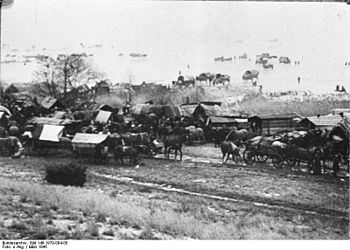
Am 21.1.1945 erreichten die ersten russischen Panzer überraschend das 8 Km entfernte Elbing und die Bevölkerung des Amtsbezirks Zeyer erhielt nachts vom Landratsamt Tiegenhof die Aufforderung zur sofortigen Räumung. Obwohl die Räumung theoretisch vorbereitet war, kam es nicht zu dem angeordneten Treck über die Weichsel, da am frühen Morgen sämtliche Chausseen von der flüchtenden Bevölkerung überlaufen und verstopft waren. Zum anderen konnte sich die Landbevölkerung nur sehr schwer zum Verlassen ihrer Höfe entschließen. Außerdem bildete die deutsche Wehrmacht entlang des Elbingflusses sofort eine Front, hinter der sich die Bevölkerung einstweilig sicher fühlte. Lediglich die Bevölkerung von Zeyer und Stuba setzte sich nach Zeyersvorderkampern und Schlangenhaken ab.

Inzwischen wurde der gesamte Viehbestand durch Räumkommandos abgetrieben und auch die Getreidevorräte abgeholt.Es blieb nur dort was zur Ernährung der Bevölkerung für kurze Zeit notwendig war.

Die Pferdebestände übernahm die Wehrmacht. Bei den einsetzenden Stellungskämpfen hielt sich die Zerstörung der Gebäude in Zeyer in Grenzen. Es brannten lediglich 3 Grundstücke nieder. Allerdings erlitten sehr viele Gebäude erhebliche Schäden durch Artillerie-und Bordwaffenbeschuss. Die größten Schäden sind erst nach der Besetzung durch Russen und Polen entstanden.

Inzwischen war für die Zurückgebliebenen an ein Wegkommen nicht mehr zu denken,da der Russe bereits durch Pommer zur Ostsee durchgestoßen war.

-3-

Am 8.3.45 war die deutsche Wehrmacht gezwungen die Stellungen an der Nogat aufzugeben, wodurch die zurückgeblieben Bevölkerung gezwungen wurde sich bis auf die Frische Nehrung zurückzuziehen, wo sie mit Schiffen, zumeist nach Dänemark gebracht wurde Ein kleiner teil in Zeyer konnte sich nicht entschließen die Heimat zu verlassen und erwarteten den Einmarsch der Russen.

Es waren zumeist Arbeiterfamilien und alte Leute.Aber auch einige Bauernfamilien.

Auf die Aussagen einer Reihe von diesen die nun die folgende Zeit überlebten und später von den Polen ausgewiesen wurden stützen sich folgende Angaben. Nach dem Einrücken der Russen in Zeyer am 9. 3. 45 wurde die gesamte dagebliebene Bevölkerung zusammen getrieben.

Alle Männer zwischen 16 und 60 Jahren wurden in Richtung Osten abtransportiert.

Durch brutalste Behandlung sind durch Vernehmungen eine Reihe zu Tode gequält worden. Schon bald nach dem Einrücken der Russen ereigneten sich in Zeyersvorderkampen die ersten Morde. Ohne ersichtlichen·Grund wurden die Landwirte Franz Thießen(7O Jahre) und Adolf Block erschossen. Später fand man die Leichen von Hulda Janzen und deren Tochter Klara Eichhorn mit ihrem 1 Jahr alten Söhnchen, sowie die Leichen des Ehepaare A. Mierau. Weiter fielen den Russen zum Opfer, die 18 Jahre alte Christel Wichert, sowie Anna Braun Zeyersvorderkampen und die vierköpfige Familie des Bauern Fritz Dudenhöft.

Sämtlich dagebliebenen Frauen wurden ein Opfer der russischen Willkür und mussten es bleiben bis zum Abzug der russischen Truppen.

Die übrige Bevölkerung wurde nach Elbing verjagt und versuchte sich dort irgendwie zu ernähren. Spurlos verschwunden ist das Ehepaar Rathke Zvk.

- 4 -
Die russischen Truppen zogen ab und die ersten Polen zumeist abenteuerliches Gesindel zogen ein. Sie plünderten restlos die Häuser von dem aus was die Russen noch da gelassen hatten. Die Russen hatten alles noch lebende Vieh und die besten Möbel mitgenommen. Ackergeräte und Maschinen wurde von den Polen zusammen getragen, verschachert und verschleppt. Weichsel und Nogatdeiche waren gesprengt und dadurch das ganze Land unter Wasser gesetzt. Die Russen hatten nach Bedarf Brücken und Laufstege gebaut und hierzu das Material aus den beschädigten Gebäuden und Ställen geholt. Unter den Polen ging die Verwüstung der Gebäude weiter. Da kein Heizmaterial vorhanden war haben sie leer stehende Gebäude abgebrochen.

Nach Berichten standen viele Häuser ohne Fenster und Türen da. Auch weitere Menschenverluste durch Selbstmorde waren zu beklagen. Die Deutsche Bevölkerung lebte in Polen unter denkbar schlechten Verhältnissen,bei völlig unzureichender Ernährung musste sie täglich Schwerstarbeit verrichten und waren schweren Misshandlungen ausgesetzt.

Die Deutschen waren vogelfrei. Man konnte mit ihnen machen was man wollte. Ebenso brutal wurde 1947 die Ausreise eingeleitet.

Alte, hinfällige Leute, Frauen mit kleinen Kindern, mussten 15 Km nach Tiegenhof gehen,wo sie bei strengem Frost in offenen Bahnloren verladen und nach Marienburg gebracht wurden von hier aus ging die Fahrt in die Ostzone wo die Ausgewiesenen zumeist in der Nähe von Halle untergebracht wurden. Alles Gepäck das über 30 Pfund wog wurde ihnen in Tiegenhof abgenommen. Eine Reihe der Ausgewiesenen hat die Strapazen nicht überstanden und ist gestorben.

In den Ortschaften wurden Kolchosen gegründet weil die Polen nicht in der Lage waren die Ländereien zu bestellen.
- 5 -

Enhanced by Zemanta

Endkampf um Ostpreußen

Source document may be found at: The Real Blaze source has been removed
Die Panzerabwehrschlacht südlich Gumbinnen

von Oberstleutnant a. D. W. Salomon

Die Panzerabwehrschlacht war für den Kreis und die Stadt Gumbinnen von höchster Bedeutung. Sie vereitelte den Plan der Russen, durch einen Umgehungsvor­stoß über Nemmersdorf—Branden (Ischdaggen) nach Mallwen (Mallwischken, Kr. Pillkallen), Gumbinnen einzukesseln. Ein geglückter Vorstoß hätte viele Gumbinner Landsleute in die russische Gefangenschaft gebracht.

Schlacht von Gumbinnen

Schlacht von Gumbinnen (Photo credit: Wikipedia)

More

Alone

Recht-Kunz Wedding As I look at photos of my great grandparents, grandparents and parents, I see the faces of my past. Each looks at me across the span of time without movement or animation, yet each coveys a strong message of simultaneously being connected and disconnected in time, space, and place. I am certain that we each assume that same position for our successors, and are especially so for our children and grandchildren.
More

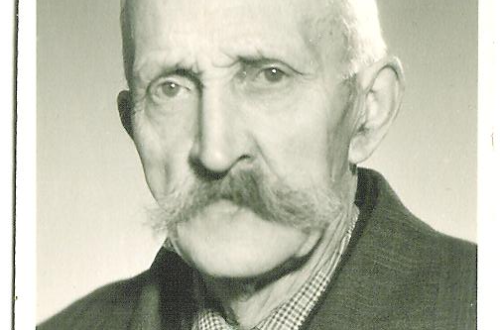
Richard Senger -90th Birthday

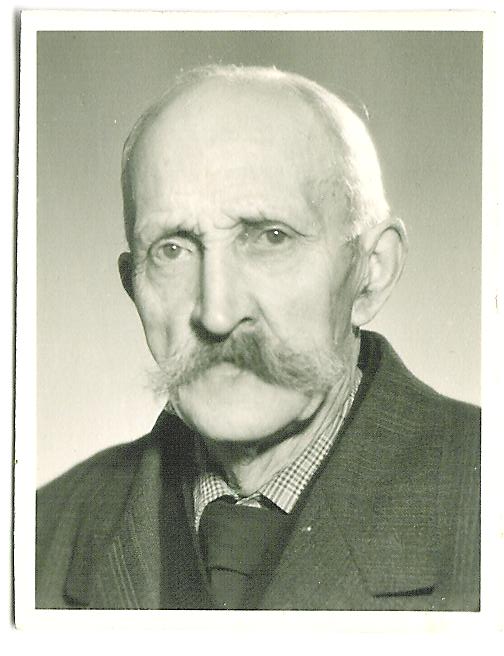
Richard Senger,

einst Bauer in Westpreußen, feierte 90. Geburtstag

Richard Senger 1969

Schwifting(m).
Schnittblumen, Blumen­schalen, köstliche Getränke und weitere Prä­sente schmücken das Wohnzimmer im Hause ‘der Familie Senger in der Schwiftinger Sied­lung. Vor wenigen Tagen feierte der „Se­nior” des Hauses, Opa Richard Senger, sei­nen 90. Geburtstag. Anlaß genug für dieMitbürgerschaft, um Schwiftings derzeit altesten Mitbürger zu ehren und zu erfreuen, ihm ‘ die herzlichsten Glückwünsche für den weiteren Lebensabend mitzugeben.

Richard Senger stammt aus Westpreußen. In seinen Adern fließt urwüchsiges bäuerli­ches Blut. Am 2. Februar 1879 wurde er in Zeyersvorderkampe bei Danzig geboren. Wie seine Eltern Bauern waren, so wurde auch Richard Senger Bauer, um einmal das Erbe seines Vaters, einen Stättlichen Hof, zu über­nehmen. Mit mehreren Geschwistern wuchs der Jubilar in seinem Heimatort, der über 40 ansehnliche Bauernhöfe zahlte, auf. Im Jahre seiner Eheschliesung, 1920, übernahm er von seinen Eltern den Hof, um ihn mustergültig, in zäher, unermüdlicher Arbeit und in Verbundenheit zur heimatlichen Scholle weiterzuführen und bewirtschaften. Seine Gattin Frieda schenkte ihm 2 Kinder, einen Sohn und eine Tochter. Ueberstand Richard Senger den ersten Weltkrieg als aktiver Teilnehmer heu und gesund, so karnen mit dem zweiten Weltkrieg und den Nachkriegs­jahren schwere Zeiten auf ihn zu. Im Herbst 1944 besetzten die vorrückenden Russen Ost- und Westpreußen, auch der Hof von Richard Senger wurde von den sowjetischen Truppen beschlagnahmt. Senger selbst muß­te als Knecht auf seinem eigenen Anwesen arbeiten. Seine Gattin wurde von den Sowjetzt in ein Arbeitslager hinterm Ural ge-steckt, von wo sie erst 1947 in die; Heimat zurückkehren durfte. Ohne von den Schick­sal seiner Familie etwas zu wissen, machte sich Richard Senger eines Tages auf, von seinem Hof zu fliehen und die deutsche Grenze zu erreichen. Er konnte es nicht mehr ertragen, als einstiger Hofbesitzer von den Russen als gedemütigter Knecht auf eigenem Besitz behandelt zu werden. Im Alter von 68 Jahren begab sich Senger, stets rüstig auf seinen Füßen, auf den Marsch, der ihn über Polen und Schwerin nach Westdeutschland und dort nach Murnau am Staffelsee führte. In Polen sind ihm dabei sämtliche Ausweis-und Wertpapiere, darunter auch die Spar­kassenbücher, abgenommen worden. Richard Senger war aber unverzagt und fand dann im Oberbayerischen wieder eine feste Wohn­stätte. Die Tochter, die heute in den USA verheiratet ist, bemühte sich damals erfolg­reich um die Wieder-Zusammenführung der Eltern. Im Jahre 1963 siedelten Richard und Frieda Senger von Murnau nach Schwifting über, wo die Familie des Sohnes, der auf dem Tower des Flugplatzes Penzing tätig ist, ein Eigenheim erbaut hat. Unter der Obhut von Sohn und Schwiegertochter verbringt der Jubilar mit seiner Gattin nun einen ge­ruhsamen ebensabend.

Zum 90. Geburtsfest stellten sich auch Bür­germeister Kaindl, zweiter Bürgermeister Nuscheier und der evangelische Pfarrer Uhl mit Gattin als Gratulanten ein, um die of­fiziellen Glückwünsche zu überbringen. Das „Landsberger Tagblatt” schließt sich die­sen Gratulanten herzlichst an.

Februar 1969. „Landsberger Tagblatt”

Coming to Grips

As we were traversing the nightmare that was my 50-51st year, we had many opportunities for introspection and thought.  There were times when we were angry.  Times when we were fearful.  Times of doubt. And even, times of joy.

I would be less than truthful if I said that we were not forced to re-examine ourselves, our lives, our values, and our faith.  That is not, however, where it stopped.  I had always been comfortable with my faith,  what was more interesting was that I not as certain how I fit in my family and world.

I have a history of absence from my family.  My work, has for the last 15 years, involved a significant amount of travel.  I assumed that this made me different from most husbands and fathers.  I even thought that my absences might, in some perverse manner, have contributed to my familys’ problems; the vengeful God fear.  Ultimately, I arrived at a different rationalization.  This rationalization is a product of considerable introspection; an introspection grounded in an effort to better understand my predecessors and may relationship to them.

Simply stated, I believe we are all absent.  It is inevitable that we are either physically or mentally (or occasionally both) absent from our families, ourselves, and our spouses.  What we can not be absent from is who we are, our potentialities, and the legacy of our very existence.

This notion became evident to me one day as I looked at a picture, actually a postcard, of my mother’s father.  I know this sounds peculiar; it actually seems peculiar to me as I write this.  It is nonetheless true.  Let me try to relate the situation, images, and thoughts more completely.

Richard Senger WWI Postcard

The postcard, I mentioned, is of five men; one of them is my grandfather. Richard Senger Verwundet 28-Dez-1914 He was about 37 years old when the photo was taken.  In the photo, he is surrounded by four of his compatriots.  The postcard is very worn and tattered.  The image, although difficult to see, seems to have been taken on a spring day, bright with sun.  There are broken trees in the background. Each of the men are in uniform; the uniforms of WWI German artillerymen.  This photo was taken in April or May of 1916 near Verdun France .  My grandfather spent 4 years in the killing fields of World War 1. He was one of the lucky ones, he survived Verdun, however, that did not come easy.Once, he was the sole survivor of his company; a second time he survived along with one of his company man.  I never saw the emotional scars he must have carried away from his years of war, but I was always aware of his hunched back, a result of having his back broken by an artillery caisson.  He survived that incident by crawling on his elbows back to his side of the battle lines, after having been left for dead by the enemy that over ran his position. (Select this link for a German Video on Verdun 1916) For all the horrors and pain he saw, he was awarded an Iron Cross Second Class and the Hindenburg Cross of Honor. Richard Senger WW1 Medals

What does this all of this have to do with my problems, you might ask.

Well, my grandfather is the single most important role model in my life.  He was a good, strong man.  He lived a long life; he died in his 96th year. He left this world a lasting, albeit temporary, legacy, me.

Looking at this photo I was forced to ask myself, was this photo so different from me? From the circumstances I was facing? That’s when the thought occurred to me.  We may not be able to control the circumstances around us, we may not be in control of fate, but we can control or choose how we react to our circumstances and challenges.

As I look at this postcard, I see a man who earned my undying respect and love.  Here he was fighting a war, which was to later be lost; a war from which he would forever be scarred, physically.  Those in the photo with him were, in all likelihood, killed in the many battles that followed.  He was forced by his circumstances, and his service, to fire artillery shells at “the enemy” with the sole purpose of destroying their towns, villages, and country.  How can this be?

As with many aspects of life, things become clearer in the fullness of time.  The man I knew, was a product of the time and circumstances seen in the photo, but he was not the man in the photo itself.  He had transcended that time and place, perhaps even grown because of it.  The man I knew was kind, gentle, loving, quiet, and strong.  He had chosen not to be victimized by his earlier circumstances.  He had wrestled his demons and won.

I could too.

Willi Wedhorn

ZUM GEDENKEN

Willi Wedhorn about 1944-2 Willi Wedhorn about 1944
Nachname:            Wedhorn
Vorname:            Willi
Dienstgrad:            Unteroffizier
Geburtsdatum:            26.03.1923
Geburtsort:
Todes-/Vermisstendatum:        15.04.1945
Todesort: Willi Wedhorn ruht auf der Kriegsgräberstätte in Futa-Pass (Italien). Endgrablage: Block 8 Grab 754

Nähere Informationen zu diesem Friedhof erhalten Sie hier.

Information on the battle in which Willi died may be found Wikipedia.


Volksbund Deutsche Kriegsgräberfürsorge e.V.
Bundesgeschäftsstelle
Pressereferat
Werner-Hilpert-Straße 2
D 34112 Kassel
Telefon    (0561) 7009-0
Telefax    (0561) 7009-270
E-Mail     [email protected]

Michael Senger

Michael Senger History -as related to Mark Rabideau by Luise (Senger) Rabideau  (Michael’s grand daughter) Jan 2006

Michael Senger 1917
  • Michael was the husband of Adelgunde Kiehl- they married about 1868  near Jungfer/ Zeyer Westpreussen
    • Their marriage lasted about 55 years
    • They had thirteen children of whom seven children lived to adulthood and two were killed in World War 1.
    Michael Senger Familie 1918
  • Michael died on his son Richard’s farm in May of 1932 after being kicked by a horse at the age of 93. He was kicked in the head, suffered severe  (irreversible) paralysis and was euthanized, at his request, by the local doctor.
  • Michael and Adelgunde built the farm which Richard Senger worked in 1932.
  • Michael was a “Hofbesitzer” (Farm Owner) who was reputed to have relied on his wife Adelgunde’s ambition and business acumen for the family’s success.

Related Postings

Hermann Recht

This page is under development; research is on-going

Note: additional source materials are currently being obtained.

Johann Hermann Recht History -this is an account that has evolved significantly from what began as an oral history related to Mark Rabideau by Luise (Senger) Rabideau (Hermann Recht’s grand daughter) on 9 Jan 2006; today this history is augmented with numerous additions and amendments from Mark Rabideau’s subsequent research as well as family information and stories from Otto Wedhorn family descendants most notably Frieda (Wedhorn) Mimietz.

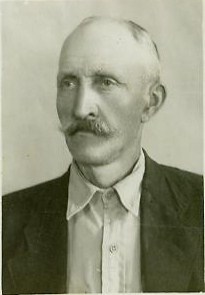
  • Hermann Recht was born as Johann Hermann Recht on 16 June 1869 in Zeyersniederkampen, Westpreussen. To date, we have not found his birth record.
  • Johann Hermann Recht’s parents were:
    Father: Samuel Ferdinand Recht (Hofbesitzer of Zeyersniederkampen) and
    Mother: Henriette Schepansky (Caroline Henriette Sczepanski of Ellerwalde)
    Johann Hermann Recht-Auguste Alvine Caroline Kunz Marriage- 1891- small
  • Hermann Recht’s Hussar (Gala uniform) photo is from his military time in Stolp, Pommern (Pomerania). We believe him to be about 20 years old in the photo (below). Hermann Recht Hussar
  • Based upon his military photo, we are reasonably certain he was stationed in the military garrison in Stolp, Pommern between the years of 1888-1891. Although research into the military garrison church records of Stolp have produced no clues or information regarding Hermann Recht.
  • Hermann is said to have come from a very poor family in Zeyersniederkampen. Although, we have no record aside from Hermann’s marriage document indicating that his parents actually lived in the area covered by the Zeyer ev. Church- which would have included both Zeyersniederkampen and Ellerwald at that time.
  • According to family traditional, after Hermann returned home from his military service, he was once again sent away from home, this time to make his fortune; his plan, it is said, was to go to Russia along with his brother (name unknown) and settle with the Germans there. On his journey, Hermann stopped at the Kunz farm just after the owner/ father, August Kunz, was buried.  Hermann took this opportunity to marry Auguste Kunz (the farmer’s daughter). They were married in Neuteicherwalde, Westpreussen 10 March 1891. Note: It is unlikely that this story is accurate: August Ferdinand Kunz died 4 years in advance of the Recht-Kunz marriage; he died on 25 April 1887.  Also to date, we have no evidence of Hermann having had any siblings. (Research continues!)
  • Upon his marriage to Auguste Kunz, Hermann assumed all Kunz family property rights and  embarked on a disastrous program which ultimately ended in the loss of  all Kunz wealth and lands.  Hermann and his family ultimately ended up holding  a small piece of land in Pietzkendorf Westpreussen (near Ladekopp).  Based upon children’s birth records, it is believe that the family moved to Pietzkendorf no later than December 23 1893 (the date of their son’s (Ernst) birth in Pietzkendorf).
Hermann Recht 1944
  • Frieda (Recht) Senger- his daughter- had little respect for her father;  she viewed him as being an angry, mean person without business-savvy.
  • Ella and Frieda (geb. Recht) complained that Hermann Recht liked to order his daughters around. He was seen as very controlling.
  • Frieda and Ella Recht married in the same year (1920) because Hermann Recht wanted them to get out of the house.
  • Hermann’s oldest daughter Erna, however, never got married and left his house to work on the farm of a “rich” Mennonite. Frieda Wedhorn said that her Tante Erna was very religious who maybe tried to take her directions not from Hermann Recht but directly from Jesus Christ. During WW2, Erna lived and worked on the Senger farm.
  • Regarding Otto Recht’s short life (7 months), it is thought that Hermann Recht apparently wanted more sons and so he did not give his wife Auguste (geb. Kunz) any time to recover after the birth of their third daughter Frieda Auguste. As a result, Otto was sickly and did not survive.
  • Auguste Kunz (Hermann’s first wife) died an invalid in 1916 after a prolonged illness (gout-Gicht).  She had been bed ridden for years prior to her death. Based upon Auguste’s death record information, it seems likely that her mother Elisabeth Kunz geb. Albrecht assisted in Auguste’s care prior to Auguste’s death.
  • Hermann remarried some years after his first wife’s death. Hermann Recht Geburtstag 1936-small
  • The Wedhorn kids actually liked to be at Hermann Recht’s farm because he never put as much pressure on them as he obviously did on his daughters.
  • His second wife’s name was Else Auguste Recht (geboren Nahme / maiden name Ekrut).
  • She is said to have once been a consort of the Kaiser.
  • Frieda geb. Wedhorn recounts that Frieda geb. Recht once held a temporary job near Danzig. While in Danzig, Frieda Recht visited Fräulein Else Auguste Ekrut, before Else’s marriage to Herman Recht (as his 2nd wife). Frieda attempted to talk Else out of this marriage, without success. Much to the surprise of Hermann’s daughters, Else Auguste did not let herself be ordered around by Hermann Recht. Once, she even walked out on him. Hermann had to travel to Danzig to get Else to come back.
  • Else Auguste Recht, reportedly, never went out to work on the fields. Instead, she took care of the house, milked the cows and was an excellent cook.
  • Else’s brother Wilhelm Ekrut was a “Baumeister” in Danzig (it is thought that he either was an architect or owned a building company), constructing one- or two-family houses in a district or suburb of Danzig. Wilhelm himself supposedly lived in one of those houses and Else Auguste lived there, as well, before she married Hermann Recht and came to live in Pietzkendorf. Frieda Wedhorn also remembers that Wilhelm Ekrut and his wife Emma (maiden name unknown; she is the woman in black who is on Hermann Recht’s 1939 birthday photo) had a car, which at that time was fairly significant.
  • Else’s death/ disappearance:
  • Otto Wedhorn reportedly said that after the end of WW2, when the Soviets turned governmental administration in Westpreußen over to the Poles and ethnic Germans were being expelled from Poland, Else Auguste Recht (geb. Ekrut?) did not flee with the remaining members of the Wedhorn family to Fichtenwalde, near Berlin. Rather than joining Otto Wedhorn’s sisters in Fichtenwalde, she is believed instead to have fled to Danzig where she likely still had family or friends. It was at this time the Wedhorns lost contact with her.
  • Another family story reports that Soviet occupation troops “beat, assaulted and threw Else into the Nogat river” near the Senger farm in Zeyersvorderkampen, Westpreussen.
  • As for Hermann’s fate… One account has it that he was found dead in April 1945 by some fisherman on a side branch of the Nogat River with a stone tied around his mid-section. Another account reports that he died after trying to rescue his Else Auguste from the Nogat River (after Soviet soldiers had attempted to drown her). This story might align with another in which Else reportedly appeared at the Wedhorn home in Orlofferfelde after his death, in April 1945; Else was completely distraught and in shock following Hermann’s death. Shortly after appearing on the farm Else is reported to have fled the area.) Was Hermann murdered? Did he commit suicide? Neither option would have been uncommon at that time and place for an old man whose world had been destroyed. Perhaps some combination of all or none of the stories are true.
  • What we do know is that no official or unofficial investigation or inquiry was ever undertaken. Hermann Recht was, after all, just an old, lonely, unwanted, ethnic German; and an investigation into the death of someone like that was not something to be wasted by the allied (Soviet & Polish) authorities newly in control of Zeyervorderkampen.
  • Hermann’s body was taken and buried on the former Senger lands by Richard Senger.
  • The true fate of Hermann Recht will, almost certainly, never be known.
  • His official date of death is 24 April 1945Hermann Recht Death- 24 April 1945
  • Hermann is believed buried in an unmarked grave on the old Senger farm in Zeyer (today owned by the Bednarcyzk family).
Hermann Recht Grave on old Senger Farm- circa 1978
  • Currently we are seeking additional, official, information regarding Hermann Recht’s death in Zeyer (circa 1945).

DRK Suchdienst- 1DRK Suchdienst- 2

  • We are also seeking information on the death of Else Auguste Recht (Hermann’s second wife).

else-auguste-recht-kirchlicher-suchdienstElse Auguste Recht- Suchdienst Results


Erich Recht

Eric Recht about 1943

ZUM GEDENKEN


Name: Erich Recht
Dienstgrad: Gefreiter
geboren: 12.02.1924, Tattamischken
Truppenteil: 1./Pi. 198
Erkennungsmarke: -1-Marsch Komp.Eisb.Pi.Ers.Btl.4
Todestag: 09.09.1944
Todesort: Raum Vallecchio
Bestattet: Gem.Montecolombo-Ca Menghino/Forli Feldgrab
Umgebettet nach: Futa-Pass / Italien
Block: 48
Grab: 815 821

Futa-Pass ist die größte deutsche Ehrenstätte des Zweiten Weltkrieges in Italien, auf der über 30 660 deutsche Gefallene ihre letzte Ruhestätte gefunden haben. Der weitaus größte Teil der dort Bestatteten ist in den vom Herbst 1944 bis zum April 1945 andauernden Kämpfen gefallen, die zwischen Carrara am Ligurischen Meer und dem Raum von Rimini an der Adria stattfanden. Die Gefallenen wurden von dem erfahrenen Fachpersonal des VOLKSBUNDES aus Feldgräbern und Gemeindefriedhöfen der umliegenden Provinzen auf den Soldatenfriedhof Futa-Pass umgebettet. Die Ehrenstätte wurde am 28.06.69 im Rahmen einer Einweihungsfeier der Öffentlichkeit übergeben.

Information on the battle in which Erich died may be found Wikipedia.


Volksbund Deutsche Kriegsgräberfürsorge e.V.
Bundesgeschäftsstelle
Pressereferat
Werner-Hilpert-Straße 2
D 34112 Kassel
Telefon    (0561) 7009-0
Telefax    (0561) 7009-270
E-Mail     [email protected]

Enhanced by Zemanta

Egon Recht

Egon Recht about 1941

ZUM GEDENKEN


Nachname:            Recht
Vorname:            Egon
Dienstgrad:
Geburtsdatum:            23.09.1922
Geburtsort:
Todes-/Vermisstendatum:        01.07.1944
Vermißtort/Todesort:            Mittelabschnitt

Nach den uns vorliegenden Informationen ist die o. g. Person seit 01.07.1944 vermißt.

In einem Gedenkbuch haben wir den Namen und die persönlichen Daten des Obengenannten verzeichnet. Sie können gern einen Auszug bei uns bestellen.


Volksbund Deutsche Kriegsgräberfürsorge e.V.
Bundesgeschäftsstelle
Pressereferat
Werner-Hilpert-Straße 2
D 34112 Kassel
Telefon    (0561) 7009-0
Telefax    (0561) 7009-270
E-Mail     [email protected]

Enhanced by Zemanta

Albert Senger

Albert Senger

ZUM GEDENKEN


Nachname:     Senger
Vorname:     Albert
Dienstgrad:     Reservist
Geburtsdatum:     27.05.1888
Geburtsort:     Zeyervorderkampen
Todes-/Vermisstendatum:     03.12.1914
Todes-/Vermisstenort:

Albert Senger ruht auf der Kriegsgräberstätte in Noyers-Pont-Maugis (Frankreich). Endgrablage: Block B Grab 2148

Nähere Informationen zu diesem Friedhof erhalten Sie hier.


Volksbund Deutsche Kriegsgräberfürsorge e.V.
Bundesgeschäftsstelle
Pressereferat
Werner-Hilpert-Straße 2
D 34112 Kassel
Telefon    (0561) 7009-0
Telefax    (0561) 7009-270
E-Mail     [email protected]

Adolf Senger

Adolph Senger Adolf Senger Gefallen 20-July-1915 Adolf Senger was the tenth (10th) of Michael Senger’s and Adelgunde Kiel’s 13 children.  He was the second of their sons to give his life in World War 1.

Based upon the small amount of information available in the “Deutsche Verlustlisten”, I believe my great uncle fought with:

  • The 75.Infanterie-Brigade 1. Masurisches Infanterie-Regiment Nr. 146 III. Bataillon 9. Kompagnie

In July of 1915, units of this organization were engaged with the enemy (Russia) on the Eastern front in what is known as the  Gorlice-Tarnów Offensive (if you are interested in films of the offensive, numerous are available on YouTube).

To date, we have not found any indication of a military grave for my Uhr Onkel Adolf.  We hope some day to find his resting place.


Adelgunde Senger (geboren Kiehl)

This page is under development; research is on-going

Note: additional source materials are currently being obtained.

Adelgunde Senger 1917 Adelgunde Kiehl History -as related to Mark Rabideau by Luise (Senger) Rabideau  (Aledgunde’s grand daughter) Jan 2006

She was born to a family of barge owners (the Kiehl’s)– her birth record we know her birth to have been on the 6th of October 1850 and baptized on 9 October of 1850 near Graudenz Mittelbezirk Westpreussen.Adelgunde Kiehl- Birth 1850- small

  • It is believed that her mother (Esther Adelgunde geboren Grindemann) died giving child birth.
  • Her father (Erdmann Kiehl) is believed to have died 6 days after her birth.
  • Adelgunde was raised by relatives (an uncle?) near Tiegenhof, Westpreussen.
  • Her nickname was “Gundke”.
  • When Adelgunde deemed herself of marriageable age she announced  her interest in (advertised for) a husband in the local Newspaper (a  common practice).
  • Michael Senger applied and was considered appropriate.
  • Adelgunde was the ‘brains’ in the family; she was a shrewd  business woman and earned much of the Senger wealth through competent business practices.

Related Postings

The Beginning

September of my 50th year is when my life began to change.  During a period of 12 short months, my quiet, complacent world would be shaken to its roots.

Business was going reasonably well, our son was ensconced in his masters degree program and our daughter was a senior in high school. I was on yet another business trip, this one to LA.  I had flown out on 9/11/2002 (yes, one year after) when the first episode of my many recent encounters with life struck.  My father had broken his hip.  I suppose that this ought not have come as a total surprise, but as with most unwanted events, it was.  With the advantage of twenty-twenty hindsight, the accident was easily explained.  But nonetheless, it was, at that time, a surprise, a shock, and a panic. I was three thousand miles from my parents, one thousand miles from my wife, having to act the part of supporter and nurturer with all of the facilities that remoteness and technology would allow.
More

Francois Belanger

Francois Horlays Belanger was born on October 02, 1612; at Touque, Normandy, Orne, France; the son of Francois Lisieux Belanger and Francoise Belanger Horlays. According to the church records he was baptized five days later: “On the seventh day of October (1612) was baptized Francois Bellanger, son of Francois Bellanger and Francoise Horlays and was named after the honorable Francois Dumesnil, Squire of St-Teny, and by the honorable Nicolas Bougis, Sieur de Fosses, and mademoisel Loyse Gurou, wife of Squire Guillaume Lepaulnier, Sieur de la Chapelle.”
More

Quebec (Kebec) Pioneers

The Rabideaus are descended from a large number of original Quebec Pioneers.

flag-quebec

The histories such as we can find them, are to be found here. Please note that many people have contributed in the generation of these stories.  To the extent possible, we have noted the web locations, etc. for the materials.  Where we have directly quoted the sites we owe a debt of gratitude to the original authors.

Andre Robidou

Christening: 1640
Ste Marie, Galice, Burgos, Spain
Burial: 1 Apr 1678
Montreal, Quebec, Canada

Summary for Andre Robidou dit L’Espagnol

Came to St. Lambert, LaPrairie, Quebec in 1670. Andre was part Spanish and of dark complection and was sometimes called the Spaniard. The 1666 census for the town of Quebec shows Andre as a sailor and employed by Eustache Lambert, a prominent interpreter, settler, and fur-trader. Employees were paid 10 cents a day with board and lodging.

Andre Robidou Timeline

Thanks to the diligent research of Guy Rabideau we now have a bit more detailed history of Andre and his life.

original source

  • Circa 1636-1640- Andre is born in Sainte-Marie, Spain, the son of Manuel Robidou and Catherine Alue. (Notes: Sainte-Marie is noted as a parish, and also as being in Galicia in the Diocese of Burgos).
  • circa 1645 or later- Jeanne Denot is born, the daughter of Antoine Denot and Catherine Leduc. She is baptized at Saint-Germain-L’Auxerrois, Paris, France.
  • prior to 20 April 1661- Andre works as a sailor in Nantes, Brittany (now Loire-Atlantique, Pays-de-la-Lorie, France).
  • 20 April 1661- Andre, now in La Rochelle, Aunis (currently Carente-Maritime, Poitou-Charentes, France) enters a contract of engagement with Antoine Grignon, on behalf of merchant Eustache Lambert, obligating Andre to go to Nouvelle-France (New France) and work for 3 years.
  • late spring and summer 1661- Probably working as a member of the crew, Andre sails from La Rochelle, France to Ile-Perce (on the Gaspe Peninsula of Quebec), Acadia and finally to Nouvelle-France (New France) aboard La Marguerite, a ship originally hailing from Dieppe, Normandy, (now Seine-Maritime), France. late summer 1661 Andre arrives in Quebec, Nouvelle-France.
  • between late summer 1661 & prior to 15 June 1664- Andre is an engage to merchant Eustache Lambert in Quebec.

source

Engagés were nothing more than indentured servants. An indentured servant was bound to his employer for the duration of his contract which was usually three years. Most of the men who went to New France were “engagés or indentured servants. The “engagé’s employer whether a farmer, a religious order, or a merchant, paid for their transportation from France. During the tenure of his contract, the “engagé could not become a citizen, get involved in the fur trade or marry. Some were servants, but the majority performed hard labour such as clearing land. He earned a paltry sum of 75 livres a year, with food, lodging and clothing deducted. After three years of toil, he usually only had the shirt on his back, a gun and his freedom. His labour could be bought and sold without his consent. In 1665, a quarter of men over the age of 15 who lived in New France were “engagés.

  • circa 1664- Andre receives a concesion of land in what is now Sainte-Laurent on Ille-D’Orleans, Nouvelle-France.
  • 15 June 1665- Andre receives a concession of land on Cote Lauzon (now Levis, Quebec), Nouvelle-France.
  • 13 May 1665- Andre works as a sailor aboard the royal galiotte (type of ship) sailing from Quebec.
  • circa 1665- Andre gives up his concession of land on Cote Lauzon and Ille-D’Orleans.
  • 13 May 1666- Jeanne Denote leaves from La Rochelle as a Fille Du Roi aboard Le Saint-Jean-Baptiste, a ship originally sailing from Dieppe.
  • 1666- Census records show Andre works as a sailor and lives with merchant Eustache Lambert in Quebec.
  • circa 11 August 1666- After first stopping at the Gaspe Peninsula, the ship carrying Jeanne Denot arrives in Quebec.
  • between circa 11 August 1666 & 17 June 1667- Jeanne Denot resides at a house on the grounds of the Ursuline monastery, Quebec.
  • 16 May 1667- Andre and Jeanne Denot contract for marriage in Quebec.
  • 17 June 1667- Andre Robidoou dit L’Espagnol and Jeanne Denot marry at Notre-Dame-de-Quebec, Quebec.
  • 11 July 1669- Marie Romaine Robidou, daughter of Andre & Jeanne Denot, is born, and is baptized the same day at Notre-Dame-de-Quebec. She is named after her godmother Romaine Boudet.
  • circa 1671- Andre, Jeanne Denot, and Marie Romaine Robidou move to the seigneury of LaPrairie, Nouvelle-France, acquiring property within the village of LaPrairie.
  • 10 November 1671- Marguerite Robidou, daughter of Andre and Jeanne Denot, is born, and is baptized the same day at Saint-Francois-Xavier-des-Pres, LaPrairie. She is named after her godmother Marguerite Tenard.
  • 15 January 1672- Sepulture (burial) for Marguerite Robidou (age 2 months) at Saint-Francois-Xavier-des-Pres, LaPrairie.
  • prior to 02 June 1672- Andre acquires property on Cote de la Riviere Saint-Jacques, LaPrairie.
  • 04 December 1672- Andre exchanges with Jean Caillault the property on Cote de la Riviere, Saint-Jacques, LaPrairie, for property on Cote de la Tortue, LaPrairie. He also sells the property in the village of LaPrairie to Pierre Lefebvre.
  • 22 January 1673- The prior concession to Andre by the Compagnie de Jesus of the property on Cote de la Riviere Saint-Jacques, LaPrairie, is confirmed.
  • 20 September 1673- Jeanne Robidou, daughter of Andre and Jeanne Denot, is baptized at Saint-Francois-Xavier-des-Pres, LaPrairie. She is named after her godmother Jeanne Roinay.
  • circa 1674- Andre receives a concession of land on Cote Saint-Lambert, LaPrairie, from the Compagnie de Jesus, and gives up his concession of land on Cote de la Tortue, LaPrairie.
  • 08 December 1674- Andre’s concession of land on Cote Saint-Lambert, LaPrairie, is confirmed by the Compagnie de Jesus.
  • 28 November 1675- Guillaume Robidou, son of Andre Robidou and Jeanne Denot, is baptized at Saint-Francois-Xavier-des-Pres, LaPrairie. He is named after his godfather Guillaume Brunet.
  • 08 November 1677- The Compagnie de Jesus, as seigneur of LaPrairie, inventories all of the concessions, which inventory lists the 08 December 1674 concession to Andre.
  • 15 January 1678- Joseph Robidou, son of Andre Robidou and Jeanne Denot, is baptized at Saint-Francois-Xavier, LaPrairie. He is named after his godfather Joseph Boyer.
  • 01 April 1678- Sepulture (burial) for Andre (age between approximately 38 and 42 years) at Notre-Dame, Montreal, wherein he is noted as residing at LaPrairie. He had fathered five children. (Note – the priests records his death, but no cause is given. Kim)
  • 16 August 1678- Jacques Suprenant dit Sanssoucy and Jeanne Denot marry at Saint-Francois-Xavier, LaPrairie.

Pierre Desportes

Pierre Desportes- First History

Samuel de Champlain sent Recollet priest Georges le Baillif to France as his delegate to King Louis XIII, on September 7, 1621. He was carrying a request to his Majesty from the principal residents of the country. This appeal is said to have been composed by Pierre Desportes, August 18, 1621, and signed by many others.

Pierre Desportes was literate, so he was better educated than most of the men of his era. He came from the diocese of Lisieux in Normandy. Before leaving France he married Francoise Langlois, the sister of Marguerite Langlois wife of Abraham Martin, who is also an ancestor in this genealogy. Pierre and Francoise arrived in Quebec in 1619.

Francoise was delivered of a daughter on July 7, 1620. This daughter, Helene, was born in l’Habitation of Samuel de Champlain. Champlain’s wife, Helene Boulle served as the godmother of little Helene. Helene was the first white child born in New France.

Champlain’s wife lived in l’Habitation from 1620 to 1624, when she returned to a gentler environment in France. The Langlois sisters were her main feminine companions in this little settlement at Quebec.

The company of 100 Associates had the franchise for trade in New France at this time. Champlain was one of its principals as was Pierre Desportes. The cost of a share was 3000 livres. This would indicate he was a man of means. While in Quebec he was in charge of the warehouse and fur trading. He was also the baker for the small village.

Francoise Desportes was a godmother twice in Quebec, in 1627, and again in May 18, 1629, only months before the conquest of Quebec by the Kirk brothers. The Kirk brothers sent Champlain and most of the colonists to France by way of England. The Desportes family and all or most of the Martin family were in the group repatriated.

Jane Goodrich’s source: “One Hundred French Canadian Family Histories” by Phillip J. Moore, 1994.

Who Was Pierre Des Portes?

Who exactly was Francoise’s husband Pierre Des Portes, and what was his capacity in the Colony of New France?
His name does appear on the list of directors for The Company of One Hundred Associates or “Compagnie des Cent Associes”; run by Cardinal Richeleu; so we might assume that he held that position. He certainly did handle correspondence and filed reports to France on the condition of the settlement as early as 1621.

We know that he and Francoise were deported to France in 1629, by the Kirke Brothers, and most believe that they either died enroute or soon after in France; since only their daughter Helene returned later to Quebec, with her aunt Marguerite and Uncle Abraham Martin, as her guardians.
But herein lies the problem. There is a marriage contract registered in Paris that reads, in part:
“Pierre DesPortes, son of Louis DesPortes, attorney at the Parliament of Paris, and of Anne duPoteau, formally signed his marriage contract on 13 June 1599 with Genevieve duPuy, daughter of Jean-Baptiste duPuy and of Genevieve LeCuyer. He is to be one of the members of the future Company of the One Hundred Associates”. (14359.FTW Your Ancient Canadian Family Ties – Page 95)
So was this the same Pierre Des Portes who would marry Francoise Langlois almost twenty years later? Remember, she was only born in 1599.

Another piece to the puzzle is in The Beginnings of New France 1524-1663; Marcel Trudel, Page 195-196; where he states ” On Cape Breton, Captain Charles Daniel had withdrawn from his Fort Ste. Anne in the Grand Cibou, but on February 26, 1633; The Hundred Associates conceded the whole island to a new company formed by Pierre Desportes and Jean Belleteste, members of the Hundred Associates, who at once sent a shipment worth 6,200 livres to Fort Ste. Anne. Late in 1633, Desportes and Belleteste formed another new company with a capital of 45,000 livres; this company obtained the Cape Breton trade monopoly for a period of four years….”

And on page 203: “Cape Breton had been conceded by the Hundred Associates in February 1633; to two of their members; Pierre Desportes and Jeanne Belleteste, together with a trade monopoly for a four-year period. Desportes continued to maintain Fort Ste Anne in Grand Cibou Bay and entered into partnership with two members of the Hundred Associates, Charles Daniels and Nicolas Libert Le Jeune.”

It would certainly appear that on the surface, they were the same person. However, this Pierre Desportes went by the name Pierre Des Portes de Liguere.
It’s quite possible that Francoise’s husband was born about 1580, not 1599, as stated in many geneologies, and that he had been married before to a Genevieve Dupuis. It is also possible that only Francoise died while exiled in France, and her husband returned to the New World, shifting his interest to Capte Breton.

However, I have another hypothesis. What if her husband was the son of Pierre Desportes, Senior, and Genevieve Dupuis; and that Louis Desportes and Anne Dipideu, were actually his grandparents? There is certainly enough of a time frame to allow for the addition of a generation.

Source

Our New Home

We have moved our genealogy to a new home.  Our plan is that we will be able to provide a ‘tad’ more public information and insight into our work.  If this works out we should still be able to remain discrete while at the same time being more sharing!

If you think we ought to provide more general access to this site to you, please use our Contact Form to request a username and password.

Also please note that we have Password protected numerous pages on our main site. Should you believe that you qualify for access in these areas, we encourage you to send us a message requesting that password by using our Contact Form.

%d bloggers like this: