- Uncategorized
Pogesanians, Pomesania & Pomerelia
The area from around Elbing and Zeyer from which the Senger family came was land most anciently known to have been settled by Pogesanians, Pomesanians and Pomerelians. source: Wikipedia (best viewed with your browser’s WikiWand reader). Pogesania Pomerelia Pomesania
-
Altes Ostpreussen
Ostpreußen wie es damals war…
- Uncategorized
’tis the season
We wish all our relatives, readers and friends the most Joyous of Holiday Seasons! May your lives be filled with Peace, Joy and Happiness, always.
-
Senger Family Lands & Possesions
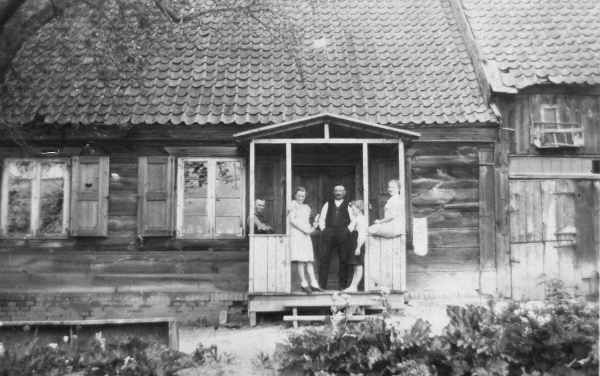
The Senger family were neither rich nor famous. They were hard working German farmers who tilled the soil and built the land (much like their forebears before them did in Holland). Richard Senger, at the outset of World War 2, was also an owner of the Kaeserei- Dairy (Papatschen Meierei) in Zeyersvorderkampen. I do not know if he had other co-owners, perhaps one of our readers can help clear that up. Papatschen Käserei (Meierei) Old Senger Farm in 2010 (now the Bednarczyk Farm) Former Senger Farm in 1978 Visit by Erich Senger I have had the wonderful good fortune of being introduced to the current owners of the former Senger…
You May Also Like
A Great Find!
-
Hansestadt Elbing- Videos
Ich habe die volgende Films von ehemaligen Elbing gefunden…. viel spass! I found the following films of the former Elbing (pre-WW2)… enjoy! Wenn Sie von anderen Videos wissen bitte sagen Sie mir… if you know of other videos, please tell us via our Contact page.
You May Also Like
Quick & Easy History
- Uncategorized
Pietzkendorf
Recently I received a set of email messages from a very helpful reader (Vielen dank, Hans!). I have taken a risk and translated the gist of his correspondence into English. I have blended his materials along with my research to reconstruct a view of Pietzkendorf. I will add more information as it comes to light. Hopefully this “accumulated view” will paint a small picture of what Pietzkendorf once was… the neatly mown fields of today’s Poland not withstanding. In days gone by, Pietzkendorf residents attended schools and Churches in nearby Ladekopp. The population was small, just a few families and homes were located in the village. The area was peopled…
- Uncategorized
Die Flucht aus Ostpreußen- Elena Schlottau
Dieser Eintrag stammt von Elena Schlottau (*1991) Ergebnisse eines Interviews mit Frau C. T.(*1937) Die damals 7-jährige C. T. erzählt von der Flucht aus Wormditt im ehemaligen Ostpreußen. Original Source (used under Fair Use Laws) Das Leben in Ostpreußen kurz vor der Flucht Ich bin damals in Wormditt aufgewachsen, im früheren Ostpreußen. Mein Vater wurde an der Front eingesetzt. Meine Geschwister und ich mussten bei meinen Tanten leben, weil unsere Mutter gestorben war. Einer meiner Brüder und ich sind bei Tante Anna aufgewachsen. Da sie in einer Metzgerei gearbeitet hatte, ist auch so manches Stück Fleisch, ohne dafür Lebensmittelmarken abgeben zu müssen, für uns abgefallen. In Erinnerung ist mir auch…
-
Meine Flucht aus dem Memelland
Dieser Eintrag stammt von Jasmin Holtzendorff (*1991) Ergebnisse eine Interviews mit Gertrud Radziwill (*1919) (Please note that the original link is no longer functioning and that the source material has been removed from the source site.) Ich wurde 1919 im Memelland als Deutsche geboren. Das Memelland liegt in Ostpreußen an der Grenze zu Litauen. Eigentlich war das Memelland immer Deutsch.1918 kamen die Franzosen bis 1923. Danach kamen die Litauer. 1939 wurden wir dann wieder Deutsch. Wir haben immer in Ruhe und Frieden mit den Litauern gelebt. Viele Behörden wie z. B. Zoll, Post, Polizei wurden von Litauern vertreten. Die Bahn war dagegen Deutsch. Da wir nur 10 km von der…
-
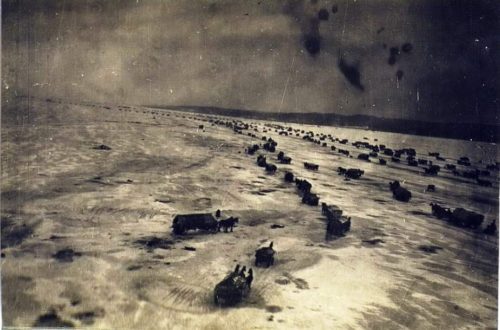
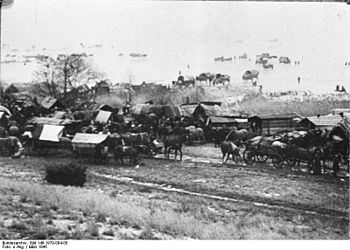
Flucht über das Haff
Dieser Eintrag stammt von Jacqueline Kayser (*1988) Ergebnisse eines Interviews mit Anni (*1926) Original Source (used under Fair Use Laws) Anni, geboren im Jahre 1926, lebte zur Zeit der Machtergreifung Adolf Hitlers mit ihren Eltern und ihren Geschwistern auf einem Gutshof in der Nähe der Stadt Gumbinnen in Ostpreußen. Ihr Vater war dort als Gutsverwalter tätig. Gumbinnen war Bezirkshauptstadt und besaß damals rund 25.000 Einwohner.
-
Unsere Flucht 1945
Dieser Eintrag stammt von Frau Schölzel Original Source (used under Fair Use Laws) Es war im Januar 1945 als uns gesagt wurde, wir sollten für 14 Tage 20 km entfernt bei meiner Schwester bleiben. Mein Mann und mein Sohn waren beim Militär, und ich war mit meiner 12 Jahre alten Tochter allein.
-
Flucht 1945
Onkel Max und Tante Friedel Dieser Eintrag stammt von Tatjana Littich Original Source (used under Fair Use Laws) Ich sehe sie noch davonfahren auf ihrem von einem lahmen Klepper gezogenen, hölzernen Kastenwagen, dem derzeitigen Transportmittel schlechthin. Vorn auf dem querliegenden Brett saß Onkel Max und Tante Friedel, im hinteren Teil des armseligen Gefährtes auf Säcken, in die gebliebene Habseligkeiten verstaut waren, hockte unsere Oma, die mit ihrer öltesten Tochter und deren Mann auf die Flucht ging – 1945 – aus einem kleinen Dorf in Schlesien.
-
Die Flucht aus Ostpreußen- Lena Buck
Dieser Eintrag stammt von Lena Buck Original Source (used under Fair Use Laws) Ich habe Friedel H., die am 9. September in Ostpreußen geboren wurde, zu ihrer Flucht aus ihrem Heimatland befragt. Hier erzählt sie von ihren Erlebnissen:
-
Die Flucht mit 500 alten und kranken Menschen von Rothenburg an der Neiße
Frau Strack Original source (used under Fair Use Laws) Mein Mann, Diakon des Rauhen Hauses in Hamburg, war bei der Wehrmacht. Ich leitete in Breslau ein Altenheim der Inneren Mission für 200 Personen, das, wie auch die Rothenburger-Anstalten, zum Verband schlesischer Altenheime gehörte.
-
Flucht aus Ostpreußen- Nina Schrader
Eine deutsch-deutsche Familiengeschichte Dieser Eintrag stammt von Nina Schrader (* 1982), Wolfenbüttel. Als im September 1945 die Russen von Osten immer näher an das Dorf Tilsit heranrückten, entschied sich auch die Familie der damals 15jährigen Hildegard, das Nötigste zusammenzupacken und die Flucht vor ihnen zu ergreifen. So machten sich Mutter, Vater und zwei von sieben Kindern, Hilde und ihre Schwester Gertrud, auf den langen und beschwerlichen Weg. Zwei Brüder, Franz und Kurt, waren dem Krieg zum Opfer gefallen. Die anderen bestritten die Flucht bereits eigenständig oder brachen schon früher mit eigenem Anhang auf. – Doch auch diese vier sollten bald getrennt werden!
-
Deutscher Zeitschriften in Elblag (Elbing)
Die sich in der Elbinger Bibliothek befindenden Zeitschriften und regionale Zeitungen auf Deutsch:
- Uncategorized
Geschichte einer Flucht aus Heiligenwalde in Ostpreussen
Autor: www.heiligenwalde.de 25. Januar 1945 Heute musste meine Mutter mit mir und meinen 3 Brüdern das schöne Heiligenwalde verlassen. Mein Vater wurde in den letzten Kriegstagen noch zum Volkssturm eingezogen. Vorher hatte er mit seiner Landwirtschaft auch dafür Sorge tragen müssen, dass er in angemessenem Rahmen die Versorgung der Soldaten an der Front mit landwirtschaftlichen Lebensmitteln sicherstellte. Jetzt wussten wir nicht, wo mein Vater sich aufhölt. Bereits seit Tagen wurde Heiligenwalde beschossen. Die Flucht war von uns längst vorbereitet, auch von anderen Bewohnern des Dorfes, denn ca. 2 Tage vor unserer Flucht waren bereits 2 Pferdegespanne mit einem Planwagen auf die Ausreise geschickt worden, von denen wir allerdings später nie…
-
Kriegs- und Nachkriegserinnerungen
Von Carl W. Gaede Ich bin im Dezember 1936 in Kaiserslautern in der Pfalz in Deutschland geboren. Mein Vater war Offizier in der Infanterie des deutschen Heeres. Mutter und Carl Am 7. Januar 1944 von 2:47 bis 3:25 Uhr nachts und noch einmal um 11:45 Uhr am folgenden Morgen wurde das westliche Wohnviertel von Kaiserslautern wie ein Teppich bombardiert und zertrümmert. Meine Mutter und ich wollten dem Grausen dieser Zerstörung entgehen, indem wir versuchten, Familienfreunde in der Nähe Bad Kreuznachs im Hunsrückgebirge zu erreichen. Zu Fuß fanden wir den Weg durch die Ruinen und die noch glühenden Trümmer und erreichten den Hauptbahnhof westlich der Stadtmitte. Unterwegs beobachtete ich, wie Rettungsarbeiter…
-
HELP: Deutsche Vertriebene- German Expulsions
Hello Readers, Because of the great shortage of information and histories associated with the expulsions of Germans from Eastern Europe after World War 2, I am placing a call to anyone willing to share their family story with others. Please contact me (use our contact page) with any histories that you may have from family members or elsewhere that involve the expulsion, flight or ethnic cleansing of Germans following the second world war. I will place the information you send (assuming it is not politically motivated) on the internet for others to view and share. It is my hope to contribute a bit of our past in order to help…
- Uncategorized
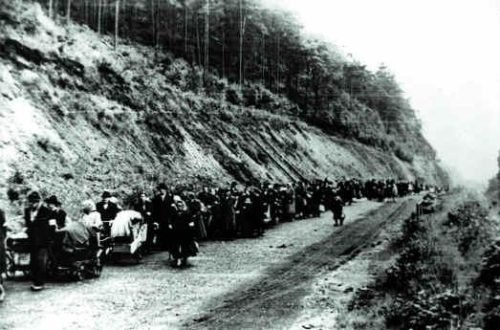
The Expulsion of Germans
Original Article (used within terms of Fair Use; this article has been removed from the original site) By Dr. Alfred de Zayas –The main speaker at the premiere of the documentary travelling exhibition ” In the Claws of the Red Dragon” in Pittsburgh [in 1999], organized in cooperation with Dr. Marianne Bouvier and B. John Zavrel,was Dr. Alfred de Zayas, a prominent expert in international law; he is an American of Spanish-French descent. After law school at Harvard, de Zayas went to Germany on a Fulbright fellowship, took doctorate in History at the University of Goettingen. He works as a legal consultant in New York and Geneva, Switzerland, and is…
-
Die letzten Tage – Januar und Februar 1945
Original Article (used and enhanced within the terms of Fair Use) Die Reportage: Der folgende Bericht beruht auf Datenunterlagen des letzten Oberbürgermeisters der Stadt Elbing Dr. Fritz Leser (in einigen Dukomentationen auch Dr. Hans Leeser genannt); Oberst a.D. Schöpfer dem letzten Kommandanten von Elbing und von Oberleutnant Curth Günther. Die Aufnahmen stammen aus russischen Wochenschauen. Ende August- Anfang September 1944 fanden in Danzig erstmals offizielle Verhandlungen über Räumungsvorbereitungen statt, zu der die Landräte und Oberbürgermeister des Reichsgaues Danzig und andere geladen waren. Für jede Ortsgruppe wurden Sammelplätze und die Fluchtwege festgelegt. Für Ostpreußen erschien niemand, dafür kam ein Brief von dem Regierungspräsidenten Dargel aus Königsberg mit der Erklärung: “Es…
-
Bericht über die End-Kämpfe um Elbing
Alfred Neubert, Hannoversch Münden, Burgstraße 15/16, den 18. August 1946 23. Januar bis 10. Februar 1945 Die Verteidigung Elbings war voraussichtlich gedacht als eine vorgeschobene breitangelegte Sicherung der linken Flanke der Weichsellinie mit linker Anlegung an das Frische Haff, rechts angelehnt an die Verteidigungswerke von Marienburg. Die Stellung Elbings im gesamten Verteidigungssystem wurde als “Brückenkopf Elbing” bezeichnet. – Der um Elbing beabsichtigte Bogen der Verteidigungslinie war weit vorgeschoben, sollte z. B. bei Dörbeck, Rakau und die entsprechenden Entfernungen nach rechts fortgesetzt führen über Grunau-Höhe, Anschluß an den Drausensee finden und über Kerbswalde, Grunau-Niederung zum Anschluß nach Marienburg führen. Zur Besetzung dieser Linie waren zwei Divisionen beabsichtigt, dazu die Einheiten des…
-
Kirche Zeyer (evangelisch)
Original Source (used with author’s permission) Autor: Günter Mauter Fast ein Kuriosum ist ein Teil der Geschichte der evangelischen Kirche von Zeyer. Als am 22. Januar 1920 der Kreis Großes Werder amtlich wurde, befand sich das Dorf Zeyer im Freistaat Danzig, während die Kirche und die Kirchenhaüser mit ca. 35 Bewohnern auf Elbinger Gebiet lagen. Die Nogat bildete die Grenze und die Kirche lag ja auf dem rechten Nogatufer, damit also im Elbinger Landkreis. Allerdings, und das ist auch bemerkenswert, lag das Pfarrhaus im Dorf Zeyer! Dr. Kerstan (Die Geschichte des Landkreises Elbing) schreibt über den Bau der Kirche: “Wann die Kirche begründet wurde, ist unbekannt, vermutlich aber in der…
-
Selbst Jauche half uns nicht
Auszüge aus dem Text von Charlotte Kaufmann (used within terms of Fair Use) Die schlimmste Zeit meines Lebens begann vor etwas mehr als 60 Jahren,genau im Januar 1945. Auch nach dieser langen Zeit sind die Narben nicht verheilt. Die Auswirkungen sind bis heute spürbar. Dieses Schicksal teile ich mit hunderttausenden Frauen und Mädchen aus den deutschen Ostgebieten, die noch vor Kriegsende vom russischen NKWD (Volkskommissariat für innere Angelegenheiten; zuständig auch für Angelegenheiten der Kriegsgefangenen und Internierten) verhaftet und dann zur Zwangsarbeit nach Russland verschleppt wurden. Dort mussten wir stellvertretend für das ganze deutsche Volk Reparationsleistungen erbringen unter unmenschlichen Bedingungen. Wir zahlten mit unserem Körper und unserer Seele für ein Verbrechen,…
-
The LDS & Zeyer ev. Kirche Records
Yesterday was the very first time I was able to view Zeyer Church records, courtesy of my local LDS (Mormon) Church Family History Center and the Salt Lake City, UT Genealogy LDS Offices. I can hardly find the words to explain the experience. It was like a trip into the past. I had my very first opportunity to ‘meet’ people and touch the lives of some of the most important individuals in my life and my family’s lives. I found a photographic image (microfilm) of the official church record of my grandfather’s (Opa’s) birth and baptism. Items I had thought destroyed in the ravages in of World War 2 were…
You May Also Like
A Great Find!
-
The “Great War”
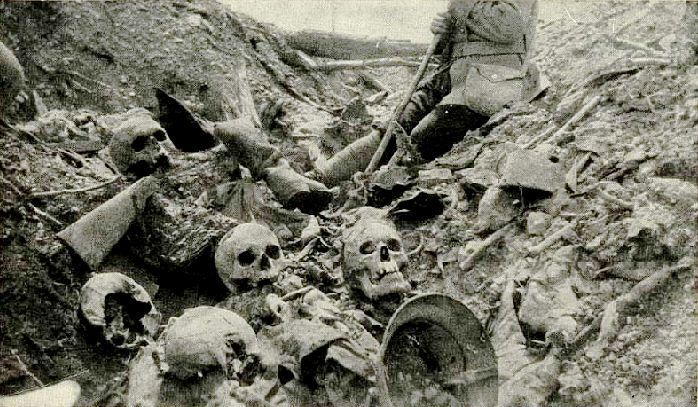
Lest we forget the insanity of war… these images are dedicated to all whose lives were unalterably changed by WW1 and its aftermath. World War I: Battle Of Verdun 1/4 World War I: Battle Of Verdun 2/4 World War I: Battle Of Verdun 3/4 World War I: Battle Of Verdun 4/4 Panorama of Verdun, filmed from the Fort de la Chaume, 1917 Related Articles Coming to Grips Christmas¦ and another war
You May Also Like
Sudeten Vertreibung- Sudeten German Expulsion
-
Zum Gedenknis- In Memory
For those who thought that WW2 was long over, a rude reminder of its horrors and brutality have once again surfaced in the former home of our Senger family. In just the past year, more than 2000 people were found buried in a mass grave. It is thought that all were killed/ died at the war’s end. To learn more please visit the site dedicated to their memory. An English article is at Der Spiegel.
You May Also Like
Quick & Easy History
- Uncategorized
XVII. Armeekorps
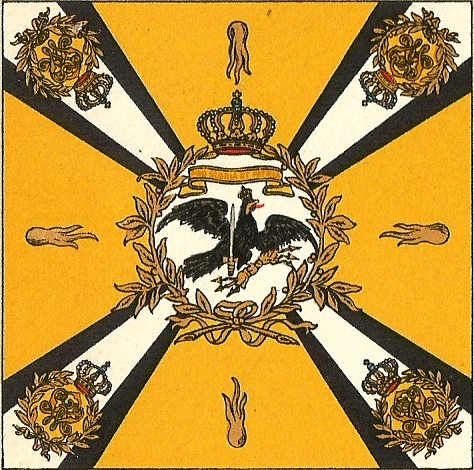
36th Division (German Empire) This is the major unit during WW1 to which we believe Richard Senger belonged and for which he fought on two fronts. The 36th Division was a component of the XVII Army Corps (Armeekorps). From Wikipedia, the free encyclopedia (Note: the Wikipedia article was removed, a modified article is available) 36th Division (36. Division); from August 2, 1914, 36th Infantry Division (36. Infanterie-Division) Active 1890-1919 Country Prussia/Germany Branch Army Type Infantry (in peacetime included cavalry) Size Approx. 15,000 Part of XVII. Army Corps (XVII. Armeekorps) Garrison/HQ Danzig Engagements World War I: Gumbinnen, Tannenberg, 1st Masurian Lakes, Gorlice-Tarnów Offensive, Somme, Arras (1917), Passchendaele, Spring Offensive, St. Quentin, 2nd…
-
Luftgau Kommando VII
This is the last unit in the Luftwaffe to which Luise Senger (Rabideau) belonged. all material which follows on this page © 1997-2005 Michael Holm Chef des Stabes: ? Obstlt Eckhard Krahmer, 1.7.38 – 1.4.39 Oberst Bruno Maass, 1.4.39 – 5.3.43 Oberst Otto Petzold, 5.3.43 – 8.5.45 Formed 4.2.38 in München from Luftgau-Kommando XIV.
You May Also Like
Quick & Easy History
- Uncategorized
Danzig History
DANZIG / GDANSK This page is concerned with the history of the whole Danzig territory as set up in 1919, not only with the town of the same name. (Please note the site from which this history was duplicated and edited no longer is functioning: http://www.geocities.com/CapitolHill/Rotunda/)
- Uncategorized
The Sengers -1920 to 1944
Richard Senger was a successful German farmer (Landwirt) in West Prussia. He worked and cared for his family’s farm with the help of his wife (Frieda), children (Luise & Erich), his brother Rudolf (Onkel Rudolf, known simply as Onkel) and his sister-in-law Erna Recht (Tante Erna). The homestead and lands had been in the Senger family since before 1893; when the home was built by Richard’s father and mother, Michael & Adelgunde Senger. The Senger farm was located on the banks of the Nogat River in Zeyervorderkampen (Kreis Elbing in Grosses Werder). At the time of the establishment of Freie Staat Danzig in 1920, the farm was the first farm…
-
Genealogy
I am not certain if there will be multiple posts here or simply one on-going post. Either way, I think it is worthwhile sharing some thoughts on ‘doing genealogy’ work. The first thing I noticed when I began tracing genealogical information is that there is lots of it! Some is easy to find, some is not. It is a curiosity to me that everything you really want or need seems to be missing. I am pretty sure that means, or perhaps better said, it almost seems there is a conspiracy out there somewhere. Somehow crucial information is always lacking. This generally means the genealogist (me or you in this case)…
-
Richard Senger- The Long Road
In late winter of 1944/45, the Senger’s farm was overrun and occupied by a command of the advancing Russian armies. The family furniture and possessions were stolen by non-Germans; the lives and history of the Senger family were unalterably, irretrievably changed. Only the Senger farm and two other farms in the village of Zeyersvorderkampen remained standing following the Soviet bombardment and artillery attacks which accompanied their nearly complete destruction and invasion of the area. Ultimately, the Senger farm was left as the sole ‘undamaged’ farm in Zeyersvorderkampen. At first, the farm was used to house Soviet commanders; ultimately, possession of the farm, lands, buildings and few remaining possessions were confiscated…
- Uncategorized
Frieda Senger- Post WW2 Gulag
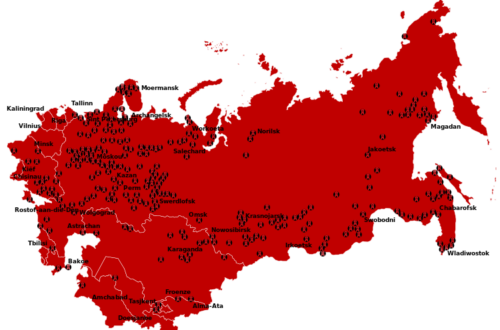
As the Russians invaded West Prussia near the end of World War 2, they rounded up abled bodied Germans to ‘work’ as slave labor in their Gulags. These ‘unlucky’ Germans (some three million) were shipped by train to forced labor camps in the far East. Frieda Senger, along with her friend and neighbor, Edith Ebel, were among those shipped by rail into the Russian Gulags; in her case, the trip was to prisons some 1700 miles or 2700 kms east. She, like many others, was deported from her and her husband’s lands (which were now in the hands of the Russians) and forced into slavery; she was not seen or…
- Uncategorized
Gulag Perm-36
Although, we now know with certainty that Frieda Senger was not interned in Perm-36 Gulag; it does represent a Gulag proximate to her location. The photos in this article represent a good approximation of the Gulags in Chelyabinsk. Frieda Senger spent 2 and one half years starting in 1945 in the Gulags. Somehow, she was lucky and survived. Wikipedia article on post WW2 Germans in Russian Gulags These images are used with permission (Permission is granted to copy, distribute and/or modify this document under the terms of the GNU Free Documentation License, Version 1.2 or any later version published by the Free Software Foundation; with no Invariant Sections, no Front-Cover…
- Uncategorized
Dedication
This site and effort is dedicated to all my forebears. Without them we (my family) would not exist. Their lives, their loves and their journey has made us who we are and who we will become. Special recognition however is merited to: Robert R. Henss- he began the family genealogy effort and set a standard for excellence that we hope to carry forward. We hope our work makes him proud. Fred & Luise Rabideau- the papers they saved from the ashes of World War 2 have kept an entire branch of the family alive. Becky Henss Rabideau- she has the patience of a saint and puts up with my working…
-
Senger Family
The Senger family had lived in Kreis Grosses Werder area of West Prussia since at least the late 1600’s. Both 20th Century World Wars took a heavy toll on the entire ‘clan’. Many family members and all the Senger lands and possessions were either destroyed or taken. The those who were not killed in the fighting were forced to leave their homes as a result of the WW2 allies ethnic cleansing pograms following the defeat of Germany. Along with as many as 12 million other Germans the Sengers were either force marched to work in Russian labor camps or left behind to work as slaves on their own lands. Finally…
You May Also Like
Quick & Easy History
-
Confluence of Past and Future
I am at the nexus of an indefinite past and indeterminate future. My history will forever remain clouded, built of conjecture, legend, and images. The future is shrouded in hope, desire, and uncertainty. It is my sense of belonging, and relatedness that joins the two and forms a unity of design and purpose.
-
Hope in the Future
As you most certainly know by now, my mother is German. She is a product of having grown up during the time of the Third Reich. My father, on the other hand, has always thought of himself, or so he says, as one of those conquering heroes who had the great good fortune of meeting the love of his life in the rubble that was post World War II Germany. It has always be a curiosity to me that such a time and place could produce the circumstances and love of which I, my sister, and my children are all products. Everyday, when I am home, I look at the…
-
Zeyer- das Ende
This article has been translated and reworked with family events. Erinnerungen eines Amtsvorstehers des Amtsbezirkes Zeyer. Johannes Jahn, Landwirt und Hofbesitzer in Zeyersvorderkampen. Der Amtsbezirk Zeyer lag in der nordöstlichsten Ecke des Freistaates Danzig, im Kreis Großes Werder und umfasste die Ortschaften Zeyer, Stuba und Schlangenhaken. Er zog sich entlang der Nogat, beginnend bei der Ortschaft Einlage bis zur Mündung der Nogat in das Frische Haff. Das Gesamtareal betrug etwa 2510 Hektar Davon fielen auf Zeyer 480 Hektar, Stuba mit der Ortschaft Neudorf circa 610 Hektar,Zeyersvorderkampen circa 1020 Hektar und Schlangenhaken 400 Hektar Die Gesamteinwohnerzahl betrug etwa 1735 Einwohnen deutscher Abstammung und Herkunft. Die Bevölkerung gehörte ausschließlich der Landwirtschaft und…
-
Endkampf um Ostpreußen
Source document may be found at: The Real Blaze source has been removed Die Panzerabwehrschlacht südlich Gumbinnen von Oberstleutnant a. D. W. Salomon Die Panzerabwehrschlacht war für den Kreis und die Stadt Gumbinnen von höchster Bedeutung. Sie vereitelte den Plan der Russen, durch einen Umgehungsvorstoß über Nemmersdorf-Branden (Ischdaggen) nach Mallwen (Mallwischken, Kr. Pillkallen), Gumbinnen einzukesseln. Ein geglückter Vorstoß hätte viele Gumbinner Landsleute in die russische Gefangenschaft gebracht. Lagekarte Wie ernst die Lage war, geht daraus hervor, daß am 21. Oktober 1944 drei russische Panzer schon über die Bahnstrecke bei Bergenbrück (Sabadszuhnen) in Richtung Zweilinden (Stannaitschen) vorgestoßen waren. Der russische Führungspanzer fuhr sich in dem sumpfigen Wiesengelände fest. Die Besatzung stieg…
-
Alone
As I look at photos of my great grandparents, grandparents and parents, I see the faces of my past. Each looks at me across the span of time without movement or animation, yet each coveys a strong message of simultaneously being connected and disconnected in time, space, and place. I am certain that we each assume that same position for our successors, and are especially so for our children and grandchildren. This notion of being simultaneously connected and disconnected arose as I began restoring a number of old family photos. The photos had been, in each instance, ravaged by “time”. In some instances “time” was represented by conquering Russian soldiers…
-
Richard Senger -90th Birthday
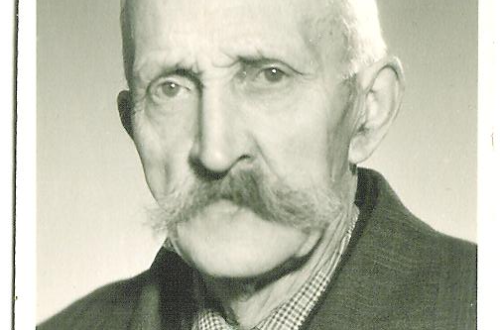
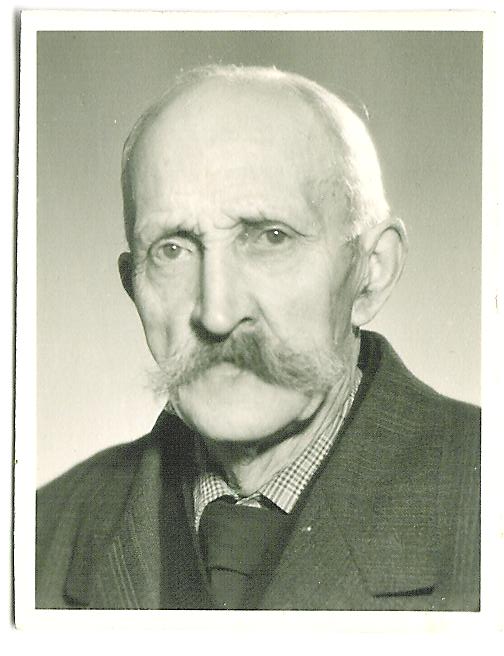
Richard Senger, einst Bauer in Westpreußen, feierte 90. Geburtstag Schwifting(m). Schnittblumen, Blumenschalen, köstliche Getränke und weitere Präsente schmücken das Wohnzimmer im Hause ‘der Familie Senger in der Schwiftinger Siedlung. Vor wenigen Tagen feierte der “Senior” des Hauses, Opa Richard Senger, seinen 90. Geburtstag. Anlaß genug für dieMitbürgerschaft, um Schwiftings derzeit altesten Mitbürger zu ehren und zu erfreuen, ihm ‘ die herzlichsten Glückwünsche für den weiteren Lebensabend mitzugeben. Richard Senger stammt aus Westpreußen. In seinen Adern fließt urwüchsiges bäuerliches Blut. Am 2. Februar 1879 wurde er in Zeyersvorderkampe bei Danzig geboren. Wie seine Eltern Bauern waren, so wurde auch Richard Senger Bauer, um einmal das Erbe seines Vaters, einen Stättlichen Hof,…
-
Coming to Grips
As we were traversing the nightmare that was my 50-51st year, we had many opportunities for introspection and thought. There were times when we were angry. Times when we were fearful. Times of doubt. And even, times of joy. I would be less than truthful if I said that we were not forced to re-examine ourselves, our lives, our values,and our faith. That is not, however, where it stopped. I had always been comfortable with my faith, what was more interesting was that I not as certain how I fit in my family and world. I have a history of absence from my family. My work, has for the last…
-
Julius Senger
World War I Service (1914-1918): 7. Landsturm .Inf.Btl. Allenstein wurde später LIB XX/14 numeriert (vom XX. Armee-Korps aufgestellt)
-
Willi Wedhorn
ZUM GEDENKEN Nachname: Wedhorn Vorname: Willi Dienstgrad: Unteroffizier Geburtsdatum: 26.03.1923 Geburtsort: Todes-/Vermisstendatum: 15.04.1945 Todesort: Willi Wedhorn ruht auf der Kriegsgräberstätte in Futa-Pass (Italien). Endgrablage: Block 8 Grab 754 Nähere Informationen zu diesem Friedhof erhalten Sie hier. Information on the battle in which Willi died may be found Wikipedia. Images of Willi Wedhorn Volksbund Deutsche Kriegsgräberfürsorge e.V. Bundesgeschäftsstelle Pressereferat Werner-Hilpert-Straße 2 D 34112 Kassel Telefon (0561) 7009-0 Telefax (0561) 7009-270 E-Mail presse@volksbund.de
-
Michael Senger
Michael Senger History -as related to Mark Rabideau by Luise (Senger) Rabideau (Michael’s grand daughter) Jan 2006 Michael was the husband of Adelgunde Kiehl- they married about 1868 near Jungfer/ Zeyer Westpreussen Their marriage lasted about 55 years They had thirteen children of whom seven children lived to adulthood and two were killed in World War 1. Michael died on his son Richard’s farm in May of 1932 after being kicked by a horse at the age of 93. He was kicked in the head, suffered severe (irreversible) paralysis and was euthanized, at his request, by the local doctor. Michael and Adelgunde built the farm which Richard Senger worked in…
-
Hermann Recht
Johann Hermann Recht History -this is an account that has evolved significantly from what began as an oral history related to Mark Rabideau by Luise (Senger) Rabideau (Hermann Recht’s grand daughter) on 9 Jan 2006; today this history is augmented with numerous additions and amendments from Mark Rabideau’s subsequent research as well as family information and stories from Otto Wedhorn family descendants most notably Frieda (Wedhorn) Mimietz. Hermann Recht was born as Johann Hermann Recht on 16 June 1869 in Zeyersniederkampen, Westpreussen. To date, we have not found his birth record. Johann Hermann Recht’s parents were: Father: Samuel Ferdinand Recht (Hofbesitzer of Zeyersniederkampen) and Mother: Henriette Schepansky (Caroline Henriette Sczepanski…
-
Erich Recht
ZUM GEDENKEN Name: Erich Recht Dienstgrad: Gefreiter geboren: 12.02.1924, Tattamischken Truppenteil: 1./Pi. 198 Erkennungsmarke: -1-Marsch Komp.Eisb.Pi.Ers.Btl.4 Todestag: 09.09.1944 Todesort: Raum Vallecchio Bestattet: Gem.Montecolombo-Ca Menghino/Forli Feldgrab Umgebettet nach: Futa-Pass / Italien Block: 48 Grab: 815 821 Futa-Pass ist die größte deutsche Ehrenstätte des Zweiten Weltkrieges in Italien, auf der über 30 660 deutsche Gefallene ihre letzte Ruhestätte gefunden haben. Der weitaus größte Teil der dort Bestatteten ist in den vom Herbst 1944 bis zum April 1945 andauernden Kämpfen gefallen, die zwischen Carrara am Ligurischen Meer und dem Raum von Rimini an der Adria stattfanden. Die Gefallenen wurden von dem erfahrenen Fachpersonal des VOLKSBUNDES aus Feldgräbern und Gemeindefriedhöfen der umliegenden Provinzen auf…
-
Egon Recht
ZUM GEDENKEN Nachname: Recht Vorname: Egon Dienstgrad: Geburtsdatum: 23.09.1922 Geburtsort: Todes-/Vermisstendatum: 01.07.1944 Vermißtort/Todesort: Mittelabschnitt Nach den uns vorliegenden Informationen ist die o. g. Person seit 01.07.1944 vermißt. In einem Gedenkbuch haben wir den Namen und die persönlichen Daten des Obengenannten verzeichnet. Sie können gern einen Auszug bei uns bestellen. Volksbund Deutsche Kriegsgräberfürsorge e.V. Bundesgeschäftsstelle Pressereferat Werner-Hilpert-Straße 2 D 34112 Kassel Telefon (0561) 7009-0 Telefax (0561) 7009-270 E-Mail presse@volksbund.de
-
Albert Senger
ZUM GEDENKEN Nachname: Senger Vorname: Albert Dienstgrad: Reservist Geburtsdatum: 27.05.1888 Geburtsort: Zeyervorderkampen Todes-/Vermisstendatum: 03.12.1914 Todes-/Vermisstenort: Albert Senger ruht auf der Kriegsgräberstätte in Noyers-Pont-Maugis (Frankreich). Endgrablage: Block B Grab 2148 Nähere Informationen zu diesem Friedhof erhalten Sie hier. Volksbund Deutsche Kriegsgräberfürsorge e.V. Bundesgeschäftsstelle Pressereferat Werner-Hilpert-Straße 2 D 34112 Kassel Telefon (0561) 7009-0 Telefax (0561) 7009-270 E-Mail presse@volksbund.de